


The following information is based on a report originally published by A Midwestern Doctor. Key details have been streamlined and editorialized for clarity and impact. Read the original report here.
Researchers scanned the brains of 60 preschool-aged children—and what they discovered about screens was “truly shocking.”
“Interactive screen time causes a LOSS of white matter in the brain.”
In simple terms, Prof. Mike Nagel calls it a measure of “BRAIN DAMAGE.”
What is white matter?
White matter is the part of the brain made up of insulated nerve fibers that help different areas of the brain communicate quickly and efficiently.
It acts like the brain’s wiring system, carrying signals from one region to another so thinking, movement, emotion, and learning can work smoothly.
“So if we’re seeing deficits in myelin production early in life, we’re probably seeing deficits in neural connectivity,” Prof. Nagel warns.
“The study shows the more screen time a child is exposed to, the greater the loss of white matter.”
But it’s not just loss of white matter we have to worry about. When you understand how screens rewire dopamine in developing brains, the story gets even darker.
A mother tells her friends her toddler throws tantrums when sugar is removed.
Another says the same thing happens when YouTube gets turned off.
That comparison shouldn’t make sense. But it does.
Modern children’s programming isn’t just “more colorful.”
It’s faster. Louder. More abrupt.
And increasingly described by parents as addictive.
In a 2025 survey of 2,000 U.S. parents, 22% reported “full-on tantrums” linked to excessive screen time.
27% saw irritability. 24% mood swings.
That’s not subtle behavioral drift. That’s nervous system dysregulation.

Another 67% of parents said they fear losing precious time with their children because of screen addiction.
A quarter admit they use screens to calm an upset child.
When the regulator becomes the pacifier, something deeper is happening. And it isn’t good.
This information comes from the work of medical researcher A Midwestern Doctor. For all the sources and details, read the full report below.
Rejuvenating The Nervous System and Reconnecting With Life

Here’s what’s changed:
Classic shows like Mister Rogers used long pauses. He deliberately left silence so children could process feelings.
Modern YouTube-first content cuts every 1–4 seconds.
That’s not artistic preference. That’s optimization for the algorithm, not the developing brain.
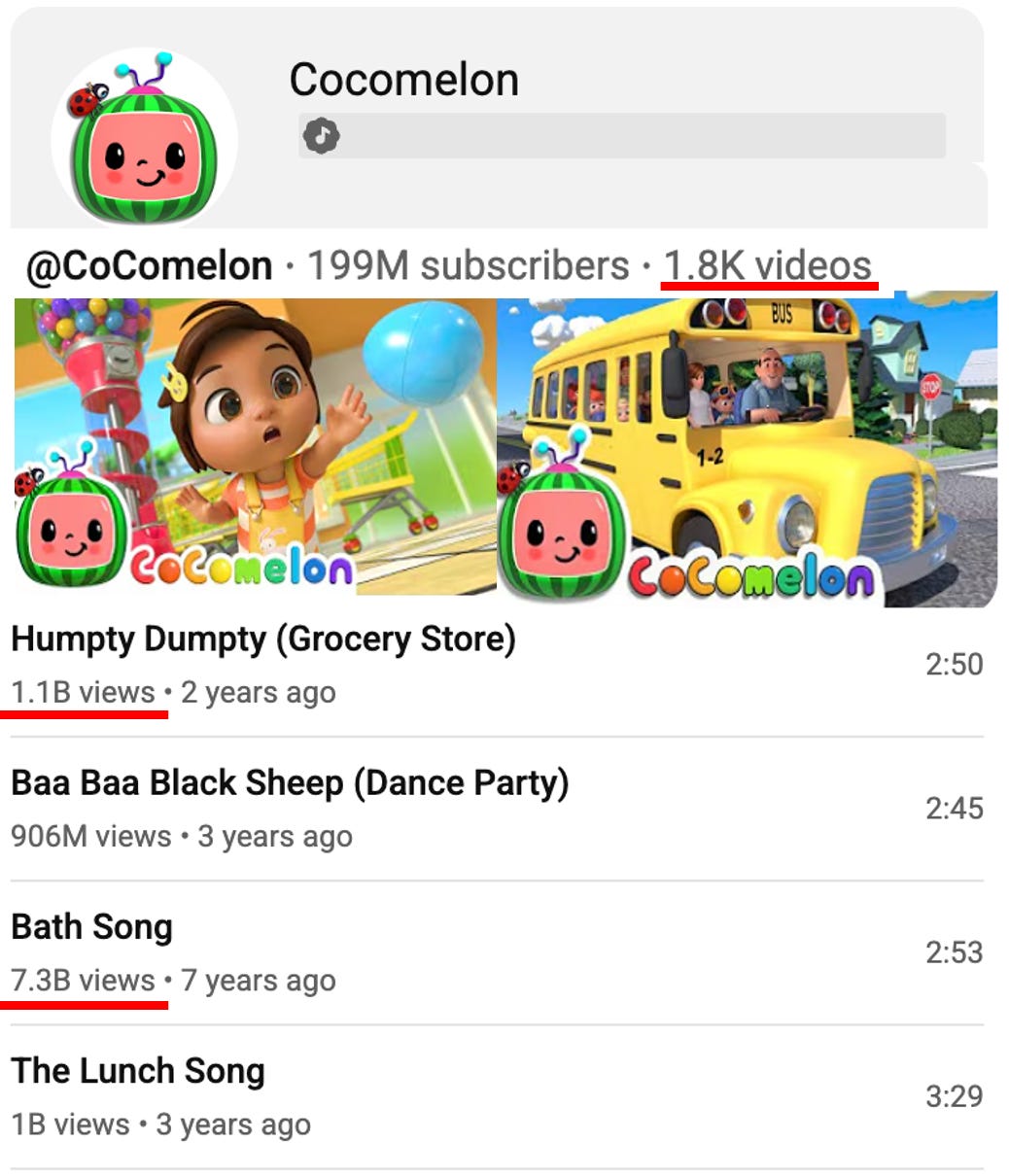
Every sudden cut triggers the brain’s orienting response—the reflex that makes you turn when a door slams.
For toddlers, that reflex is powerful and hard to inhibit.
Exploit it hundreds of times per episode and you create a near-constant dopamine loop.

Autoplay begins the next video in 3–6 seconds.
Fast pacing reduces the chance a child looks away in that window.
Completion rates rise.
Watch time rises.
Revenue rises.
The nervous system absorbs the cost.

A 2011 study exposed 4-year-olds to 9 minutes of fast-paced SpongeBob with 11-second cuts.
Compared to slower content, executive function dropped immediately and deficits lasted up to four hours.
Nine minutes. Four hours of impairment.
That’s shocking.
And a 2023 study found that each additional hour of toddler screen time increased later anger and frustration risk by 13%.
Not correlation in adulthood. Prospective measurement in preschoolers.
But it’s not just screens.
A Midwestern Doctor traces a deeper historical arc—one most people have never been told. And it’ll change how you see ADHD.
Rejuvenating The Nervous System and Reconnecting With Life
In the 1950s, after DPT entered wide use and encephalitis cases rose, a condition called “minimal brain damage” became one of the most time-consuming problems in pediatrics.
Its defining feature? Hyperactivity.
Sound familiar?
Eventually, the increase in hyperactivity was “treated” with stimulants like amphetamines.
The diagnosis was renamed ADHD.
The pattern shifted—but the nervous system story never disappeared.

This isn’t an anti-medicine rant.
Some children benefit from structured interventions.
But when diagnoses explode alongside environmental shifts, it’s rational to ask what changed.

Now add screens.
Highly stimulating, dopamine-releasing content becomes a behavioral regulator for already dysregulated nervous systems.
The solution mirrors the stimulant model.
More stimulation to manage overstimulation.

But here’s the catch.
Dopamine spikes don’t create stability.
They create peaks—followed by lows that require stronger peaks next time.
That’s addiction.
David Kessler documented how food was engineered for hyper-palatability and addiction.
Robert Lustig described dopamine as temporary pleasure—and serotonin as sustained well-being.
Big Tobacco once purchased major food brands and optimized for addictiveness.
Different industries. Same playbook.
When the nervous system is depleted, subtle experiences lose their appeal.
You need stronger flavors.
Brighter colors.
More intense stimuli.
Ordinary life, the same one that once excited you, now feels flat.

That depletion doesn’t just drive consumption.
It drives romantic instability.
Pornography dependency.
Constant novelty-seeking.
You don’t feel alive—so you chase spikes that give you a temporary lift.

The economy benefits from the chase.
A consumption-based system requires dissatisfaction.
If you were content in the present moment, vast sectors of the economy would shrink overnight.
That’s not conspiracy. It’s incentive structure.

Harvesting attention and creating lifelong pharmaceutical customers are parallel economic models.
Both rely on chronic nervous system depletion. Both monetize dysregulation.
In an increasingly digital world, we all need to understand the reality of the situation.
Rejuvenating The Nervous System and Reconnecting With Life
The core thesis isn’t political. It’s physiological.
When the nervous system is resilient, the pull toward artificial stimulation weakens naturally.
You don’t fight addiction with willpower alone. You restore vitality.

The full article breaks down something practical most people overlook: How to pace your nervous system before it crashes.
• How to know when to stop pushing
• Why abdominal breathing resets sympathetic overdrive
• The 20-minute daily habit that outperforms complicated routines
This may be the piece you’ve been missing.
Rejuvenating The Nervous System and Reconnecting With Life
Think about it.
What if the opposite of addiction isn’t discipline—but feeling genuinely alive inside?
When that energy returns, ordinary moments regain depth.
You don’t need the next spike. You don’t crave constant novelty.
Presence becomes enough.

And the solutions to regaining presence aren’t extreme.
They’re simple:
• Walking without distraction
• Abdominal breathing to shift parasympathetic tone
• Epsom salt baths for restoration
• Nature immersion to lower cortisol
• Somatic bodywork to release stored tension
The full article has all the details.
Rejuvenating The Nervous System and Reconnecting With Life
If attention disorders are the dominant story, perhaps the deeper story is that our nervous system is one of the most precious resources we have.
And in a society that demands high cognition while constantly overstimulating us, our nerves are under attack from every direction.
When that resource erodes, joy erodes with it. And we start chasing spikes just to feel alive.
That’s the trap.
Restoration—not stimulation—is the way out.
And there’s no better time to start than now.

Thanks for reading! This information was based on a report originally published by A Midwestern Doctor. Key details were streamlined and editorialized for clarity and impact. Read the original report here.
Rejuvenating The Nervous System and Reconnecting With Life
For a deeper dive into what modern medicine has overlooked—or intentionally buried—check out these other eye-opening reports by A Midwestern Doctor:
The Truth About SSRI Antidepressants
Statins, Cholesterol, and The Real Cause of Heart Disease
What’s The Healthiest Water To Drink?
While you’re at it, give A Midwestern Doctor a follow. No one brings more research, clinical insight, or historical context when it comes to exposing the health myths we’ve all been fed. This is easily one of the most valuable accounts you’ll ever follow.

If you haven’t subscribed to this Substack yet, take a moment to read what some of the most powerful voices in the medical freedom/truth movement have to say:
“The Vigilant Fox has been putting in a lot of work to create a news platform that shares the stories we want to hear about and brings attention to the most important things to know about. If you want a daily newsfeed in alignment with our ...”
– A Midwestern Doctor, The Forgotten Side of Medicine
“The Vigilant Fox absolutely is on top of things. We must support our fighters, and the Fox is fighting with truth.”
– Tom Renz, Tom Renz’s Newsletter
“Excellent capture of key video presentations on evolving pandemic science.”
– Peter A. McCullough, MD, MPH, FOCAL POINTS (Courageous Discourse)

The best words from my childhood; "Go out and play".
Just look at the children and how they act when they're staring at a screen. It's clearly not good for their development.
But it makes parenting easier so the parents now have more time to stare at THEIR OWN phones.
smdh