
This article originally appeared on Focal Points and was republished with permission.
Guest post by John Leake
One of the first books of military history I ever read was The Face of Battle, by John Keegan. I was especially fascinated by his depiction of the Battle of Agincourt (1415) in which King Henry V’s English army defeated the French army led by Charles d’Albret.
Keegan endorsed the idea that the battle—in which 5,000 English longbowmen wrought havoc on the French cavalry—marked the end of of the Age of Chivalry. Henry did not come to France to fight like a gentleman; he came to press his claim to the French throne.
Shakespeare portrayed Henry V in a favorable light—giving him some of the most memorable lines in the English language—to appeal to Queen Elizabeth. However, at the time of the battle 186 years earlier, the French knights were shocked by his use of newfangled missile technology. The arrows could pierce armor from a distance of 300 yards and did terrible damage to horses’ flanks, totally disrupting the normal joining of battle between knights.
I understand why Agincourt is regarded as marking the end of chivalry, but I believe the true and final end of gentlemanly virtue in combat was the advent of large scale aerial bombardment during the 1930s. Picasso immediately recognized the evil of it and expressed it in his depiction of the bombing of the Basque town of Guernica in 1937 during the Spanish Civil War.
I heartily agree with Pope Pope Leo XIV’s statement on March 23 in which he condemned aerial bombardment, proclaiming that such warfare should have been “banished forever” after 20th-century conflicts.
More so than any other infernal technology, the ability to drop bombs on people—especially on civilians—made it possible to kill one’s adversary without having to engage him man to man.
Strategic bombing has had an especially corrupting influence on politicians (and their constituents) who wish to exert power and coerce other nations, but are not willing to fight on the ground to do it. The temptation to launch strategic bombing raids—like all forms of wanting to have one’s cake and eat it too—arises from the illusion that you can get what you want from people without having to pay fully for it.
Now President Trump finds himself in a very difficult situation because his 36-day bombing of Iran hasn’t yielded a capitulation, just as none of the strategic bombing campaigns of the past—unaccompanied by large forces of men on the ground—yielded a capitulation.
This weekend, on his Fox News show, “Life, Liberty & Levin,” Mark Levin referred to President Truman’s use of atomic weapons on Japan (Hiroshima and Nagasaki) and how this action purportedly saved the lives of a million US soldiers who would have otherwise died in an invasion of the Japanese mainland. Levin seemed to propose that Trump could and should take similar action to end the war in Iran.
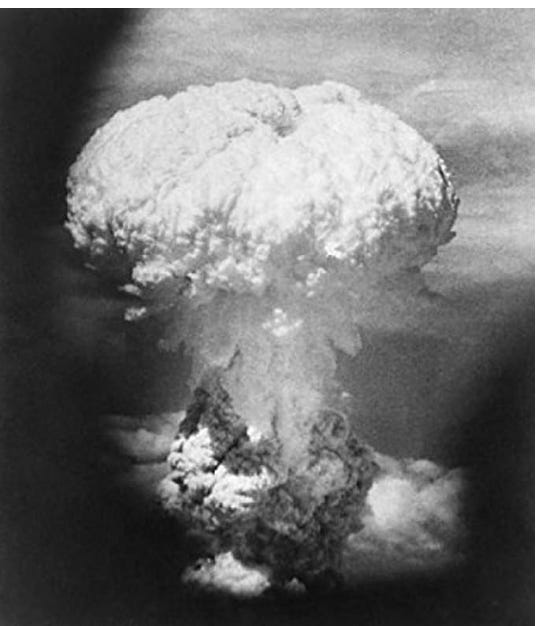
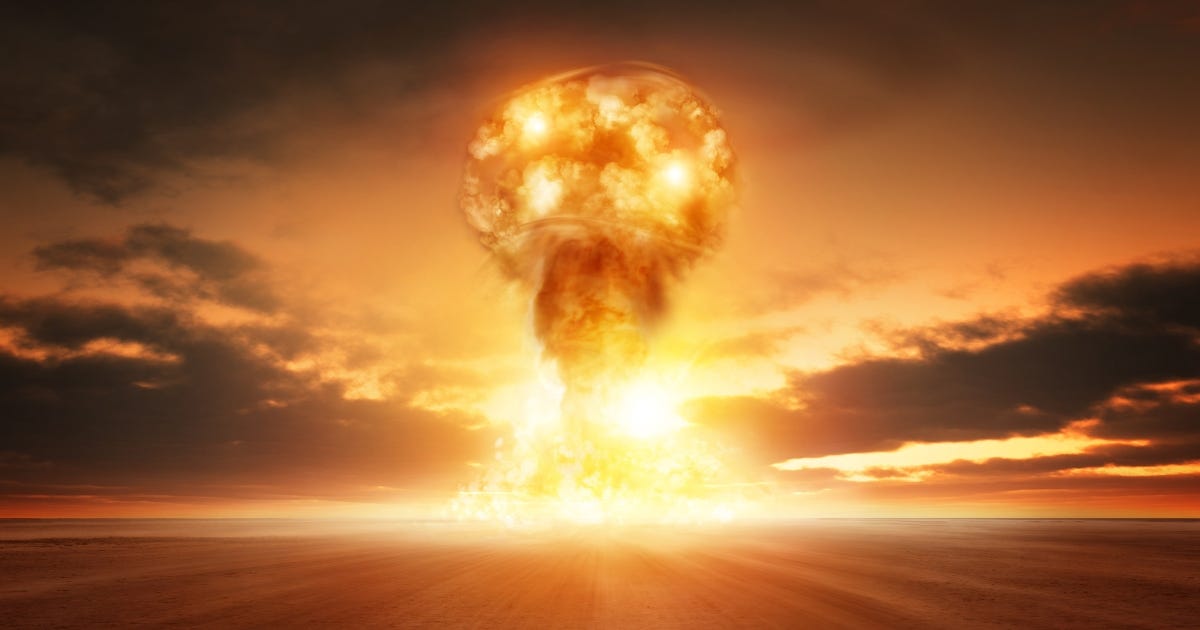
Will Trump take Levin’s advice and attack Iran with nuclear weapons?
It’s hard to wrap one’s mind around the prospect of a nuclear-armed nation—the only nation that has ever used nuclear weapons—using nuclear weapons on another nation because—in the judgement of the nuclear-armed nation—the other nation aspires to acquire nuclear weapons.
It reminds me of Clevinger’s trial in Catch-22. As Joseph Heller set it up:
Clevinger was a troublemaker and a wise guy. Lieutenant Scheisskopf knew that Clevinger might cause even more trouble if he wasn’t watched. Yesterday it was the cadet officers; tomorrow it might be the world. Clevinger had a mind, and Lieutenant Scheisskopf had noticed that people with minds tended to get pretty smart at times. Such men were dangerous, and even the new cadet officers whom Clevinger had helped into office were eager to give damning testimony against him. The case against Clevinger was open and shut. The only thing missing was something to charge him with.
Colonel: “You said that we couldn’t punish you.”
Clevinger: “I didn’t say you couldn’t punish me, sir.”
Colonel: “When?”
Clevinger: “When what, sir?”
Colonel: “Now you’re asking me questions again.”
Clevinger: “I’m sorry, sir. I’m afraid I don’t understand your question.”
Colonel: “When didn’t you say we couldn’t punish you? ... Now suppose you answer my question.”
Clevinger: “But how can I answer it?”
Colonel: “That’s another question you’re asking me.”
Clevinger: “I never said you couldn’t punish me.”
Colonel: “Now you’re telling us when you did say it. I’m asking you to tell us when you didn’t say it.”
Clevinger (taking a deep breath): “I always didn’t say you couldn’t punish me, sir.”
Colonel: “That’s much better, Mr. Clevinger, even though it’s a bare-faced lie. Didn’t you whisper that we couldn’t punish you to that other dirty son of a bitch we don’t like?”
I didn’t understand this passage when I read it forty years ago, but now I believe I get what Heller was trying to tell us about our world. Humans in positions of power become domineering, arbitrary, and even paranoid about others whom they suspect of challenging their authority.
Patriotism is invoked by commanders who never risk their own skins. The chaplain’s mild and gentle religious faith seems ineffectual, and is constantly tested by violent absurdity.
Protesting the insanity of bombing people while running the high risk of being obliterated by gun and cannon fire, Yossarian proclaims, “I’m not going to be killed so that you can say I was a good sport.”
President Truman justified the atomic bombing of Japan because of the Japanese attack on Pearl Harbor and because of Imperial Japan’s extremely aggressive invasions of twenty countries in which it committed massive war crimes such as the Rape of Nanking in 1937.
Iran, by contrast, hasn’t invaded anyone, but has itself been invaded and attacked three times since 1941.
Western media often harps on about Iran’s support of Hezbollah—a Shiite militia and paramilitary group that formed in response to the Israeli invasion of Lebanon during the Lebanese Civil War in 1982.
Iran’s support of Hezbollah is hardly grounds for attacking Iran with nuclear weapons. People who moralize about Iran’s support of Hezbollah should consider that the U.S. government has supported all manner of roguish proxy groups, including Abu Mohammad al-Jolani’s Al-Qaeda affiliate Jabhat al-Nusra after al-Jolani was released from a U.S. prison in Iraq for killing US servicemen with roadside bombs.
I don’t buy the assertion that Iran wishes to acquire nuclear weapons so that it can use them in an offensive attack against the US or Israel. I have seen no evidence—or any attempt to present evidence—that Iran is a suicidal actor for whom the principle of Mutually Assured Destruction (MAD) doesn’t apply. This assertion has no more credibility than George W. Bush’s 2002 assertion about the danger of Saddam Hussein.
Facing clear evidence of peril, we cannot wait for the final proof—the smoking gun—that could come in the form of a mushroom cloud.
Increasingly, President Trump and Secretary of War Hegseth remind me of Colonel Cathcart in Catch-22, who is more concerned about his personal power and image than in making good strategic decisions. He pretends to be concerned about his men while recklessly endangering them.
The Iranians should start thinking creatively about ways to give President Trump at least the appearance of a face-saving offramp. If they put him in a position in which backing off will be viewed as a humiliation, he may take Mark Levin’s malignant advice.
Trump’s recent behavior and impulsive statements—especially his F-bomb outburst on Easter Sunday—remind me of literature by Austrian psychologists Erich Fromm and Otto Kernberg about what they called malignant narcissism, which they considered the most dangerous and destructive personality type.
Especially alarming is Fromm’s description of the malignant narcissist’s potential for extreme aggression and cruelty when his grandiose self-image is threatened with humiliation. Such a scenario is likely to trigger rage that could result in enormously destructive actions.
Another frightening feature of malignant narcissism is that it may be accompanied by considerable charisma and personal magnetism. Masses of people may be seduced by the malignant narcissist and not realize they have been led astray until it’s too late.
In the case of Donald Trump, this would include me. To be sure, I knew he had narcissistic traits, but I thought he would channel these impulses into bombastic commercial enterprises and grandiose building projects.
I believed he was completely sincere when he repeatedly proclaimed he had no interest in dragging us into another war, and that he would use his vaunted art of the deal to negotiate constructive arrangements with our adversaries.
Man, was I wrong.
Copyright 2026 Focal Points

I seriously doubt the President will take Levin's advice. At no time has he threatened to do so. Besides, we can do irreparable damage to Iran without using nukes.