


Have you ever heard the Declaration of Independence read out loud?
You should. It’s the greatest break-up letter ever written.
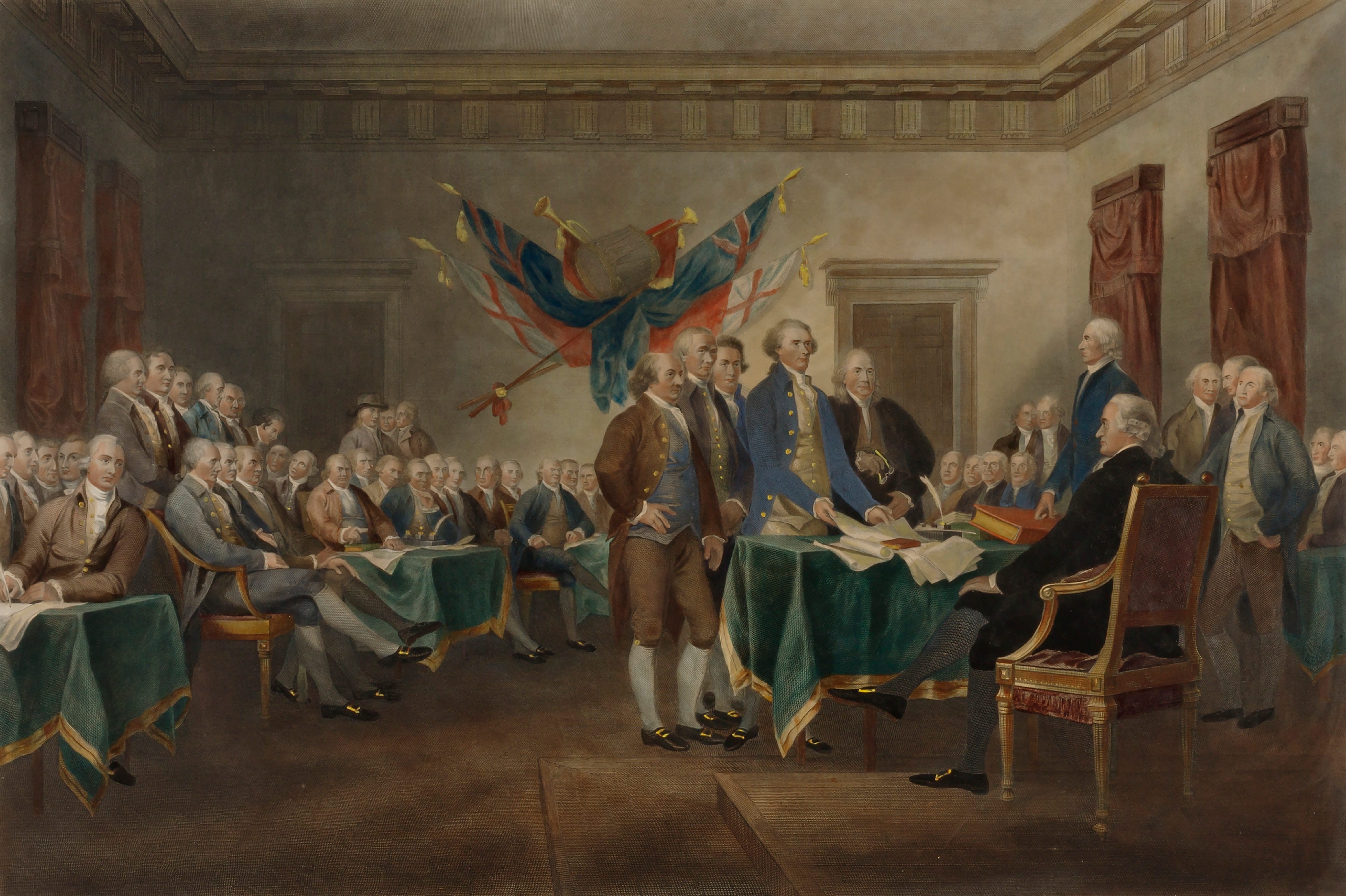
At just 33 years old, Thomas Jefferson, with cold moral clarity, told the British government to pound sand:
“Whenever any Form of Government becomes destructive of these ends [life, liberty, and the pursuit of happiness], it is the Right of the People to alter or to ABOLISH it.”
The power of that line isn’t just what it says. It’s how it’s said.
Jefferson wasn’t writing from a place of outrage. He was transmitting conviction — moral clarity delivered from a steady frame of mind.
It’s said Jefferson revised the Declaration of Independence with the help of Franklin and Adams dozens of times before it was finalized.
And that deliberate, cutting language paired with emotional steadiness is precisely why the words still land nearly 250 years later.
The following information is based on a report originally published by A Midwestern Doctor. Key details have been streamlined and editorialized for clarity and impact. Read the original report here.
Have you ever noticed that you can feel a writer’s inner state long before you consciously process their words?
Some writing carries clarity and calm, while some carries tension, bitterness, or fear—even when the facts are correct.
That emotional transmission isn’t accidental. It’s the internal state of the writer seeping out from the words and into the reader.
That’s the foundation of heart-centered writing.

Writing doesn’t just transmit information—it transmits emotional residue.
Unresolved trauma shapes how people communicate. It alters tone, framing, urgency, and aggression.
Many writers don’t realize that their internal emotional state is driving their message—regardless of the topic—and that their readers absorb it along with the ideas and information that they’ve expressed.
This is why “being right” when writing just isn’t enough.

Our trauma doesn’t disappear just because we have good intentions.
When emotional pain is embedded in a writer’s nervous system, it can leak into their work—creating anxiety, hostility, or despair that can transfer to the audience.
Even valuable truths can become harmful if they’re delivered through unresolved emotional charge.
Information can heal—or it can infect.
This is something both writers and readers should keep in mind.

This information comes from the work of medical researcher A Midwestern Doctor. For all the sources and details, read the full report below.
Heart Centered Writing

In healing professions, openness can actually matter more than technique.
Remaining emotionally open—especially when dealing with difficult people—changes outcomes for both healer and patient.
The same principle applies to communication.
An open heart transmits stability, even when the message is challenging or uncomfortable.

Much of alternative media fails here.
Content meant to “wake people up” often carries rage, despair, or obsession. That emotional state spreads to the audience, worsening mental and physical health rather than improving it.
Constant exposure to antagonistic media keeps the nervous system locked in stress.
That’s bad for all of us, regardless of which “side” you’re on.
Awareness without emotional regulation becomes another trap.

Mainstream media doesn’t just inform—it emotionally antagonizes.
Fear, outrage, and division aren’t side effects. They’re the product.
In this article, A Midwestern Doctor breaks down how this conditioning works—and why it’s so effective at keeping people tense, reactive, and controllable.
Why Are We Flooded With Outrage Producing News Stories?

And there’s a deeper layer here—how emotional states silently shape media, movements, and health.
Most people never notice it. And once you do, you can’t unsee it.
Don’t miss the full article from A Midwestern Doctor.
Heart Centered Writing
Did you know that psychological pain triggers the same reflex as physical pain? People close themselves off.
When humans are hurt, they harden emotionally.
But closed hearts don’t transmit healing, clarity, or courage. They transmit fear and paralysis. And we’re seeing a lot of that—right now.
Keeping the heart open—even under pressure—creates space for others to stay open too.
And the good news is that openness is contagious.

This isn’t just personal—it’s political, too.
Collective despair and emotional shutdown are tools of control.
Populations locked into fear, bitterness, or hopelessness don’t organize effectively and their movements aren’t sustained.
Emotional fragmentation neutralizes resistance—no force needed.
But open hearts? They’re harder to manipulate.

This pattern shows up clearly in activist spaces.
Groups formed with shared purpose often fracture once negativity dominates. Drama, infighting, and despair replace cohesion. When unity dissolves, progress stalls.
I’m sure you noticed it, too. Many groups formed out of protest to COVID-era mandates soon devolved into drama after mandates dropped and life went (sort of) back to normal.
Movements that remain heart-centered last longer and withstand external pressure.
Emotional tone determines durability.

Back to writing…
Readers usually respond not just to what is written—but to how it makes them feel.
Clarity, calm, and groundedness all create trust. So people return. Not because they’re addicted to outrage, but because the writing leaves them more stable than before they read it.
That emotional aftereffect matters far more than advertising and algorithms.

This framework explains why some voices calm you—and others leave you tense, angry, or drained.
The difference isn’t just ideas. It’s something beneath them.
A Midwestern Doctor’s full article is worth the read.
Heart Centered Writing
Doing things well beats doing things loudly. By far.
In medicine, the best practitioners rarely advertise. Their work spreads by word of mouth because quality speaks for itself.
And writing? It works the same way!
Depth, care, and precision build lasting influence—not volume or speed.
Quality scales better than noise.

High-quality work requires emotional availability.
Clinicians who do great work open themselves to patients.
Writers who do great work open themselves to readers.
That openness costs energy, time, and vulnerability—but it’s what makes the work meaningful.
Superficial output protects the creator, not the audience.

The doctors who truly excel aren’t perfect—but they share a pattern.
They don’t cut corners. They take extra time. They’re always refining their craft, even when no one is watching.
In this article, A Midwestern Doctor explores exactly what separates these practitioners from the rest—and why it matters far beyond medicine.
What Made Doctors Do the Right Thing During COVID-19?

Medicine and education both teach dependence.
Be healthy because a doctor says so, learn because an authority tells you what matters and how to learn it.
This produces compliance, not insight.
True learning happens when ideas are internalized, not recited.
Our modern systems train people to memorize, not understand.

Effective communication avoids jargon and abstraction.
Ideas land when they’re framed in ways people recognize in their own lives. And repetition from different angles can help concepts stick.
Insight emerges through connection, not scattered facts.
Understanding is felt before it’s verbalized.
Unfortunately, most public schools these days are drilling approved facts and skipping the connection.

Seeing multiple sides before taking a position reduces emotional reactivity.
It allows anticipation of objections and prevents brittle certainty.
This internal clarity lets communication remain calm—even when addressing controversial topics.
Calm is far more persuasive than the opposite.
Think of a time you were able to successfully communicate on a controversial topic. Was it heated? Were those involved reacting aggressively? Or did cool heads prevail?

If you’re a writer or simply trying to express your thoughts and ideas, perhaps technical precision shouldn’t be the highest priority.
Sometimes preserving the emotional integrity of a message matters more than polishing language to perfection.
Over-editing can strip meaning from writing, leaving it accurate but hollow.
Resonance matters.

Now more than ever, people are starving for meaning.
The material successes many strive for just don’t answer existential questions.
Modern life is disconnecting people from purpose, spirituality, and depth. And work that’s thoughtful and intentional becomes an antidote to that emptiness.
Mediocrity wastes something irreplaceable—time. And mediocrity in writing wastes the writer’s time as well as the reader’s.

Heart-centered communication builds trust, stability, and long-term impact.
It resists manipulation, fragmentation, and despair. And it leaves people better than it found them.
That’s the standard worth holding.
Isn’t efficient—but it’s durable. And it applies to writing as much as it does to medicine.
Doing fewer things well requires restraint. Volume-driven systems reward speed, not care. But quality protects both the creator and the recipient from burnout, harm, and emptiness.

Clarity doesn’t come from louder voices or sharper attacks—it comes from steadiness.
When people stay open, do their work with care, and refuse to transmit fear or bitterness, something shifts.
Healing becomes possible. Understanding spreads. Trust rebuilds.
The quality of our work matters—no matter what it is.
Our presence matters—no matter what we’re doing.
And choosing to act from an open heart, especially right now, is how real change begins.

Thanks for reading! This information was based on a report originally published by A Midwestern Doctor. Key details were streamlined and editorialized for clarity and impact. Read the original report here.
Heart Centered Writing
For a deeper dive into what modern medicine has overlooked—or intentionally buried—check out these other eye-opening reports by A Midwestern Doctor:
The Evidence DMSO Could Save Millions From Brain and Spinal Injury
The Forgotten Cancer Cure Hiding in Plain Sight
What’s The Healthiest Water To Drink?
While you’re at it, give A Midwestern Doctor a follow. No one brings more research, clinical insight, or historical context when it comes to exposing the health myths we’ve all been fed. This is easily one of the most valuable accounts you’ll ever follow.

If you haven’t subscribed to this Substack yet, take a moment to read what some of the most powerful voices in the medical freedom/truth movement have to say:
“The Vigilant Fox has been putting in a lot of work to create a news platform that shares the stories we want to hear about and brings attention to the most important things to know about.”
– A Midwestern Doctor, The Forgotten Side of Medicine
“The Vigilant Fox absolutely is on top of things. We must support our fighters, and the Fox is fighting with truth.”
– Tom Renz, Tom Renz’s Newsletter
“Excellent capture of key video presentations on evolving pandemic science.”
– Peter A. McCullough, MD, MPH, FOCAL POINTS (Courageous Discourse)

Thank you for an insightful article - these principles and concepts were, at one time, taught in English Composition classes from senior year high school through MA level.
This powerful statement should be front and centre in the UK, Australia and Germany today.
“Whenever any Form of Government becomes destructive of these ends [life, liberty, and the pursuit of happiness], it is the Right of the People to alter or to ABOLISH it.”