


NOTE: Thank you for supporting this sponsored message, which helps keep this website running and brings you uncensored news.
I woke up this morning and attended church, just like I do every Sunday, to worship God, to hear the Word, to pray, to stay connected to my Creator.
But recently, I started wondering about another layer:
What is my weekly church attendance doing beyond worship and faith — for me, my family, and the people around me?
Is it just a weekly habit? Or does showing up every Sunday produce measurable effects that most people never think about?
So I started doing some digging into the research. What I found was staggering:
What happens when you attend church weekly?
Ten years ago, Harvard published a study in JAMA looking at over 89,000 women.
Researchers compared women who attended church at least once a week with those who rarely or never attended.
They found that women who attended church once a week or more were 84% less likely to commit suicide.
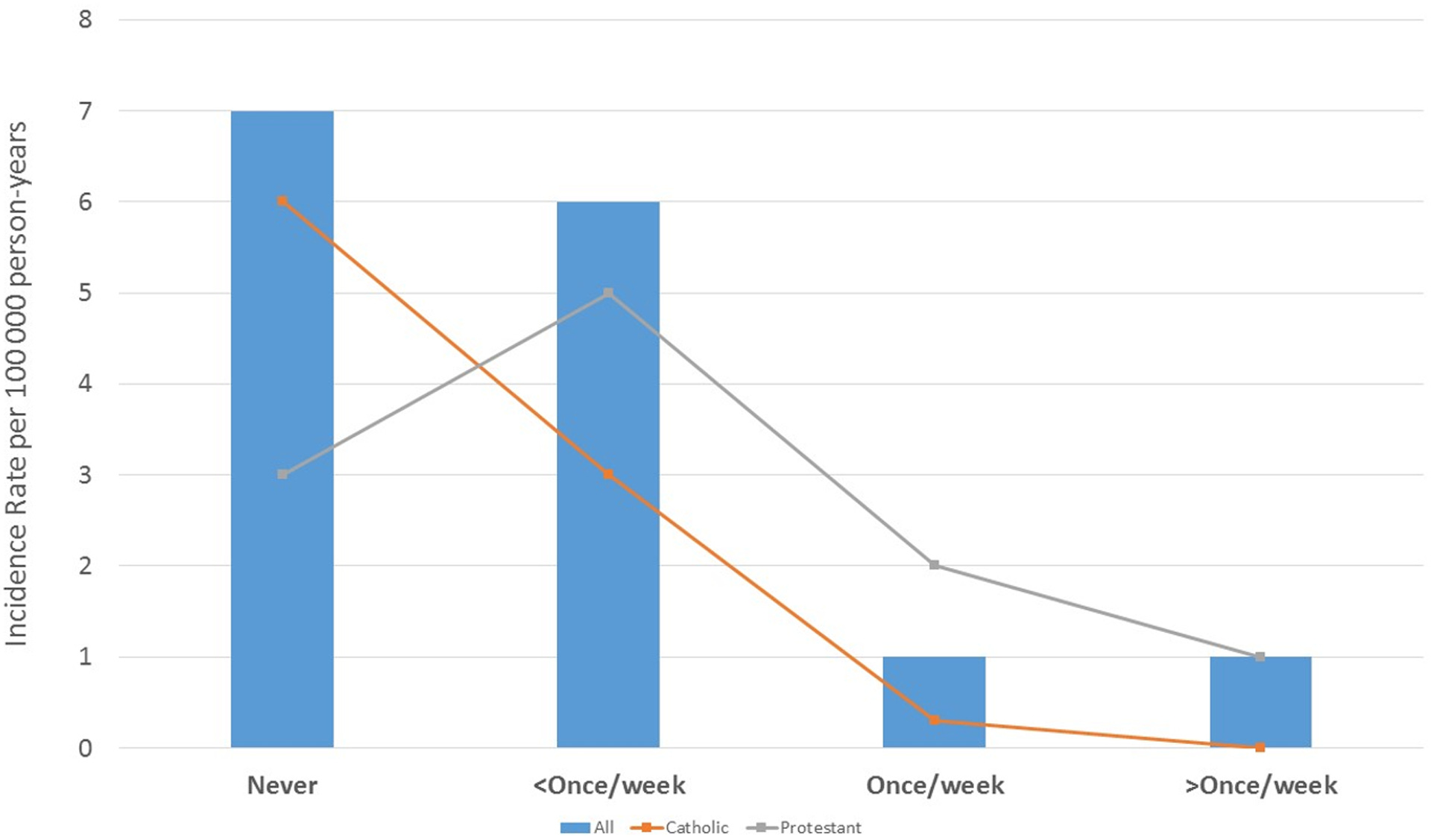
Similarly, in 2020, Harvard conducted another study on deaths of despair (suicide, overdose, and alcohol-related deaths) among more than 100,000 male and female healthcare professionals.
Researchers found: “… attendance at religious services at least once per week was associated with a 68% lower hazard of death from despair among women and a 33% lower hazard among men compared with never attendance.

What about longevity? In 2016, Harvard School of Public Health published yet another study.
Researchers found that Women who attended services more than once weekly had a 33% lower risk of death from any cause compared with women who never attended.
The results were so astounding that Time Magazine wrote this article about it:
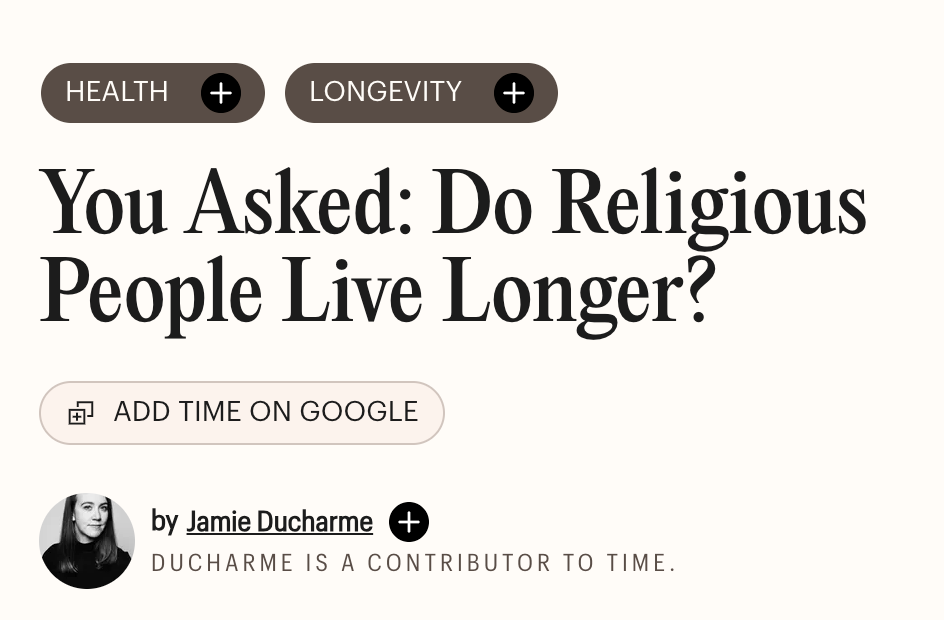
The answer to their headline is a resounding yes.
What happens when you read the Bible four times a week?
In 2009, Researchers at the Center for Bible Engagement analyzed data from more than 40,000 people to examine how Scripture engagement correlated with behavior.
They compared U.S. adults who engaged with Scripture 0–3 times per week with those who engaged 4 or more times per week.
The results were striking.
Compared with less frequent readers, those who engaged with Scripture 4+ times per week were:
• 57% less likely to get drunk
• 51% less likely to view pornography
• 68% less likely to have sex outside marriage
• 74% less likely to gamble
They also reported significantly higher levels of spiritual engagement:
• 228% more likely to share their faith with others
• 407% more likely to disciple others
One of the most surprising findings from this analysis was the difference between people who engaged with Scripture 2–3 times per week and those who did so 4 or more times.
There were measurable improvements among those who engaged with Scripture 2–3 times per week compared with those who did so 0–1 times per week.
But once people crossed the four-times-per-week threshold, the decline in destructive behaviors became dramatically more pronounced. (See the far-right section of the chart.)

What happens to your children when you make God the center of your life?
The benefits of a life centered around God become even clearer when researchers turn their attention to children. Two studies, in particular, stood out to me:
1.) The Harvard Religious Upbringing Study
Harvard researchers followed more than 5,000 children into adulthood to examine whether regular religious participation during childhood was associated with long-term outcomes later in life.
They compared children who attended religious services weekly with those who never attended.
The children who attended services weekly were:
• 18% more likely to report high life satisfaction as adults
• 29% more likely to volunteer regularly
• 33% less likely to use illicit drugs
• 40% less likely to become sexually active at an early age
• 12% less likely to experience symptoms of depression
Researchers concluded that regular religious participation during childhood predicted healthier outcomes across multiple areas of adult life.

That same Harvard study also looked at the long-term outcomes of children who regularly prayed or meditated compared with those who rarely did. The findings followed them into adulthood.
Children who frequently prayed or meditated were:
• 47% more likely to report a strong sense of purpose in life
• 38% more likely to volunteer in their communities
• 30% less likely to use illicit drugs
• 30% less likely to become sexually active at an early age
• 40% less likely to contract a sexually transmitted infection
2.) The National Study of Youth and Religion
Researchers followed thousands of teenagers into adulthood to identify the strongest predictors of whether children retain their faith later in life.
The single biggest factor was parents.
Researchers found that when parents considered their faith highly important and practiced it consistently, 82% of their children remained highly religious as adults.
By contrast, when parents viewed religion as unimportant, only 1% of their children remained highly religious as adults.
In other words, children raised in highly committed religious homes were roughly 82 times more likely to remain highly religious themselves.

Summary
As you can see, weekly church attendance, prayer, and regular Bible reading have effects that extend far beyond your personal relationship with God.
The research shows it influences everything from your ability to resist temptation, finding purpose, and raising children who thrive later in life.
Taken together, these studies paint a remarkably consistent picture:
The people who practice their faith most consistently — with purpose and devotion to God — tend to experience more fulfilling lives, not only for themselves, but for their children as well.
“The Bible is God’s Word of love to each one of us.”
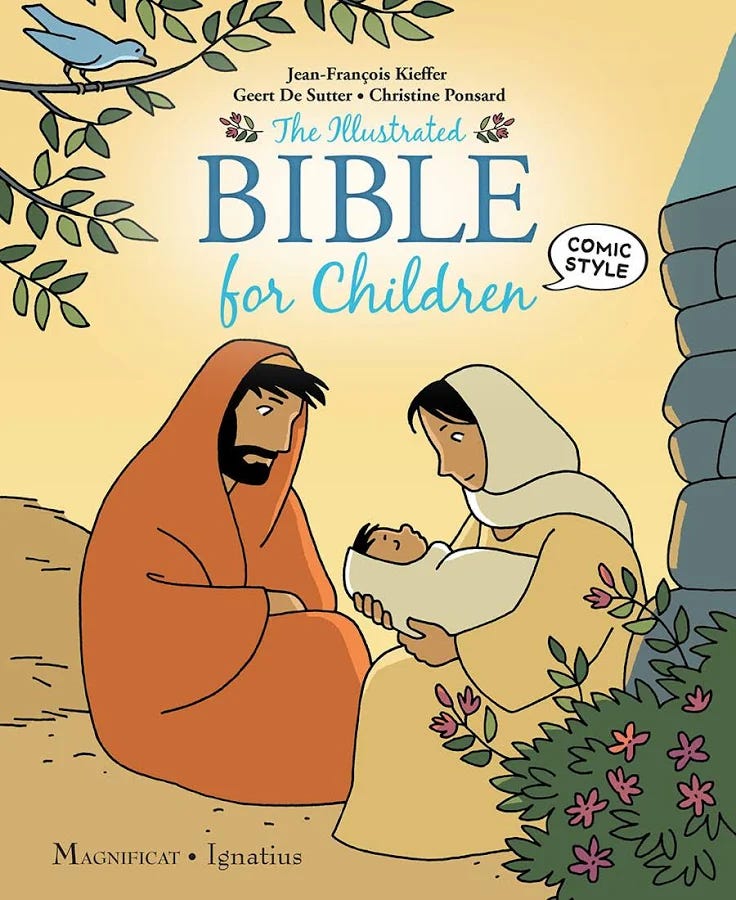
The following words were written as the introduction to a children’s Bible presented in comic book form.
Yet few things I’ve read capture the heart of the Bible more clearly:
Did you know that, in order to grow, a baby needs cuddles and words as much as he needs milk? He needs his mommy and daddy to soothe him with sweet words, with words of love. No one can live without hearing that he is loved and wanted.
The Bible is God’s Word of love to each one of us.
Through all the great stories in the Bible, God speaks to you—directly to you. In the secret of your heart, he tells you that you are his beloved child, that you are unique and precious. He wants you to live and to be happy, along with all men, women, and children in the world. To make himself known to us, he became the friend of Abraham, his children, and his children’s children. He spoke through his prophets to remind us of his love. He sent his Son, Jesus, into the world to reveal his infinite mercy. If you learn to know Jesus, to love him, and to love as he loves, then you will know God. You cannot see him with your eyes, but you can welcome him into your heart. Then you will grow in the joy of the children of God!
— Sophie Cluzel
The easy way to turn Bible reading from an aspiration into a daily habit.
Most Christians already know they should read the Bible. They don’t need another lecture. They don’t need another reminder.
What they need is a system that helps them show up consistently enough for the habit to take root.
That’s why I find the Orange Bible app so compelling. And full transparency, it’s a sponsor of this newsletter.
At first, the idea sounds almost ridiculous: a Bible app that rewards you with Bitcoin for reading Scripture.
Most people immediately focus on the Bitcoin. I don’t think that’s the interesting part.
The interesting part is that it solves one of the biggest obstacles to spiritual growth: consistency.
The app provides a daily reading plan, tracks your progress, builds streaks, and creates momentum. Instead of wondering where to start or how much to read, you simply open the app and begin.
Every day you complete your reading, or simply listen through the audiobook-style option, you earn Bitcoin — not enough to change your life financially. But enough to reinforce a habit.
Think about how many apps today are designed to keep you scrolling, distracted, and consuming things that add little value to your life.
The Orange Bible app uses some of those same techniques — but for something that actually strengthens your faith and improves your life.
The biggest reward isn’t really Bitcoin. It’s the Bible-reading habit. Bitcoin is simply the mechanism that helps create the habit.
Over time, what starts as a reminder becomes a routine. The routine becomes a habit. And the person who once struggled to open their Bible becomes the person who naturally spends time in God’s Word every day.
Along the way, you develop a stronger relationship with God, a stronger foundation for your family, and a deeper understanding of Scripture.
And yes, a little Bitcoin along the way.
If you’ve been telling yourself for months — or years — that you need to spend more time reading Scripture, this may be the most practical place to start.
For a deeper look at how the app works and the story behind why it was created, watch Maria Zeee’s interview with Pastor Allen and Jonathan Rose.

Available now on iOS. Android soon.
I was with you until the bitcoin part. Maybe I don't understand crypto, but it's like the stock market. It's gambling. You shouldn't need to be paid to read the Bible. I feel like that's not doing it for the right reasons.
Thoughtful readings of the Bible on a daily basis help build good character if we are influenced by what we read. If we don't follow the good things we read we can become hypocritical or calloused. I struggle with that. "16 All scripture is given by inspiration of God, and is profitable for doctrine, for reproof, for correction, for instruction in righteousness:" https://www.biblegateway.com/passage/?search=2%20Timothy%203&version=KJV