

The following information is based on a report originally published by A Midwestern Doctor. Key details have been streamlined and editorialized for clarity and impact. Read the original report here.
Big Pharma is “terrified” of Vitamin D, and Dr. Pierre Kory says he could spend a whole hour on this topic.
Why so scared?
Because “It threatens the DISEASE MODEL.”
A meta-analysis out of Italy found what happens when people take Vitamin D, and the results are staggering:
Looking at data from 19 different studies and 1.26 million individuals, the meta-analysis revealed:
• Vitamin D showed about a 60% effectiveness against the incidence of COVID-19 in randomized control trials.
• Vitamin D showed about 40-50% effectiveness in reducing the incidence of COVID-19 in observational studies.
• For preventing severe COVID-19 cases requiring ICU care, vitamin D supplementation was about 70% effective.
We didn’t need to lock ourselves inside for years, live in fear, and vilify our neighbors for not wearing a mask.
That was literally the worst thing we could have done.
All we ever needed was to go outside, get sunshine, and raise our vitamin D, and everything would have been so much better.
But the sunshine story goes far beyond COVID. You think you’re doing your health a favor by avoiding the sun?
The data tells a very different story, and it starts with 29,518 women who did exactly that.
For decades, Americans were told to treat the sun like poison.
Avoid it. Block it. Fear it. Wear sunscreen every day, everywhere, even when it’s cloudy.
But sunlight isn’t just a lifestyle preference.
It’s a biological necessity.
And the campaign against it may be one of the most successful and profitable fear campaigns in modern medicine.

Their message is simple:
Sunlight causes skin cancer.
Skin cancer can kill you.
Therefore, avoid the sun.
That sounds reasonable until you ask one question: What kind of skin cancer are we talking about?
Because “skin cancer” isn’t just one thing.
And with that simple question, the narrative starts to fall apart.

This information comes from the work of medical researcher A Midwestern Doctor. For all the sources and details, read the full report below.
Dermatology’s Crusade Against The Sun

The term “skin cancer” gets used as if it describes a single disease with a single risk profile.
But it doesn’t.
Basal cell carcinoma, squamous cell carcinoma, and melanoma are all very different diseases.
Different frequency.
Different danger.
Different relationship to sunlight.
But the public hears one terrifying phrase: skin cancer.

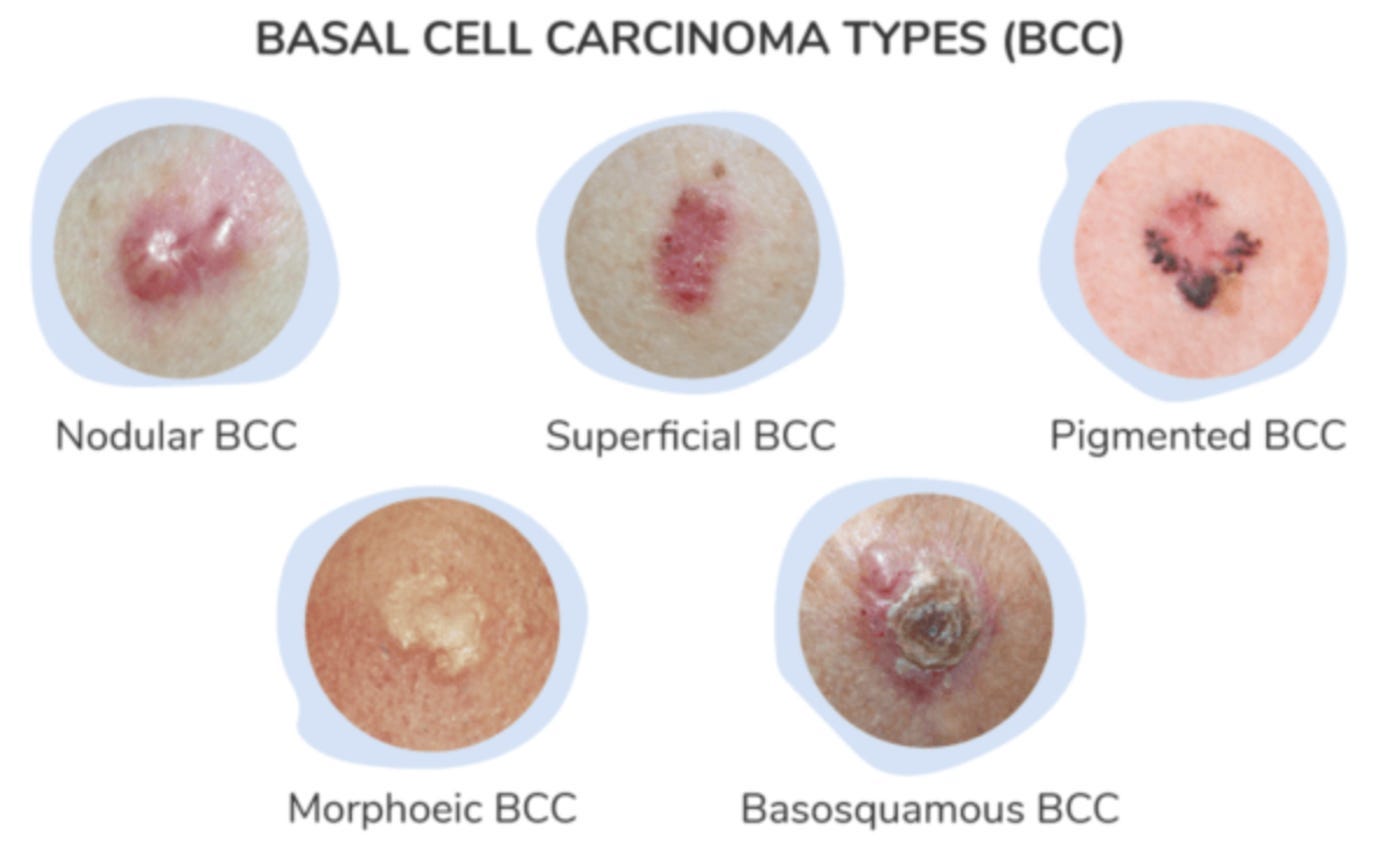
Basal cell carcinoma is the most common skin cancer.
It makes up roughly 80% of cases, with about 2.64 million Americans diagnosed each year.
But it rarely metastasizes and has a near 0% fatality rate.
That doesn’t mean it should be ignored.
It means it should not be used to make sunlight sound like a death sentence.
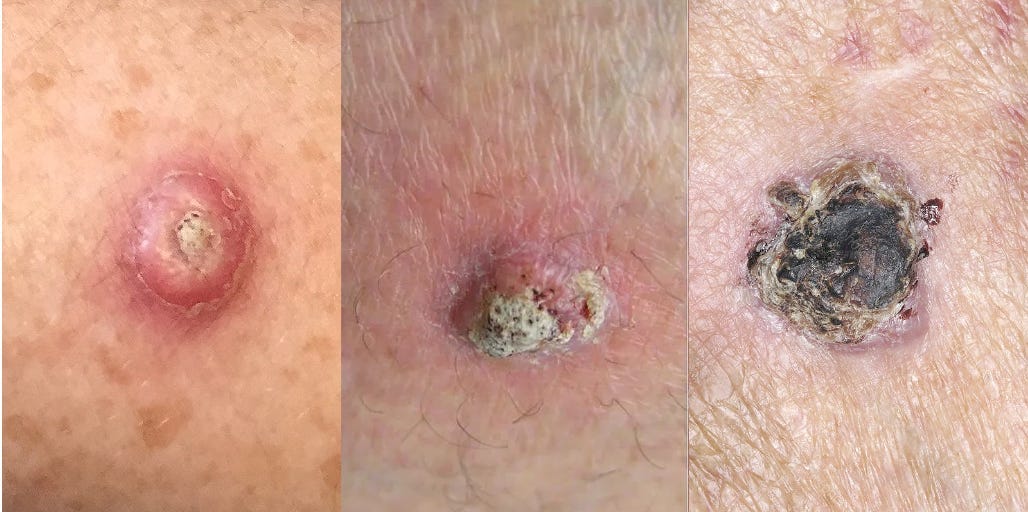
Squamous cell carcinoma is more serious.
It can metastasize, and once it does, survival drops sharply.
But when removed before metastasis, survival is around 99%. Overall survival is roughly 95%.
About 2,000 Americans die from SCC each year.
So yes, it matters.
But it still doesn’t justify treating the sun itself as the enemy.
The trick is simple:
Use basal cell’s frequency.
Use melanoma’s fear.
Use sunlight’s link to some non-melanoma cancers.
Then merge them all into one phrase: “Skin cancer.”
That phrase does a lot of work.

The full article from A Midwestern Doctor shows clearly how that one label became the foundation for an entire industry.
Dermatology’s Crusade Against The Sun
Melanoma is the scary one.
It accounts for only about 1% of skin cancer diagnoses, but it causes most skin cancer deaths.
That is why suspicious moles and changing lesions should be taken seriously.
But here is the problem:
Melanoma doesn’t fit neatly into the “sunlight causes skin cancer” story.
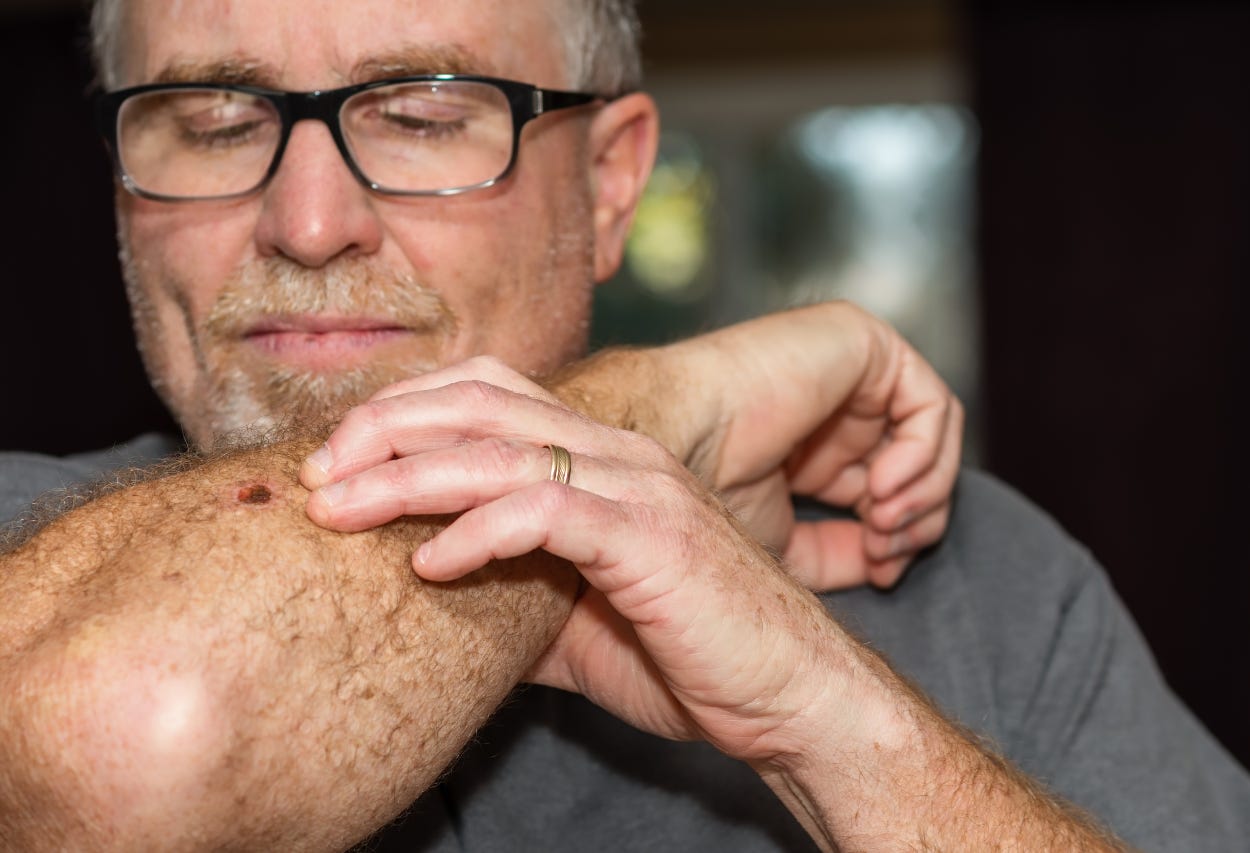
It turns out, patients with solar elastosis—a marker of sun exposure—were reportedly 60% less likely to die from melanoma.
Melanoma often appears on areas of the body with minimal sun exposure.
Outdoor workers, despite far more UV exposure, have lower melanoma rates than indoor workers.
That should at least make people pause before slathering on gobs of sunscreen.
Then there is sunlight itself.
A 20-year prospective study of 29,518 Swedish women found that sunlight avoiders were 60% more likely to die overall.
Compared to women with the highest sun exposure, they were 130% more likely to die.
That’s not a small signal.
That’s a major public health contradiction.

One of the most stunning findings is that smokers who got more sunlight had a similar mortality risk to non-smokers who avoided the sun.
That doesn’t mean smoking is safe.
It means sunlight exposure was so strongly associated with survival that avoiding it may have carried a risk comparable to one of the most notorious health risks in the world.

The biggest benefit appeared to be cardiovascular.
Heart disease kills far more people than skin cancer—so this matters.
The tradeoff should be obvious.
If avoiding sunlight slightly reduces some skin cancer risk but increases overall mortality, cardiovascular risk, depression, circadian disruption, and vitamin D deficiency, that is not prevention.
That is bad math.

Sunlight isn’t just “vitamin D.”
Natural light affects nitric oxide, circulation, mood, mitochondrial signaling, sleep cycles, hormones, immune function, and seasonal affective disorder.
This is why people instinctively feel better in the sun.
The body is not confused.
But the medical messaging might be.

For decades, the public was trained to believe the sun was the danger.
But what if the real danger was the advice to avoid it?
A Midwestern Doctor’s article makes a disturbing case that one of the cheapest health tools on earth was turned into a villain—because villains create markets.
Dermatology’s Crusade Against The Sun
A 2023 UK study of more than 470,000 people found that frequent sunscreen use was associated with a 1.9-to-3.9-fold increased risk across four skin cancers studied.
Association is not causation. But that’s exactly the point.
The authors of that study reportedly treated the result as a “paradox.”
Instead of asking whether the model was wrong, they suggested sunscreen users may be getting more sun, applying it poorly, or using it after a relevant diagnosis.
Then they still concluded the data showed the importance of adequate sunscreen use.
That’s how a narrative protects itself.
There’s also the growing problem of artificial light.
A mouse study designed to examine malignant melanoma revealed that mice kept under simulated daylight developed tumors more slowly and less extensively than mice kept under cool white fluorescent light.
Maybe sunlight isn’t the only variable.
Maybe losing natural light matters too.

In the early 1980s, dermatology was not the prestige specialty it is today.
Dermatologists were often dismissed as nothing more than “pimple poppers.”
Today, dermatology is one of the most desirable specialties in medicine: high pay, lower stress, enormous procedure volume.
Clearly something changed. What was it?
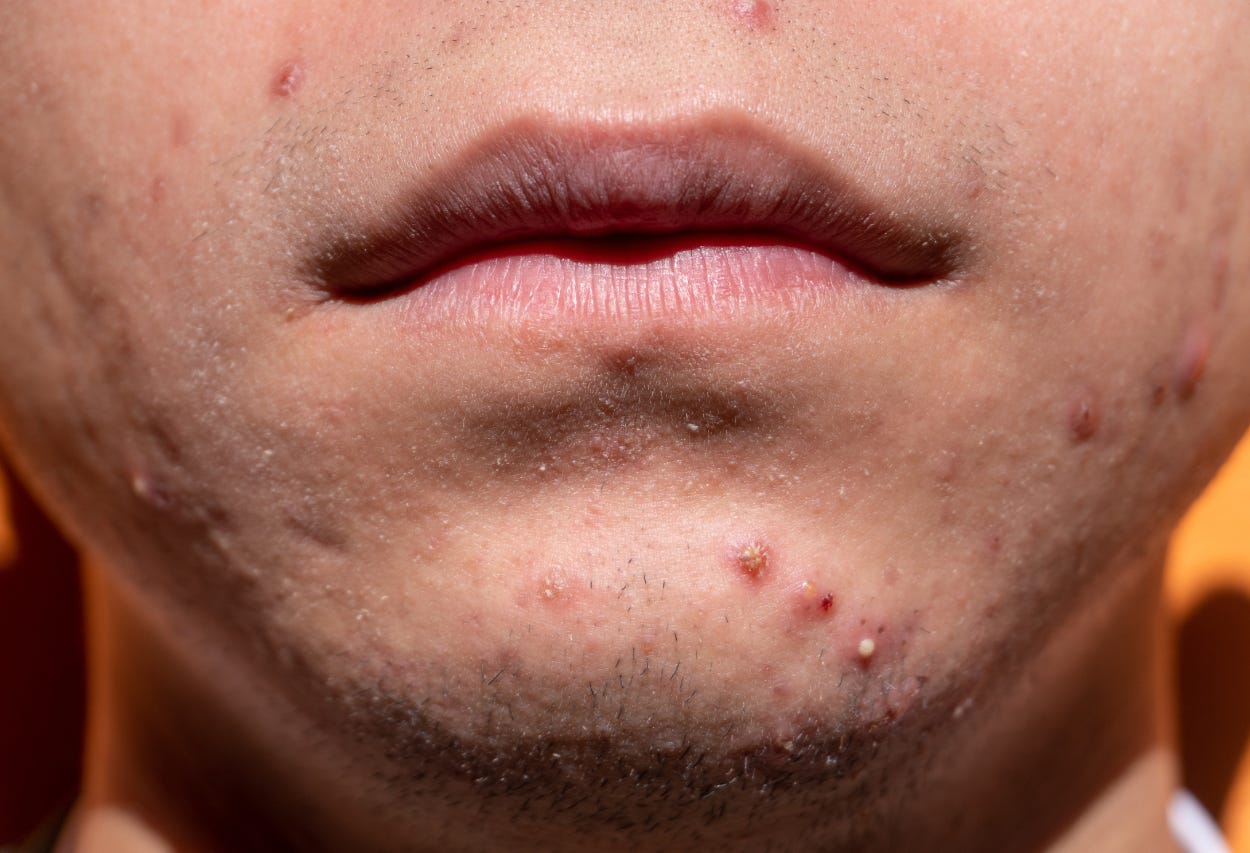
According to dermatologist David J. Elpern, the American Academy of Dermatology assessed its members over $2 million in the early 1980s to hire a prominent New York advertising agency.
The strategy was to rebrand dermatologists as skin cancer experts.
Not just acne fighters and rash experts.
But cancer fighters.
That changed everything.
The free National Skin Cancer Screening Day became the perfect public funnel.
Screen people.
Find lesions.
Biopsy more.
Diagnose more.
Cut more.
Repeat.
And once the public was taught that every suspicious spot could be cancer, anxiety became the engine.
Fear drove demand.
Demand drove procedures.
Procedures drove revenue.

The most profitable narratives usually have three parts:
A terrifying enemy.
A screening ritual.
A procedure that appears to save you.
Dermatology found all three.

A Midwestern Doctor’s research lays it all out and shows how “sun safety” became less about health and more about a business model.
Dermatology’s Crusade Against The Sun
Mohs surgery became a major part of that machine.
It’s often promoted as a gold standard because it can remove cancer precisely while sparing healthy tissue.
Sometimes, that’s true and when it is, it is very valuable.
But it also overused.
Among Medicare beneficiaries, Mohs surgery use reportedly rose 700% from 1992 to 2009.
By 2012, over $2 billion was paid out for Mohs surgeries.
That’s huge.

Private equity then entered the field.
Dermatology practices were acquired. Profit pressure increased. Non-physician providers were used to scale the model.
And concerns about misdiagnosis, over-treatment, and vulnerable nursing home patients being targeted for procedures grew.
Because it was no longer just medicine.
No one is suggesting that you ignore suspicious skin changes.
Melanoma can indeed be deadly. Changing moles, irregular borders, multiple colors, rapid growth, bleeding, or non-healing lesions deserve real evaluation.
The point is not “never see a dermatologist.”
The point is not to confuse legitimate care with an industry-wide fear campaign.
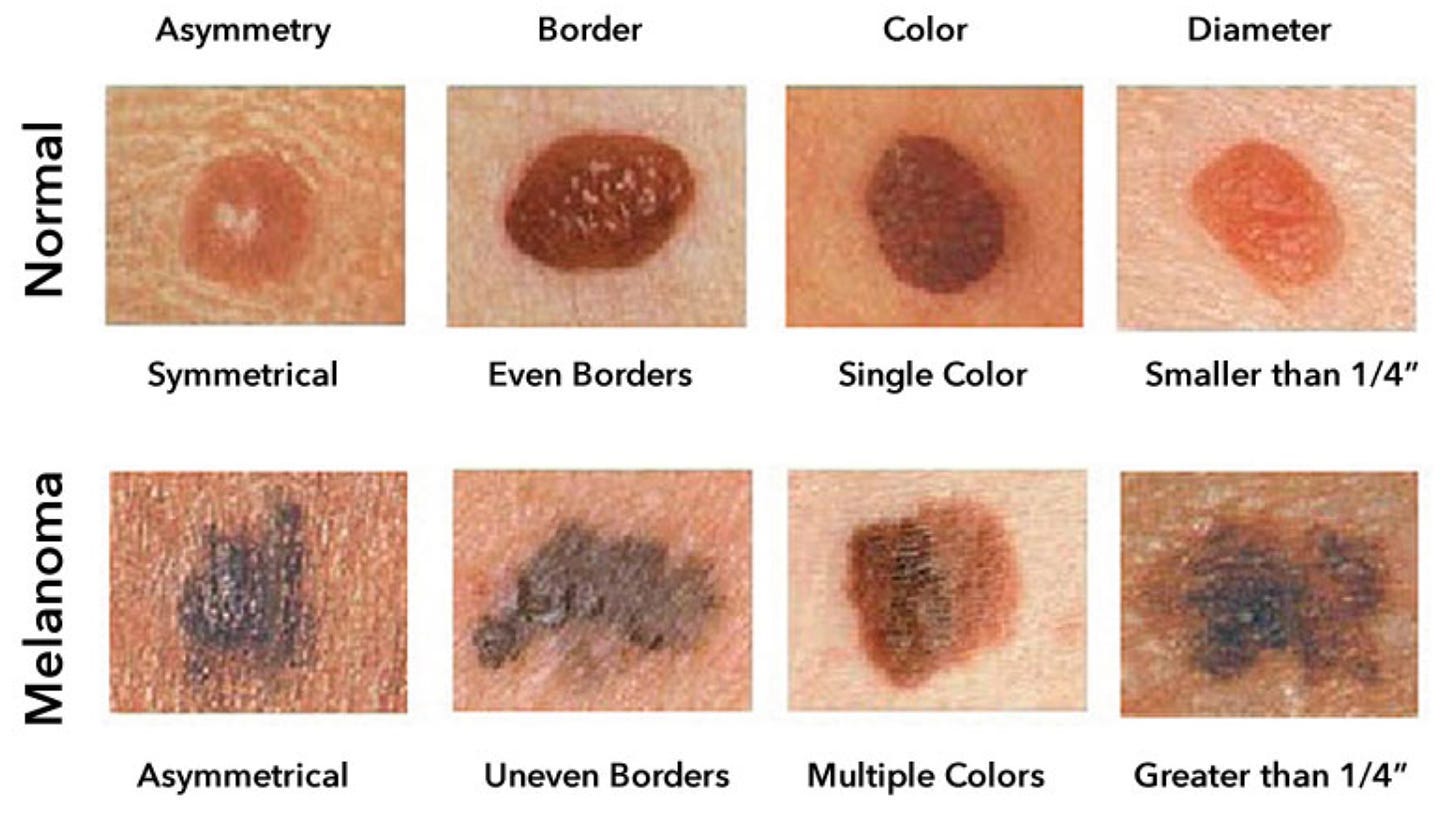
The sun was never our enemy.
Reckless burning is bad. Suspicious lesions matter. Some cancers need urgent removal.
But sunlight itself is one of the oldest, cheapest, most essential inputs for human health.
A sane medical system would teach people how to use it wisely.
A corrupted one teaches them to fear it—then sells them the solution.

Thanks for reading! This information was based on a report originally published by A Midwestern Doctor. Key details were streamlined and editorialized for clarity and impact. Read the original report here.
Dermatology’s Crusade Against The Sun
For a deeper dive into what modern medicine has overlooked—or intentionally buried—check out these other eye-opening reports by A Midwestern Doctor:
We Now Know How The Government Lied About the COVID Vaccines
How DMSO Heals The Nerves & Eliminates Pain
What’s The Healthiest Water To Drink?

While you’re at it, give A Midwestern Doctor a follow. No one brings more research, clinical insight, or historical context when it comes to exposing the health myths we’ve all been fed. This is easily one of the most valuable accounts you’ll ever follow.
If you haven’t subscribed to this Substack yet, take a moment to read what some of the most powerful voices in the medical freedom/truth movement have to say:
“The Vigilant Fox has been putting in a lot of work to create a news platform that shares the stories we want to hear about and brings attention to the most important things to know about. If you want a daily newsfeed in alignment with our ...”
– A Midwestern Doctor, The Forgotten Side of Medicine
“The Vigilant Fox absolutely is on top of things. We must support our fighters, and the Fox is fighting with truth.”
– Tom Renz, Tom Renz’s Newsletter
“Excellent capture of key video presentations on evolving pandemic science.”
– Peter A. McCullough, MD, MPH, FOCAL POINTS (Courageous Discourse)

In my opinion this article UNFAIRLY vililfies the dermatologists who specialized in Mohs surgery. The REAL VILLAINS are the Medical Associations who allow Medical Schools to keep providing training in this field, even though it is overcrowded. Some of the best students are encouraged to specialize in Mohs, and only find out after training, that "private equity" is gobbling up practices and pushing their hired derms and Mohs surgeons to find cancer. Reimbursementfor Mohs procedures has decreased in the last eight or so years. Where the MODEL FAILS is Private equity. It should NOT be allowed in Medicine, (nor in Housing). It is model that runs on cutting costs, pushing the doctors to meet certain "production" goals, and removes them if they don't.
A lucrative area you might want to look at is the reimbursement for Colonoscopies, which has been a cash cow for over 30 years.
I take astazanthin and have cut out seed oils, replaced with MCT, omega 3, olive oil, avocado.
Also do a daily 10,000 D3 with 100 K2. Outside a lot. Rarely burn..see my derm doc for yearly screening. He says "Nice seeing you..now go away!" But, I was an OR Nurse for 35+ yrs and saw firsthand how awful melanoma can be..