


The following information is based on a report originally published by A Midwestern Doctor. Key details have been streamlined and editorialized for clarity and impact. Read the original report here.
The world’s second most published critical care doctor says they’ve been lying to you about the sun for decades.
Dr. Paul Marik says there’s no reason to fear the sun; you should embrace it.
Because when you get adequate levels of vitamin D, your risk of cancer goes down, depression symptoms alleviate, and your immune system functions far better.
What about sunscreens? Dr. Marik advises against it because “it defeats the purpose.”
“There’s some data that sunscreens increase your risk of melanoma — paradoxically.”
Similar to how Big Pharma doesn’t like the “I drug” (Ivermectin) for treating COVID-19, Dr. Marik explained they also don’t like Vitamin D for general health and well-being.
Why? Because if you are in good health and devoid of chronic disease, there’s less money to be made.
Big Pharma played us. They propagandized the masses into fearing an essential component of human life.
Here’s what they don’t want you to know about the sun vs. artificial light—and what happens when your body is cut off from natural light.
The further north humans migrated away from the equator—and away from the sun—the lighter their skin became.
That’s not cosmetic. It’s a survival adaptation.
The human body, recognizing it wasn’t capturing enough light, made itself more transparent to capture whatever remained.
We evolved to need light the way we need food.
But in our modern lives, we commute in sealed cars, work 8 hour shifts under fluorescent lights, and go home to screens in the comfort of our artificially lit homes.
And we wonder why we’re sick.

In a 20-year study following 29,518 women, researchers found that those who avoided the sun were 60% more likely to die—with heart disease showing the greatest mortality difference.
A separate large study found that high solar UVB exposure halved one’s risk of both breast and prostate cancer.
The data is there. And it’s been available for decades. But almost no one talks about it.
Why? Because no one profits from sunlight.

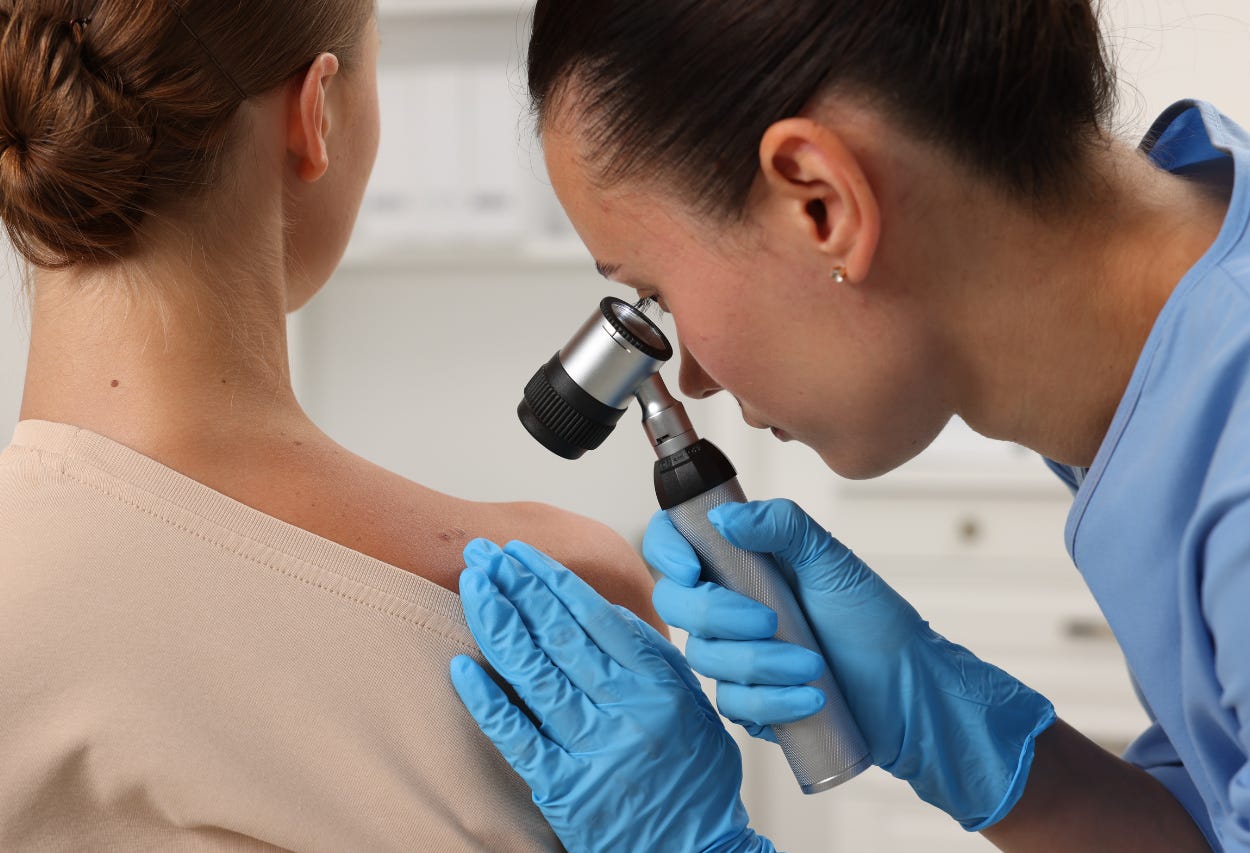
Dermatology was once one of the least desirable specialties in medicine.
Then it rebranded itself as a cancer-fighting field, convinced the public that all sun exposure was dangerous, and turned routine skin lesion removal—often treating benign conditions that would never kill anyone—into one of medicine’s most lucrative procedures.
Billions are now spent every year on skin cancer.
But the death rate has barely moved.
Meanwhile, it’s actually a lack of sunlight that causes the fatal skin cancers we all fear.
This information comes from the work of medical researcher A Midwestern Doctor. For all the sources and details, read the full report below.
Natural Light is An Essential Nutrient

Vitamin D is where most people’s understanding of sunlight begins and ends.
But that’s not even close to the full story.
Let’s dig in and open our eyes.

Inside every living cell, something remarkable is happening.
Cells emit extremely faint photons—light, essentially, in the ultraviolet range—that they use to communicate with neighboring cells, coordinate growth, and regulate behavior throughout the body.
It’s incredible.
Alexander Gurwitsch discovered this in 1923 and called it “mitogenic radiation.”
Here’s the part that matters: carcinogenic compounds, when tested, significantly disrupt these biophoton emissions. Compounds that don’t disrupt them aren’t carcinogenic.
That means disrupting your internal light communication is a working definition of disease.
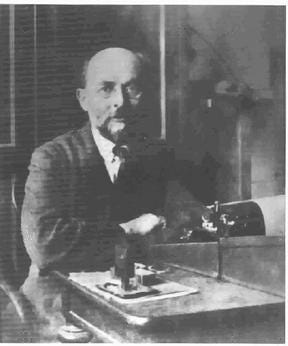
Gurwitsch took it even further.
He discovered that blood normally emits mitogenic radiation—but in cancer patients, it goes silent.
Using this principle, the hospital where he worked could accurately detect cancer in patients simply by measuring whether their blood had lost its light emissions.
A blood test for cancer. Powered by light.
In the 1930s!
In 1927, a young man named John Nash Ott began experimenting with time-lapse photography. And he got very good at it. So good, in fact, that Disney hired him.
Ott’s footage appeared in major motion pictures. He was in high demand for decades—in part because so few others could pull off what he could do.
But something kept distracting him from his commercial work.
The plants he was filming under controlled artificial lighting for months at a time were behaving strangely.
And the patterns were too consistent to be coincidence.
Ott would follow that thread for the rest of his life.
Ott discovered that standard glass filters out the UV light many plants depend on.
When he amplified UV instead—placing aluminum foil beneath squash plants to reflect it back upward—their yield increased fivefold. Both viral and insect infestations disappeared.
He found that light color controlled whether a pumpkin grew male or female flowers.
Pink fluorescent: all male flowers. Daylight-white fluorescent: all female.
Same seeds. Same soil. Same plant.
Different light.
He then turned to animals.
Under natural UV light, 97% of mice survived to maturity. Under standard fluorescent lighting: 88%. Under pink fluorescent: 61%.
But the behavioral findings were harder to dismiss than survival rates.
Minks kept in a pink environment became progressively aggressive, difficult to manage, and in many cases outright vicious.
The same minks, moved to a blue environment, became docile and friendly. Within 30 days, handlers could pick them up bare-handed like house pets.
Not a different animal. Different light.

There’s a lot more to this—including a school with 5x the national average for childhood leukemia that traced the entire cluster to two classrooms.
If you spend most of your time indoors, you need to check out the full article from A Midwestern Doctor.
Natural Light is An Essential Nutrient
When Ott placed a cathode-ray color television near his animal breeding program, something alarming happened.
Rats went from producing 8–12 pups per litter to 1–2—most of whom didn’t survive.
It took 6 months for normal breeding to resume after the TV was removed.
When he measured the x-rays being emitted from the ends of fluorescent light tubes and from the backs of TVs—the implications were unavoidable.

In 1964, a nationwide news story covered 30 children who had developed continuous fatigue, nervousness, headaches, disrupted sleep, and vomiting.
Doctors ran every test available. No infections. No contaminated food or water.
The only commonality: all 30 were watching 3–6 hours of television on weekdays and 6–10 hours on weekends.
The 12 who stopped entirely recovered in 2–3 weeks.
The 11 who later returned to normal TV viewing had their symptoms return.
That’s huge.

In 1973, Ott ran a formal study in a Chicago school.
Two of four classrooms had their standard fluorescent lights replaced with full-spectrum bulbs—shielded at the ends to stop x-ray emissions, and grounded to prevent radio wave transmission. The other two classrooms were unchanged.
Students were monitored with randomized time-lapse photography, specifically so teachers wouldn’t know when to prompt good behavior.
Under ordinary lighting, first graders showed nervous fatigue, constant fidgeting, jumping from their seats, flailing arms, attention lapses, and hyperactivity.
Within one week of the new lighting being installed: settled, calmer, focused.
One boy who had been in constant motion—unable to concentrate on anything for months—taught himself to read during the study.
Those same students were later discovered by their dentists to have had one-third the cavities of the control group.

One school had five times the national average for childhood leukemia.
Every single case traced to only two classrooms.
In both rooms, teachers had closed the curtains to block glare from a nearby building—and switched to warm, orange-pink fluorescent lights as their primary source of illumination.
When those teachers eventually left and were replaced, the curtains reopened and the bulbs were changed.
The leukemia cases disappeared entirely.
It was officially labeled an unsolved mystery.

After spending years working under artificial lighting, Ott developed severe arthritis in his hip and could barely walk.
He tried everything.
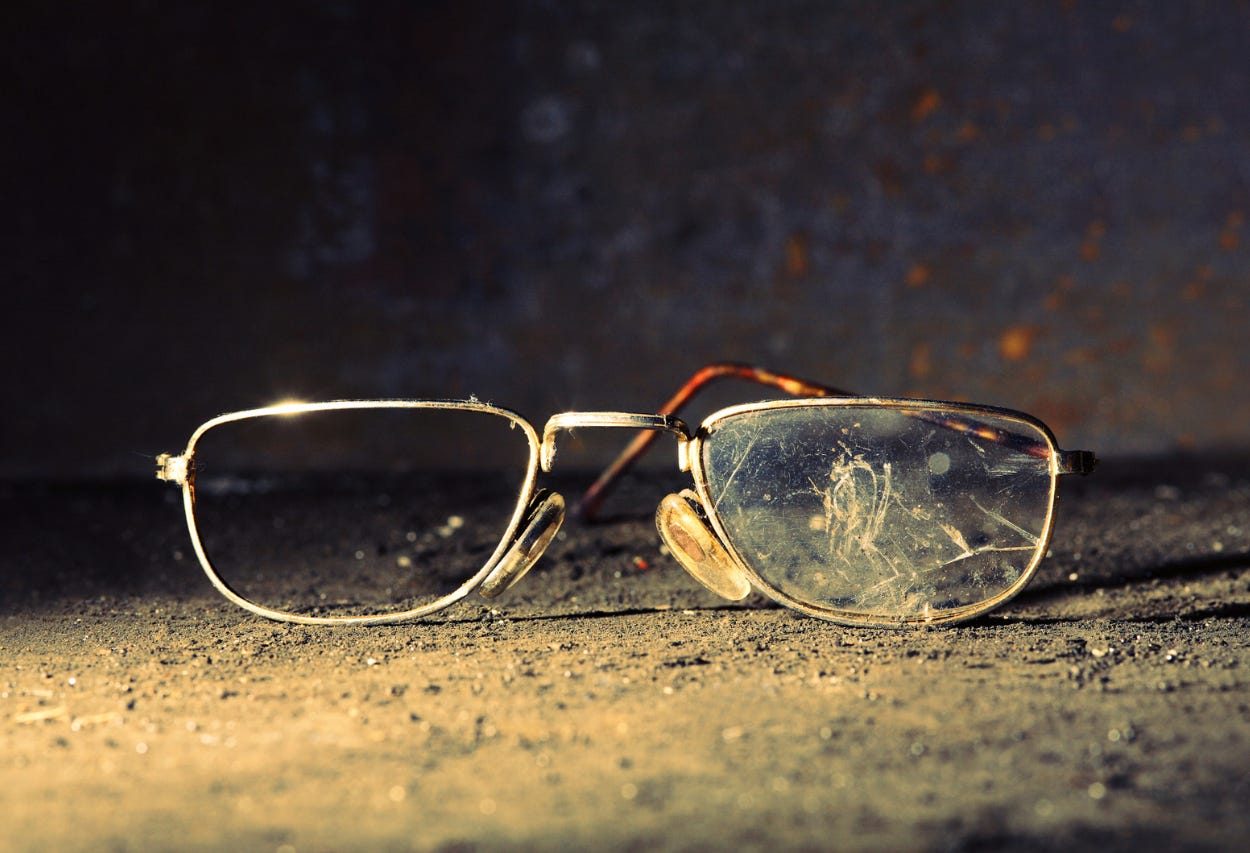
His glasses broke. He couldn’t find his replacement pair quickly, so he went without them for a few days.
The arthritis began improving—immediately and progressively. Before long he felt better than he had in four years.
His improvement was later confirmed by hip x-ray and a doctor’s physical exam.
That accident opened a door he hadn’t known was closed.
The realization that followed was counterintuitive.
Ott had been sunbathing to treat his arthritis. It made him worse.
Only when he stopped blocking light through his UV-filtering glasses—and let unfiltered natural light reach his eyes—did he recover.
From this he concluded: the eyes are the primary gateway through which sunlight enters and nourishes the body.
The skin matters. But the eyes are the circuit.
And most people in the modern world are running that circuit through UV-blocking glass all day long.
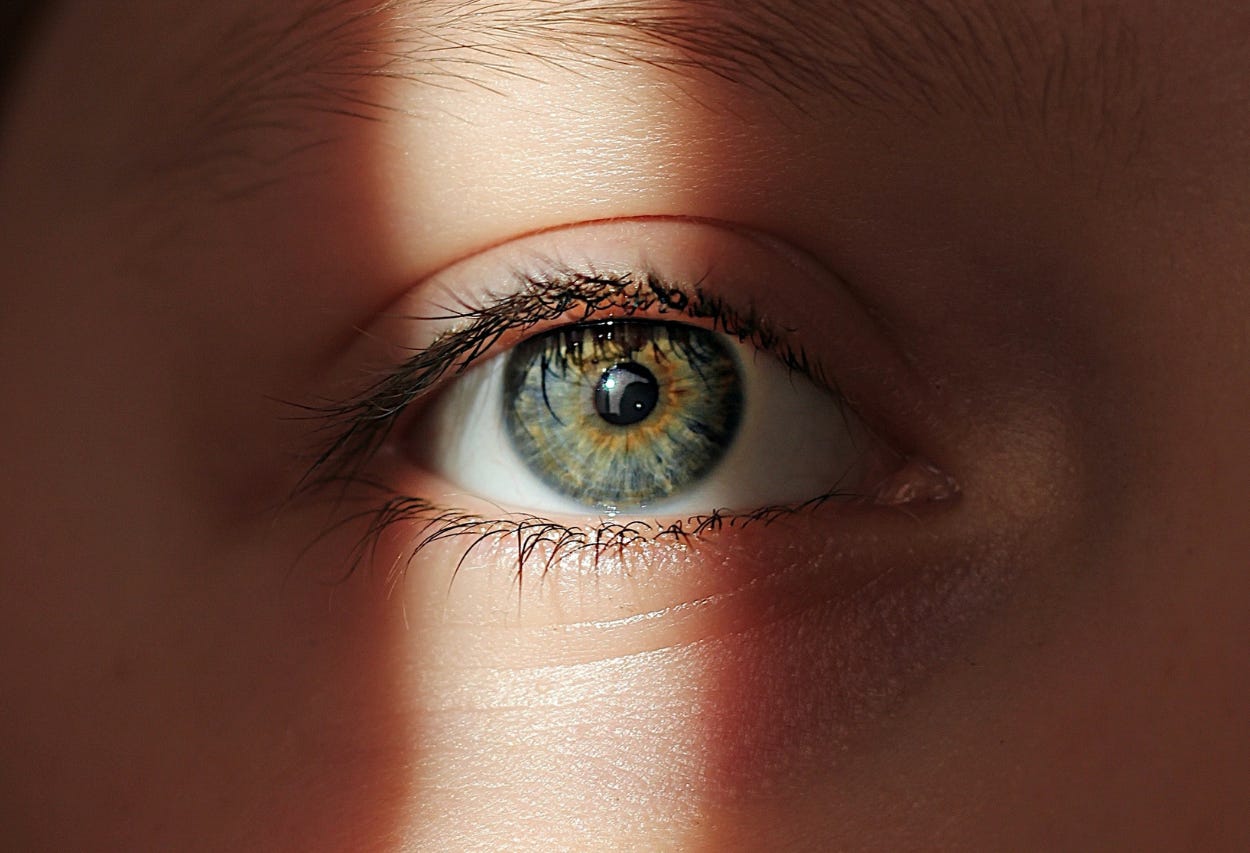
Dermatology tells you to protect your eyes from the sun with sunglasses.
Based on decades of this research, that advice has real consequences—and they aren’t the ones you’ve been told to worry about.

After Ott began connecting these dots, the cases found him.
At a hospital in Africa, a community with essentially no prior history of cancer had developed a surge. No environmental changes had occurred.
But it turns out sunglasses had recently become a status symbol in the area.
He then worked with 15 cancer patients who agreed to follow a full-spectrum light regimen.
In 14 of the 15, cancer progression stopped. Several showed improvement.
The one who didn’t respond had continued wearing regular glasses throughout.
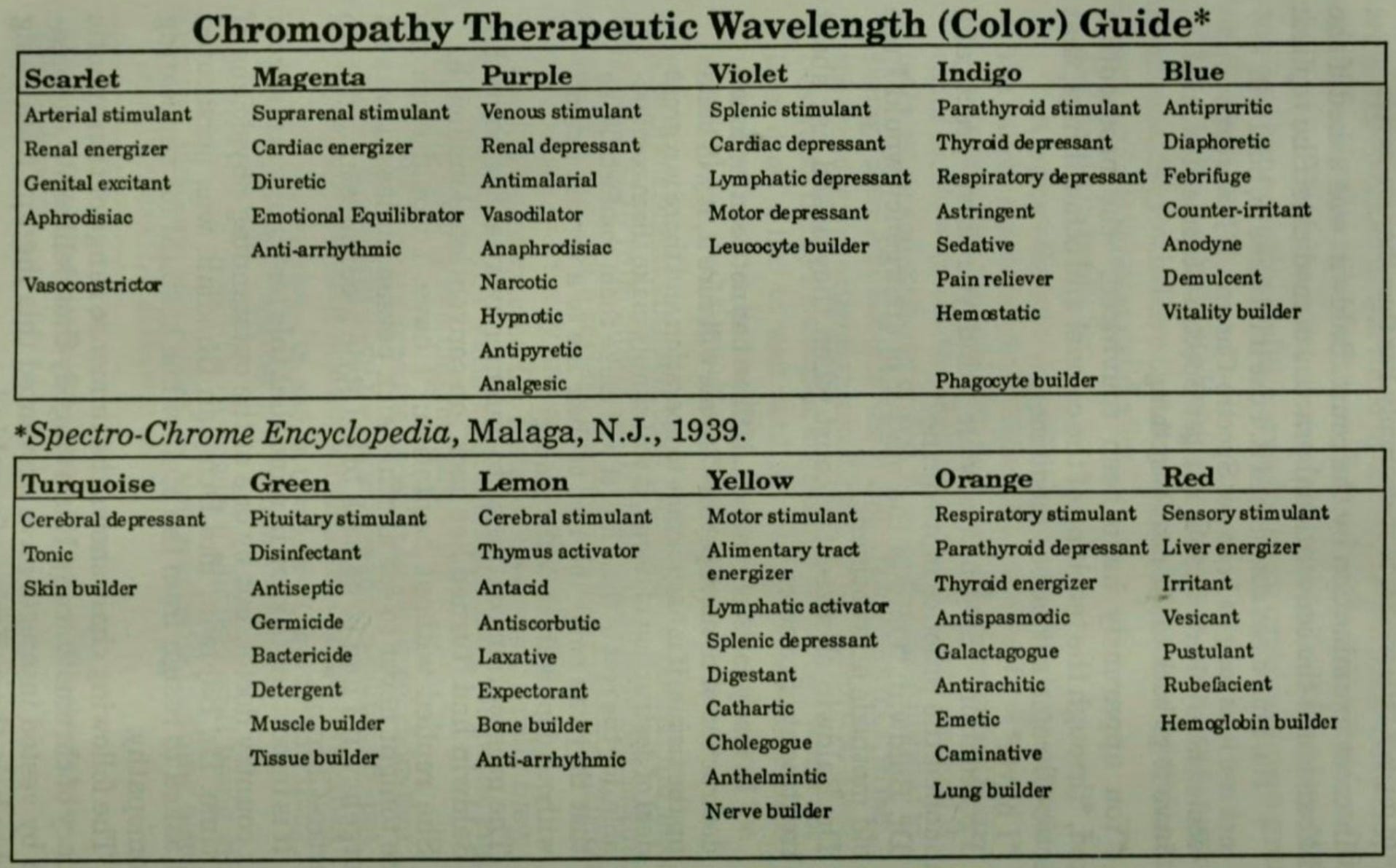
This just scratches the surface of what A Midwestern Doctor compiled from decades of buried research on what light does—and doesn’t do—inside the body.
The full article is worth reading.
Natural Light is An Essential Nutrient
Here’s where the mechanism gets structural.
Physicist Gerald Pollack discovered what he calls the “fourth phase” of water. Under the right conditions—a polar surface and an energy source—water transforms into a gel-like crystalline lattice that generates its own charge gradient and drives spontaneous fluid flow—without any pump.
This is the mechanism behind blood moving through capillaries too small and numerous for the heart’s pressure alone to explain.
And sunlight is one of the primary energy sources that builds and powers it.
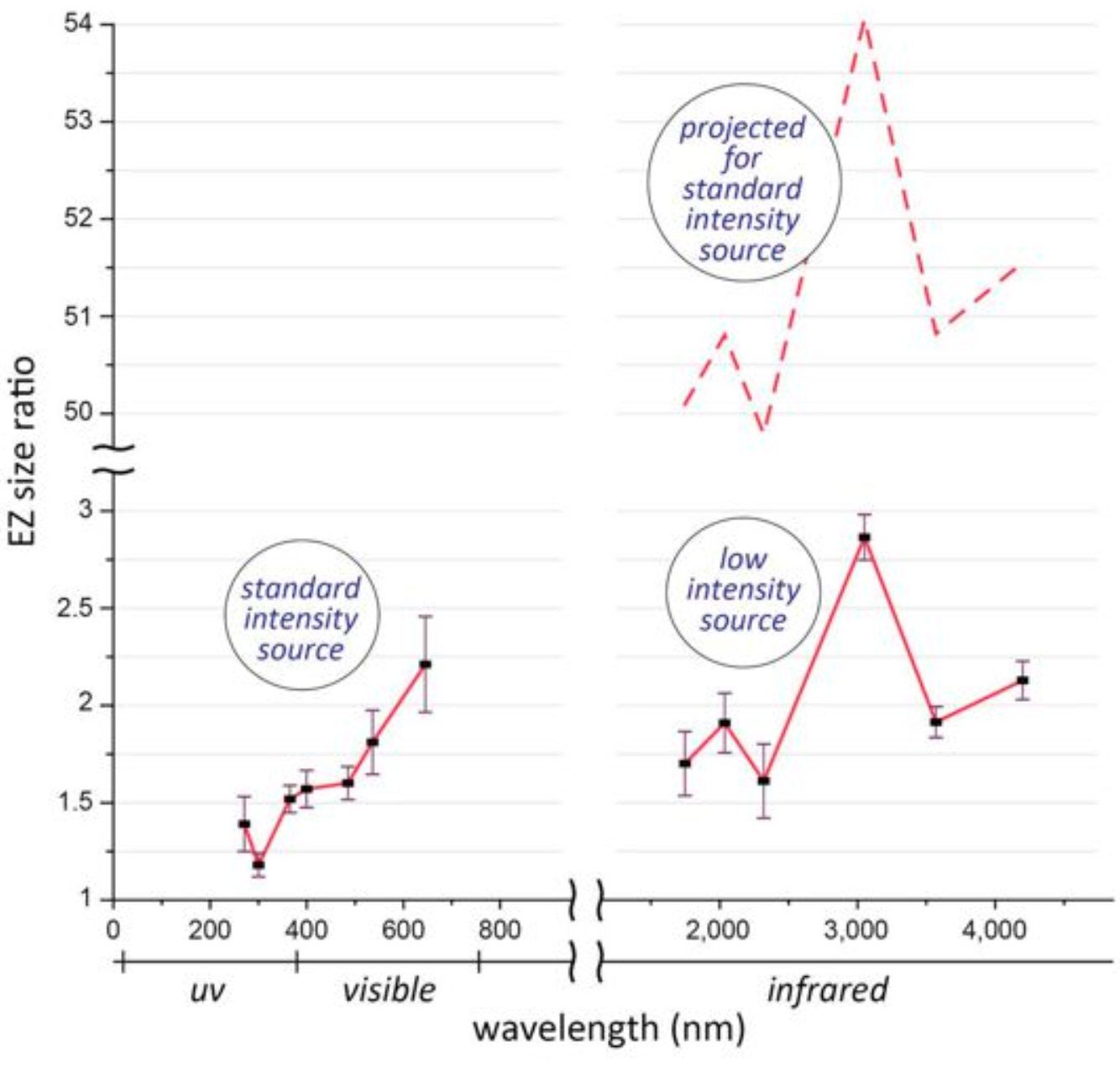
Think about what happens when you step into the sun.
The veins at the surface of your skin dilate.
That isn’t just heat response. It’s the body pulling blood toward the surface to absorb light.
The body was architecturally designed to capture sunlight.

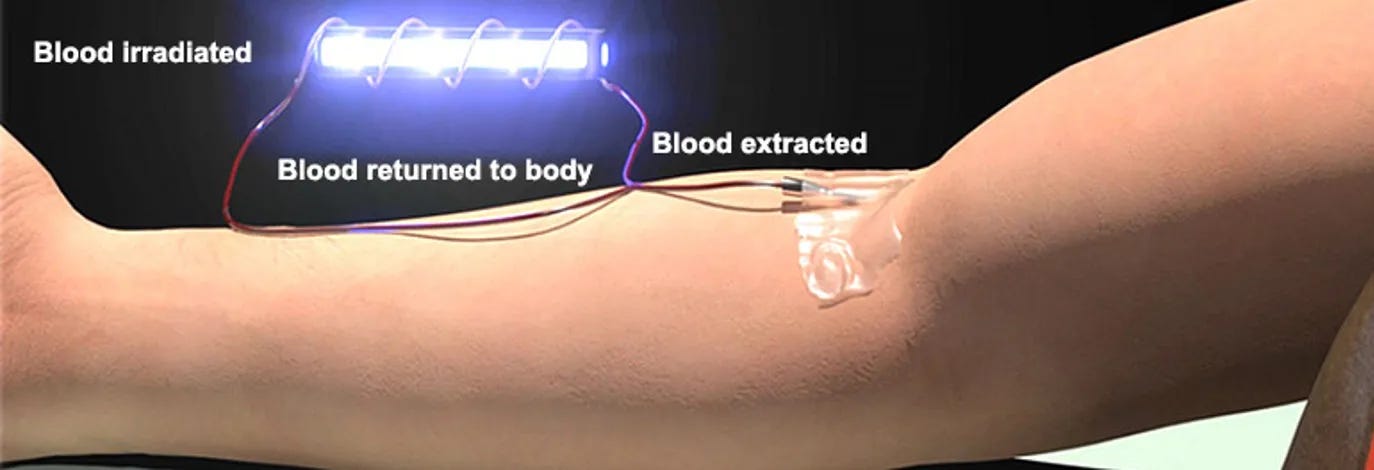
After observing this framework for years, A Midwestern Doctor began working with a therapy where blood is drawn from the body, exposed to UV light externally, and returned.
During treatment sessions, something didn’t seem to fit conventional models.
The moment a continuous circuit of blood existed from the external UV source to the IV entry point—but not a moment before, not while saline was still clearing the line—patients had an immediate systemic response.
Within seconds.
Not minutes.
Turning the light on and off repeatedly generated the same immediate response.
The interpretation? Blood conducts light through the body the way fiber optics conduct data.
Illuminate one part of the circuit, and you illuminate all of it.
Which also explains why, for decades, light-based therapies have often produced effects that seem too rapid and too systemic for conventional models to account for.
So why doesn’t everyone know about this?
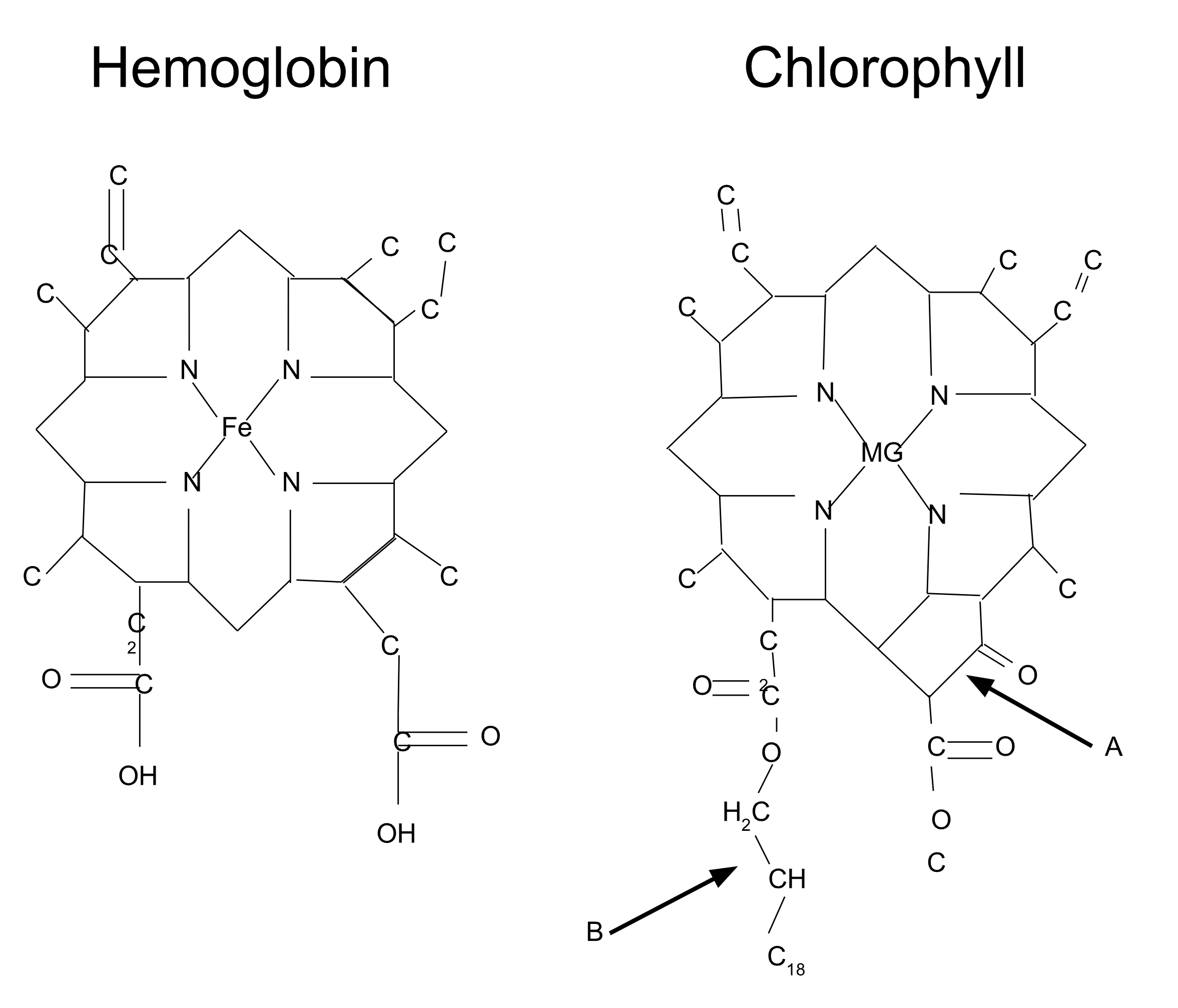
Let’s look at the molecular structures of hemoglobin and chlorophyll.
They’re nearly identical—both porphyrins, ring-shaped molecules built to transfer electrons.
Chlorophyll captures sunlight and converts it to chemical energy for plants. Hemoglobin, in iron where chlorophyll uses magnesium, may do something functionally similar for animals.
Not just a vehicle for oxygen.
A vehicle for light.
The eyes are the most transparent part of the human body.
When early researchers wanted to study the behavior of blood cells directly, they looked through the vessels in the eyes—the only place in the body where they could see blood flowing freely under a microscope.
This transparency isn’t incidental.
The eyes appear to function as the primary entry point for sunlight to travel into the bloodstream and circulate through tissue that skin exposure would never reach.
Every UV-blocking lens between your eyes and natural light interrupts that circuit.
Most people in the modern world are wearing one—right now.

In 2020, Donald Trump stood at a press conference and said:
“Supposing you brought the light inside the body, which you can do either through the skin or in some other way...”
The media spent the next two years repeating that Trump had told the public to inject bleach.
He was almost certainly describing a real device—then in clinical testing—that emitted UV light inside the lungs to kill SARS-CoV-2 without harming surrounding tissue.
The “bleach injection” framing accomplished something beyond embarrassing Trump. It made the entire concept of putting light inside the body sound absurd—and bought that idea several more years of public invisibility.
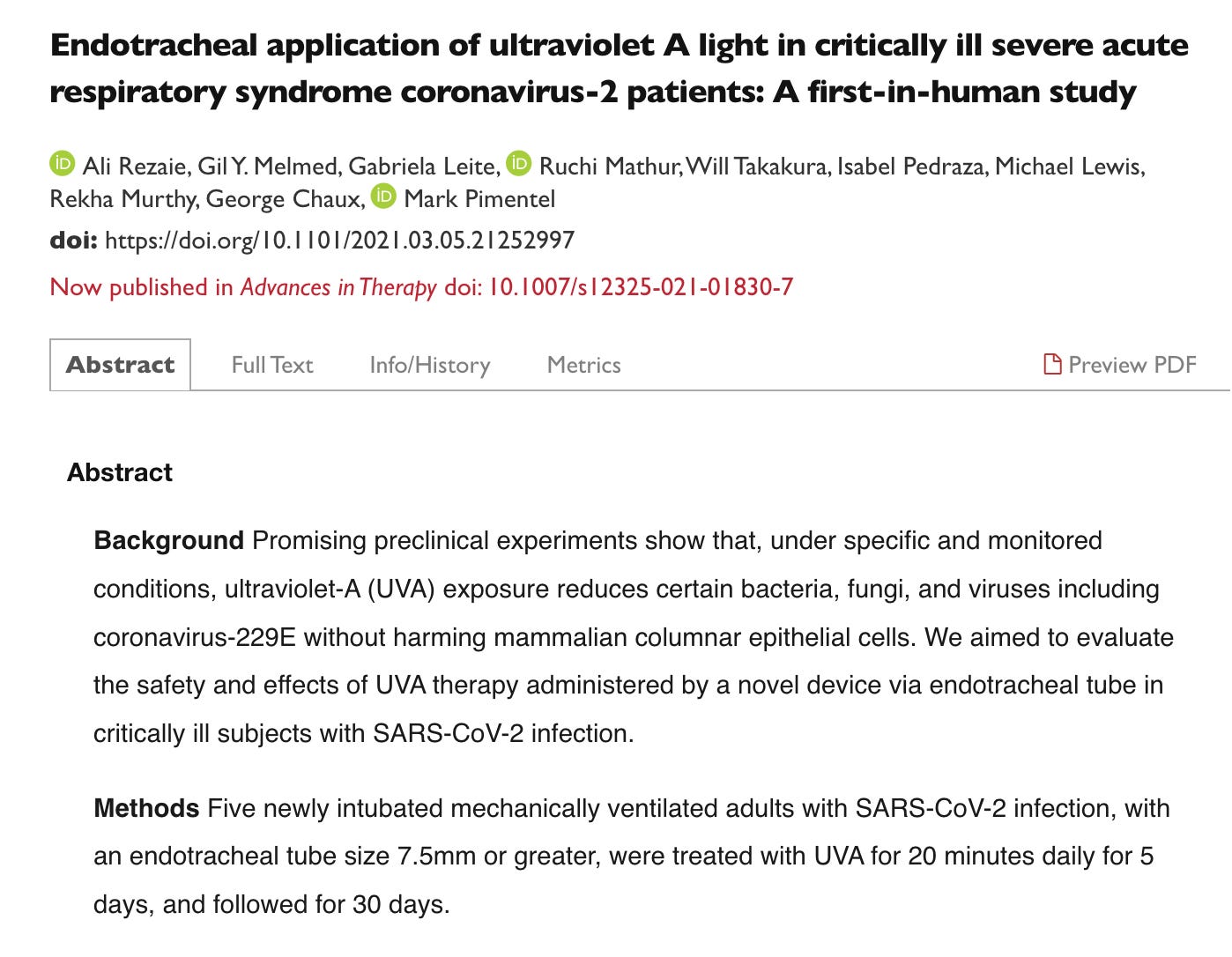
There’s a groundbreaking therapy that actually brings light inside the body. You’ll never believe how far the medical industry went to make sure it never reached you.
The full article is worth reading.
Natural Light is An Essential Nutrient
Consider what our modern lives actually looks like, laid out honestly.
We wake to LED lights. We drive around little UV-blocking boxes. We spend the workday under fluorescent tubes. We wear UV-filtering sunglasses on the rare occasions we go outside. We come home to screens, walls, and UV-blocking windows.
Every one of those choices—invisible, unremarkable, built into the infrastructure of daily life—is, from the perspective of a century of buried research, a systematic withdrawal from a biological resource that evolution spent millions of years optimizing.
Light isn’t vitamin D with extra steps.
Light is how the body communicates, repairs itself, moves fluid through its smallest vessels, regulates behavior, and suppresses disease.
Light is everything.
Gurwitsch mapped the biophoton signal in 1923. Ott spent five decades watching it fail in real time. Pollack found the mechanical infrastructure that makes it possible. And physicians using this forgotten therapy are still watching it work in patients who have nothing else left to try.
The research never disappeared.
It simply was never permitted to reach you.
It’s time to change that.

Thanks for reading! This information was based on a report originally published by A Midwestern Doctor. Key details were streamlined and editorialized for clarity and impact. Read the original report here.
Natural Light is An Essential Nutrient
For a deeper dive into what modern medicine has overlooked—or intentionally buried—check out these other eye-opening reports by A Midwestern Doctor:
The FDA’s 50-Year War on the Safest Painkiller Ever Discovered
The Hidden Dangers of Hospital Births & How to Protect Your Family
What’s The Healthiest Water To Drink?
While you’re at it, give A Midwestern Doctor a follow. No one brings more research, clinical insight, or historical context when it comes to exposing the health myths we’ve all been fed. This is easily one of the most valuable accounts you’ll ever follow.

If you haven’t subscribed to this Substack yet, take a moment to read what some of the most powerful voices in the medical freedom/truth movement have to say:
“The Vigilant Fox has been putting in a lot of work to create a news platform that shares the stories we want to hear about and brings attention to the most important things to know about. If you want a daily newsfeed in alignment with our ...”
– A Midwestern Doctor, The Forgotten Side of Medicine
“The Vigilant Fox absolutely is on top of things. We must support our fighters, and the Fox is fighting with truth.”
– Tom Renz, Tom Renz’s Newsletter
“Excellent capture of key video presentations on evolving pandemic science.”
– Peter A. McCullough, MD, MPH, FOCAL POINTS (Courageous Discourse)

This was a fantastic article. I have know about how important light is inside the body and how we need the sunlight, but this really drives it home. I do not wear sunscreen anymore, nor do I wear sunglasses. Sun gazing is the first thing I do in the morning and I know it is healthy, but the other gain is that I feel HAPPY! Educating people is SO important. I have been arguing with my sister who slathers on the sunscreen and has had 2 melanoma's on her chest. She is programmed by the medical industry, I don't think I'll ever reach her, but I do hope to educate others and I will share this article widely. Thank you!
Fascinating and useful info! An eyeglass wearer since age 5, I might start taking my daily walks without them on.
But one question: Many of the older studies reported health gains when blue light replaced pink or warmtone light. Yet we hear that blue light (from screens) is harmful. What's the truth here?