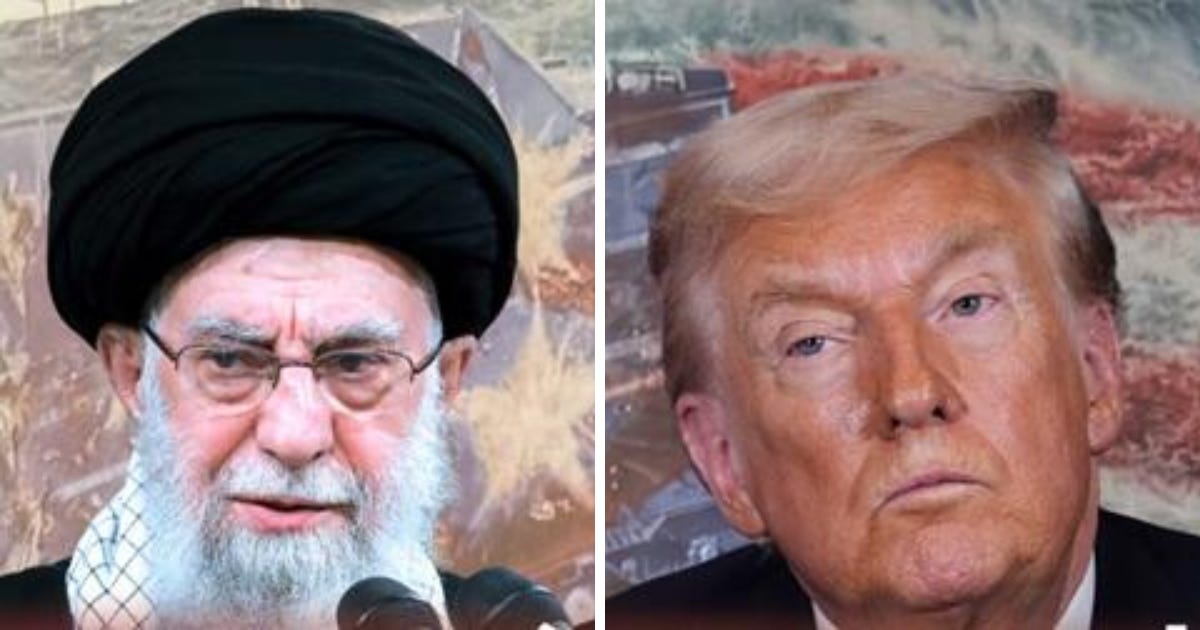
This article originally appeared on ZeroHedge and was republished with permission.
Guest post by Tyler Durden
Update(1629ET): One Mideast regional analyst has pointed to a significant contradiction in the current White House stance and rhetoric on Iran, amid the military threats and build-up, and suggests this time the warnings of US action are much more serious:
If you read Trump’s latest post on Iran carefully, you will understand what America’s real worry is. Until now, Trump was talking about the protesters. But today, he said time is running out for Iran to make a nuclear deal. “No nuclear weapons”, he wrote. If you remember correctly, after the June 22 attack on Iran, Trump had claimed that he had “obliterated” Iran’s nuclear program. And Iran’s nuclear program had gone dark after the June war because Iran denied access to the IAEA to the bombed facilities. If Trump had obliterated Iran’s nuclear program in June 2025, why does he want a nuclear deal in January 2026
“This is the core issue, not democracy and human rights,” the analyst, Stanly Johny, writes. Indeed in the halls of power it’s very unlikely that Western officials actually believe this is all about “standing with Iranian protesters” (which by the way many days ago subsided). Another X commenter pointed back to the several regime change conflicts of the last couple decades:
“Free Iran” means exactly what “Free Iraq,” “Free Libya,” and “Free Syria” meant. That is the material reality, however you try to spin it. Either you’re calling for another US-engineered destruction, or you’re so politically naive your opinion can be automatically disregarded.

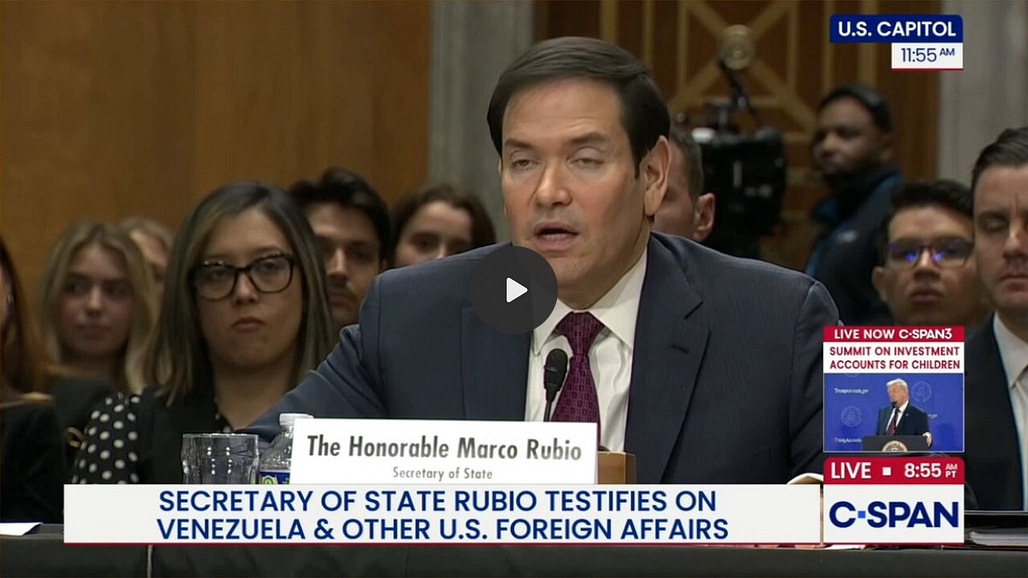
Rubio said during the Wednesday Senate Foreign Relations Hearing focused on Venezuela, “And so I think it’s wise and prudent to have a force posture within the region that could respond and potentially, not necessarily what’s going to happen, but if necessary, preemptively prevent the attack against 1000s of American servicemen and other facilities in the region. And our allies.” But ironically this is just after admitting the US ordered additional assets to the region in the first place, which are the same assets now supposedly under threat by Tehran.
“I hope it doesn’t come to that, but that’s I think what you’re seeing now is the ability to posture assets in the region to defend against what could be an Iranian threat against our personnel,” the secretary of state said.
* * *
Things between Tehran and Washington are moving fast according to an eerily familiar pattern hearkening back to the lead-up to the 12-day June war, when there was some wrangling over negotiations - and talk of good faith efforts at dialogue - just before the US greenlighted a surprise Israeli attack which also saw US entry into the conflict by the close of it (whereupon nuclear facilities were hit by American bombers).
“Our stance is clear,” Iran’s Foreign Minister Abbas Araqchi said Wednesday as the US has expressed the desire to strike a deal. “Negotiations don’t go along with threats, and talks can only take place when there are no longer menaces and excessive demands.”
IRAN SAYS WILL RESPOND TO US ‘LIKE NEVER BEFORE’ IF PUSHED
IRAN SAYS READY FOR TALKS WITH US BASED ON MUTUAL RESPECT
OIL PARES GAINS AS IRAN SAYS ITS READY FOR TALKS WITH US
Araqchi confirmed his country has had no recent communication with US special envoy Steve Witkoff and has not sought talks with Washington. President Donald Trump said Tuesday that another US “armada” was moving “beautifully” toward Iran, but he hoped Tehran would ultimately strike a deal and avoid conflict.
The Iranian FM noted, however, that unnamed intermediaries were “holding consultations” and remained in touch with Iranian officials.
Separately, Iranian President Masoud Pezeshkian told Saudi Crown Prince Mohammed bin Salman on Tuesday that Tehran supports any process “within the framework of international law” that helps avert war. The Saudis have joined the UAE in declaring that the US cannot use its airspace for aggression against Iran.
This shouldn’t pose too big a challenge for the Pentagon, however, which has a build-up of assets at its Qatar base and with a carrier group near Iran in regional waters.
But The Wall Street Journal disagrees, saying this could be a significant setback if the White House wishes to pursue war plans:
The declarations from the two Gulf states represent a foreign policy setback for the Trump administration as it seeks to ratchet up pressure on Tehran, which has defied Washington’s demand that it halt uranium enrichment and end the suppression of protesters.
Crown Prince Mohammed bin Salman, the kingdom’s de facto leader, outlined his country’s position while talking by phone with Iranian President Masoud Pezeshkian.
A Saudi readout of the Tuesday call said the crown prince had stressed that the kingdom “will not allow its airspace or territory to be used for any military actions against Iran.”
Previously, during Monday remarks, President Trump said “They want to make a deal. I know so. They called on numerous occasions. They want to talk.” He added ominously, “We have a big armada next to Iran. Bigger than Venezuela.”
US forces stationed across the Middle East are also meanwhile taking part in large-scale war games aimed at showcasing combat readiness, as Washington ramps up its military footprint, and as Trump is presented with an array of ‘options’. All of this supposedly steps from Washington ‘concern’ for large-scale protests from earlier this month, where thousands died - but which also included the deaths of police and security services.
In a statement which kicked off the week, US Central Command said: “Ninth Air Force will be conducting a multi-day readiness exercise to demonstrate the ability to deploy, disperse, and sustain combat airpower across the Central Command (CENTCOM) area of responsibility.”
President Trump issued the following “time is running” out message Wednesday morning:


The command added that “this exercise is designed to enhance asset and personnel dispersal capability, strengthen regional partnerships and prepare for flexible response execution throughout CENTCOM.”
The sweeping drills are unfolding against the backdrop of sharply rising tensions with Tehran in which an oil blockade and potential strikes on senior officials in the Islamic Republic are being considered. But in terms of blockades, two can play at that game, as the Strait of Hormuz remains among the most vital waterways for the global market, and the IRGC has threatened that its forces can shut it to international transit.
Copyright 2026 ZeroHedge