


The following information is based on a report originally published by A Midwestern Doctor. Key details have been streamlined and editorialized for clarity and impact. Read the original report here.
At 17, Amy Tippins was dying of liver failure. A transplant saved her life.
After the surgery, she noticed “some of my traits had changed.”
Amy suddenly found herself drawn to hands-on home projects she’d never cared about.
“What gives?” she thought. So she tracked down the obituary of the stranger whose liver she’d received and discovered something staggering:
“Not long after surgery, some things about myself and some of my traits had changed… I really started to love projects like replacing flooring on my own. I never saw flooring being put in. I never saw anything like that being done.”
“I knew he was 47 and that he had been killed in a car wreck in Columbus, Georgia. So I went to the library and I started looking up obituaries for that time. And I backed into his obituary.”
“What I discovered is he was a police officer. He was 47, and his name was Mike. His sister told me that he did a lot of his own home renovation. He also liked to work with his hands. He liked to do projects.”
“When I found out who my donor was, it made a lot more sense on why some things about myself and some of my traits had changed after transplant.”
Is a donated organ just an organ? Or can it actually change who you are?
Conventional medicine laughs at the idea. But is it really so crazy?
Let’s take a look at the evidence.
When organ transplantation became possible, doctors called it a miracle. And it is. Giving someone a second life through another person’s death is incredible.
But the full story isn’t quite so simple.
Oftentimes, something else seems to come with the organ. Something nobody signed up for.
The standard model is pretty straightforward. Your heart is a pump. Your kidney is a filter. Personality and memory live in the brain, and nowhere else.
Swap a failing organ for a healthy one and you’ve simply updated the plumbing, not the person.
But that’s been nothing more than an assumption.
For decades, a significant number of cases has been building up that say otherwise.
This information comes from the work of medical researcher A Midwestern Doctor. For all the sources and details, read the full report below.
The Mystery of Transplanted Consciousness: When Organs Transfer More Than Function

Transplants are notoriously difficult to keep alive.
Within ten years, nearly half of transplanted hearts fail. For lungs it’s almost three-quarters. Kidneys and livers aren’t far behind.
Recipients pay for survival with immunosuppressants that can run $30,000 a year, permanent sobriety, endless bloodwork, and a life spent dodging infection.
That’s the price of the gift. The big price.
And it’s only the part medicine talks about.
Because beyond the medical ledger, transplant patients kept reporting something much stranger.
Not medical complications.
Changes that made who they were before the transplant different than who they became after.
At University Hospital in Vienna, 47 heart transplant patients were studied closely.
Most insisted their personality was unchanged—though many showed signs suggesting otherwise.
A distinct minority reported something they couldn’t explain: new traits they felt belonged to someone else.
They described feeling compelled to accommodate memories that weren’t theirs.
Roughly one in ten heart recipients report emotions they believe came from their donor.
The most well documented case is a woman named Claire Sylvia.
At 47 she received a new heart and lungs, and almost immediately started craving beer and chicken nuggets—foods she’d never wanted previously in her 4 years of life.
Months later she dreamed of a young man named Tim. In the dream they kiss, and she feels herself inhale him into her. She woke up certain Tim was her donor and that part of him was now living inside her.
Friends said she walked differently. She felt more aggressive, more confident, drawn to blonde women, as if some new energy were responding through her.
Then she traced the donor through an obituary. His name was Tim L. His family confirmed he’d loved chicken nuggets and beer—the exact cravings that had appeared within her body.

You could dismiss an odd craving. Or a one off dream.
But a name, a face, and a dead man’s favorite foods all surfacing in someone who never met him—that’s a bit harder to simply wave away.

Sylvia eventually said the only thing that freed her was a kind of ritual—a way to let the donor’s spirit “let go.”
A Midwestern Doctor’s full article describes how recipients and clinicians can actually do that.
The Mystery of Transplanted Consciousness: When Organs Transfer More Than Function
This is where the research gets serious.
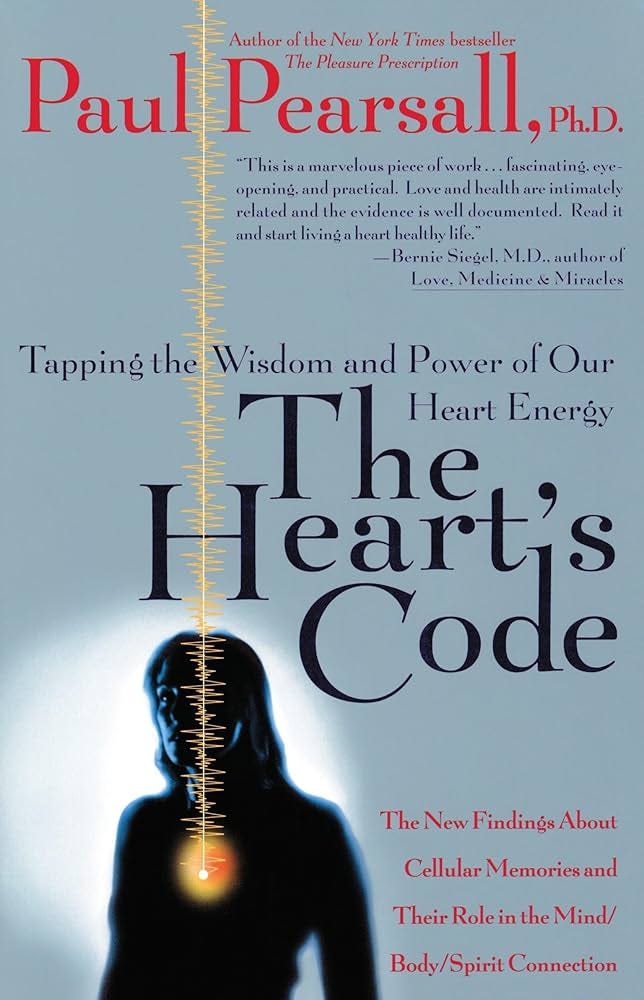
A neuropsychologist named Paul Pearsall—himself a transplant patient—set out to document it properly. He interviewed 73 heart recipients, 67 recipients of other organs, and the families of 18 deceased donors.
He wasn’t collecting ghost stories. He published his findings in an academic paper with independent verification, with meticulous citations.
And across all those interviews, the same patterns surfaced again and again: recipients reliving a donor’s death they were never told about. Food and music tastes flipping to match the donor. In one case, a lifelong lesbian becoming attracted to men and marrying one.
The themes were too consistent to be random noise.
Then come the cases that are impossible to explain away.
An eight-year-old girl received the heart of a murdered ten-year-old. She began having vivid nightmares about the killing.
Her descriptions were specific enough that police investigated—and the details about timing, the weapon, the location, and the victim’s final words were accurate enough to find and convict the murderer.
A child’s nightmares, sourced from a transplanted heart, closed a homicide case.
It sounds unbelievable.

Transplants save lives every single day, and most recipients never report anything unusual about the experience.
But “most” isn’t “all.”
And the exceptions are strange enough to demand a look.
The pattern keeps repeating with different people who had no way to know each other.
A man named William Sheridan could barely draw past a child’s level. After his heart transplant, he was suddenly producing detailed wildlife and landscape art. His donor had been a passionate artist.
A 47-year-old foundry worker received the heart of a 17-year-old and developed a sudden pull toward classical music. He laughed it off, assuming the teenager would’ve liked rap. Then he learned the boy had died on his way to a violin lesson, literally clutching his violin case.
A woman bent down to a transplant recipient and whispered a private phrase she’d shared with her dead husband David: “Everything is copacetic.” The recipient’s mother went pale. Her son had started using that exact word—constantly—but only after the surgery.

None of these people knew their donors. None had a script.
Yet the talent, the phrase, the music kept showing up—matched to a stranger whose body had stopped working but allowed another’s body to continue living.
There are many more of these cases than can fit in one thread—including donors who seemed to “speak” to their grieving families through the recipient.
The full article has more.
The Mystery of Transplanted Consciousness: When Organs Transfer More Than Function
The obvious objection is coincidence. So why do only some recipients experience this?
That’s exactly what Pearsall tried to answer. Studying who was sensitive, he found a recurring profile—eighteen shared traits.
The sensitive ones tended to be open rather than rigid, highly creative, intensely body-aware, drawn to music, prone to vivid dreaming, and described as intuitive even before surgery.
A random coincidence wouldn’t sort itself neatly by personality type, would it?
These experiences don’t stop with the heart.
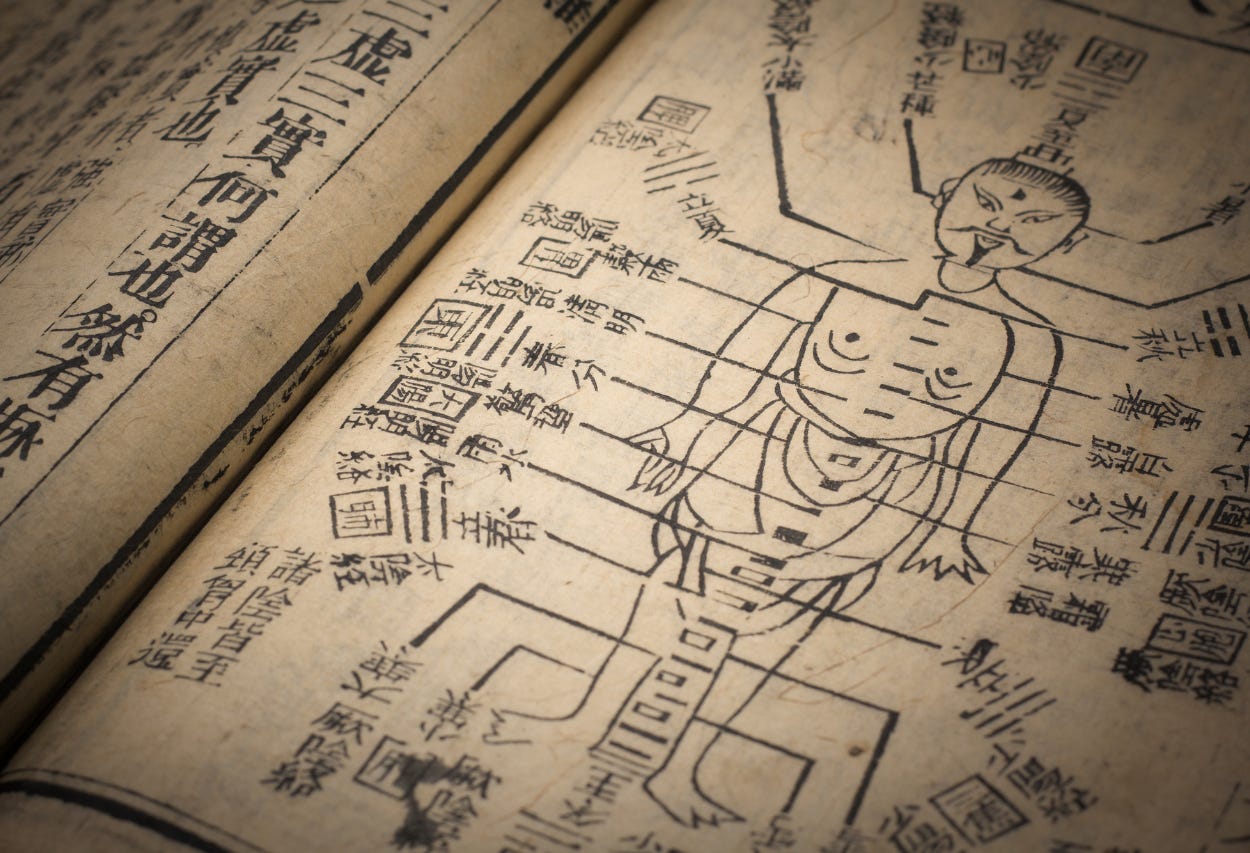
Pearsall saw changes in liver and kidney recipients too, though milder. And here’s the incredible part: the emotional shifts tended to track what traditional Chinese medicine assigns to each organ.
Liver with anger. Lung with grief. Kidney with fear. Heart with joy.
Clinicians working with recipients report the same alignment—as if each organ carries its own emotional signature.
This forces an uncomfortable question about memory itself.
If a personality trait or a specific word can ride along inside a transplanted organ, then memory may not be locked inside the brain the way we were taught.
Memory research already hints at this—damage to specific brain regions often fails to erase specific memories, leading some to propose the brain works more like a receiver than a hard drive. A way of accessing information stored elsewhere.
Including, perhaps, in tissue that used to belong to someone else.
Living with a transplanted heart is its own psychological ordeal—and not for the reasons you’d expect.
The hardest part for many recipients isn’t the surgery or the medication. It’s the dawning sense that something foreign has entered them and might be steering their personality. Many worry less about their donor’s health history than about their donor’s character.
Pearsall noticed recipients moved through stages much like grief: anxiety and anger, then euphoria, then depression and guilt, and finally a crossroads—where most retreated into firmer denial, and about one in ten became deeply, almost devotedly, interested in who their donor had been.
You can even hear it in the language. Those resisting say “the heart.” Those who’ve made peace say “my heart.”
A New York Times reporter sat in on a Valentine’s Day party for heart recipients.
The room, the reporter wrote, spoke in hushed and reverent tones—about the angel in their chest, about the responsibility they now carried, about the little prayer they said to the other person living inside them.
These aren’t fringe mystics. They’re ordinary people, given a second heart, quietly making room for whoever it came from.

Clinicians working in mind-body medicine describe transplanted organs as carrying “trapped emotions”—and report that helping recipients release them can improve quality of life, sometimes improve organ function, and make the body more willing to accept the organ instead of fighting against it.
Sylvia described her own version: she said she finally felt whole after a ritual to let Tim’s spirit go. She stopped dreaming of him afterward.
There is a darker side to the transplant story.
Organs are scarce, and transplants can cost up to nearly two million dollars—conditions that have built a global black market, including organs taken from people who never agreed to give them.
In the US, donors are usually declared “brain dead.” That means the organ is still functioning, but the person is “gone.” However, there’s a disturbing body of documented cases of paralyzed, supposedly unreachable patients regaining control of their bodies—sometimes just moment before harvesting.
Which raises a question almost too unsettling to ask. If consciousness can travel with an organ, what happens when an organ is taken from someone who was still, in some sense, there—and deeply afraid of what was happening to them?
The full article goes deeper into the therapies that have reversed failing organs without transplant, the evidence that many “brain dead” patients aren’t, and the methods clinicians use to release a donor’s trapped trauma.
It’s the the part of the story that mainstream medicine won’t touch.
The Mystery of Transplanted Consciousness: When Organs Transfer More Than Function
It’s worth holding two ideas at once.
Skeptics call all of this coincidence, and that explanation should always be on the table.
But coincidence doesn’t usually repeat itself across different researchers, cultures, and decades with the same fingerprints.
If even a fraction of these accounts reflect something real, then the self isn’t sealed inside the skull. Some of what makes you you may be distributed through your body—written into your tissue, carried in your blood, and able to outlive the rest of you.
Some who never had transplants but received large blood transfusions describe milder versions of the exact same thing.

Modern medicine built organ transplantation to move parts between bodies. But we may have been moving something more than parts the whole time.
The mystery isn’t only where consciousness ends. It’s whether it ends at the edges of one person at all—or whether a piece of someone can keep living, remembering, and reaching out from inside a stranger’s body.
We pushed the boundary of medicine. We may have crossed a boundary of identity without even noticing.
Thanks for reading! This information was based on a report originally published by A Midwestern Doctor. Key details were streamlined and editorialized for clarity and impact. Read the original report here.
The Mystery of Transplanted Consciousness: When Organs Transfer More Than Function
For a deeper dive into what modern medicine has overlooked—or intentionally buried—check out these other eye-opening reports by A Midwestern Doctor:
We Now Know How The Government Lied About the COVID Vaccines
The Hidden Dangers of Hospital Births & How to Protect Your Family
What’s The Healthiest Water To Drink?

While you’re at it, give A Midwestern Doctor a follow. No one brings more research, clinical insight, or historical context when it comes to exposing the health myths we’ve all been fed. This is easily one of the most valuable accounts you’ll ever follow.
If you haven’t subscribed to this Substack yet, take a moment to read what some of the most powerful voices in the medical freedom/truth movement have to say:
“The Vigilant Fox has been putting in a lot of work to create a news platform that shares the stories we want to hear about and brings attention to the most important things to know about. If you want a daily newsfeed in alignment with our ...”
– A Midwestern Doctor, The Forgotten Side of Medicine
“The Vigilant Fox absolutely is on top of things. We must support our fighters, and the Fox is fighting with truth.”
– Tom Renz, Tom Renz’s Newsletter
“Excellent capture of key video presentations on evolving pandemic science.”
– Peter A. McCullough, MD, MPH, FOCAL POINTS (Courageous Discourse)

I’ve gone down this rabbit hole. They do and it’s why I no longer donate my organs. That and the fact they use brain dead as an excuse to kill you and harvest your organs
I would never have wanted to stay alive so much that I would have have had a transplant. There is no guarantee the operation will be successful. it is not only costly, but the blood used in the operation could be contaminated. One really doesn't know how healthy the donor was. When I was 27, I made a decision to learn all I could in order to stay healthy, so I would not die in some hospital tied to a tube keeping me alive. I was willing to eat right and live a healthy lifestyle. It worked for me and I have no physical problems at 92...and feel better than I did in my twenties. Hippocrates, the Father of Medicine (2400 BC) was known for his CURES. Truth is so simple...Good health stems from the right food, exercise, fresh air, sunshine, avoidance of environmental hazards and asking a blessing on the food.. The word MEDICINE used by Hippocrates was for NOURISHING FOOD...not any other elements, which would destroy the internal organs, glands and cells.