


The following information is based on a report originally published by A Midwestern Doctor. Key details have been streamlined and editorialized for clarity and impact. Read the original report here.
This teacher-turned-cognitive scientist shared a disturbing reality that left the room stunned.
“Our kids are LESS cognitively capable than we were at their age.”
Every previous generation outperformed its parents since we began recording in the late 1800s.
So, what happened?
Screens.
Dr. Jared Horvath explained:
“Gen Z is the first generation in modern history to underperform us on basically every cognitive measure we have, from basic attention to memory, to literacy, to numeracy, to executive functioning, to EVEN GENERAL IQ, even though they go to more school than we did.”
“So why? … The answer appears to be the tools we are using within schools to drive that learning (screens).”
“If you look at the data, once countries adopt digital technology widely in schools, performance goes down significantly, to the point where kids who use computers about five hours per day in school for learning purposes will score over two-thirds of a standard deviation LESS than kids who rarely or never touch tech at school. And that’s across 80 countries.”
But screens aren’t just decimating learning and making new generations less intelligent than the ones before them.
They’re doing something far worse. And when you take a closer look, it isn’t pretty.
This isn’t a glitch.
Engagement-driven algorithms don’t understand meaning, context, or childhood development. They only understand clicks and watch time driven by dopamine spikes.
So when AI is tasked with churning out videos at scale, it doesn’t filter for innocence—it optimizes for stimulation.
Cartoon imagery masking adult themes, fear cues, violence, and psychological distress is being served to toddlers. Bright colors on the surface. Something very, very wrong underneath.
This content has zero educational or developmental value. No story. No moral arc. No learning. Just rapid-fire novelty engineered to hold attention at all costs—even if that cost is literally the viewer’s brain and nervous system development.
Dopamine-optimized media and AI-generated slop are conditioning our children for addiction, emotional dysregulation, and long-term neurological harm.
We have to stop this before it starts—and before Big Pharma steps in with the “solution.”
Something unprecedented and highly concerning is happening to children’s brains.
Toddlers aren’t just watching screens—they’re being neurologically conditioned by them.
Rapid cuts, flashing colors, constant novelty.
And none of it is by accident. It is all by design.
What looks like “kid’s content” is often dopamine engineering aimed at maximizing engagement, not healthy development, no matter the damage it does.
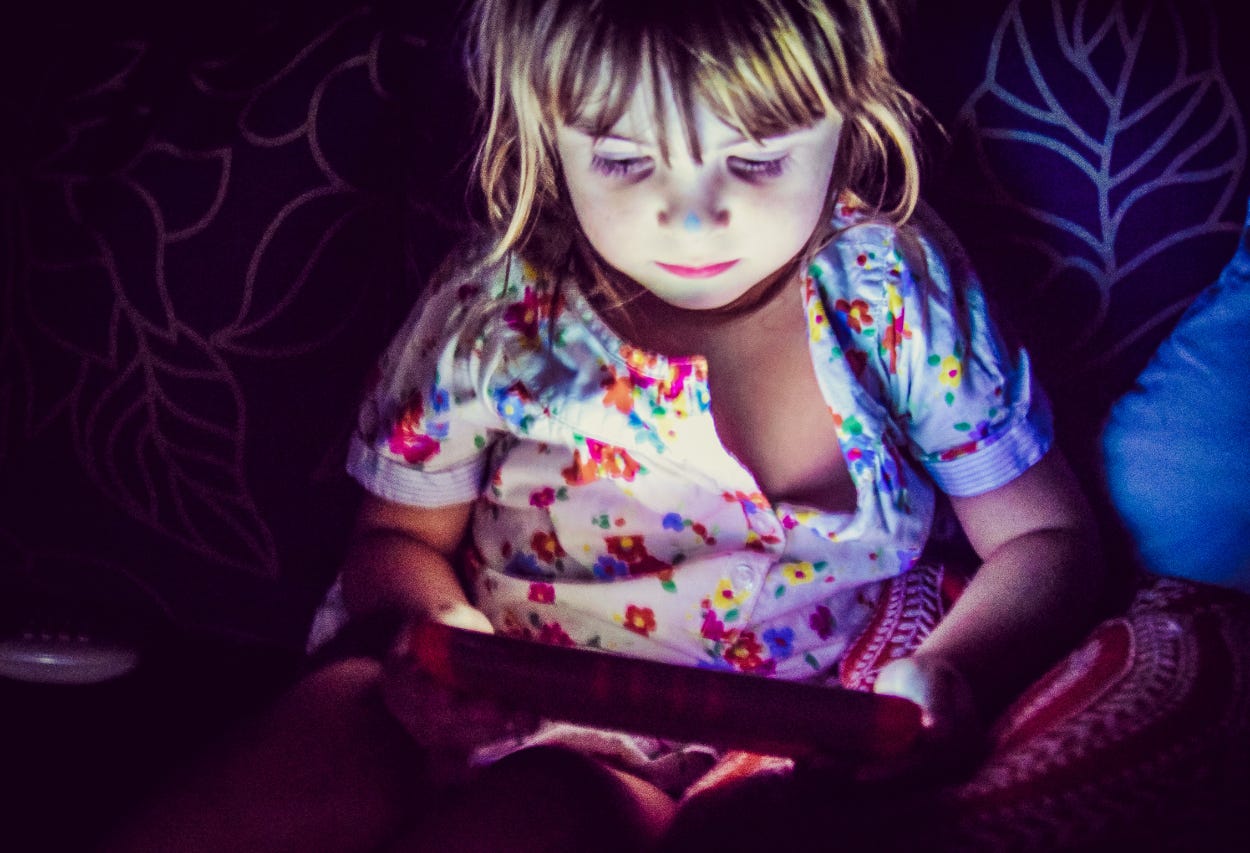
Parents see the patterns.
Their young children are calm while watching shows—but when the screen turns off, they melt down.
They’re not just upset it’s over. It’s much bigger than that.
Rage. Desperation. And tantrums that feel disproportionate.
A 2025 survey found 22% of parents report “full-on tantrums” from excessive screen time, along with irritability and mood swings.
Many parents say it’s worse than sugar crashes and harder to manage than hunger or fatigue.
That’s not coincidence. That’s withdrawal.
Unfortunately, 25% of parents use screens to calm children when upset and 17% report children self-soothing with mobile devices.

This information comes from the work of medical researcher A Midwestern Doctor. For all the sources and details, read the full report below.
The Hidden Dopamine Trap

Fast-paced children’s programming trains the brain to expect constant stimulation.
When attention is conditioned to jump every few seconds, slower real-world experiences—reading, conversation, imagination, boredom—become intolerable.
The developing nervous system adapts by chasing novelty instead of building focus.
Unfortunately, this rewiring doesn’t fade on its own.
Classic children’s shows were fundamentally different.
They were slower. Predictable. Repetitive. On purpose. They left space for emotional processing and imagination.
Modern programming does the opposite—relentless stimulation with no pauses, optimized through analytics to keep kids locked in.
The brain learns whatever it practices most. Especially in young children.
And the research backs it up.
Early exposure to fast-paced media is linked to later attention problems, impaired executive function, emotional dysregulation, and increased anger.
And each additional hour compounds the effect. The younger the brain, the deeper the imprint.
This isn’t just about “screen time.” It’s about screen design.
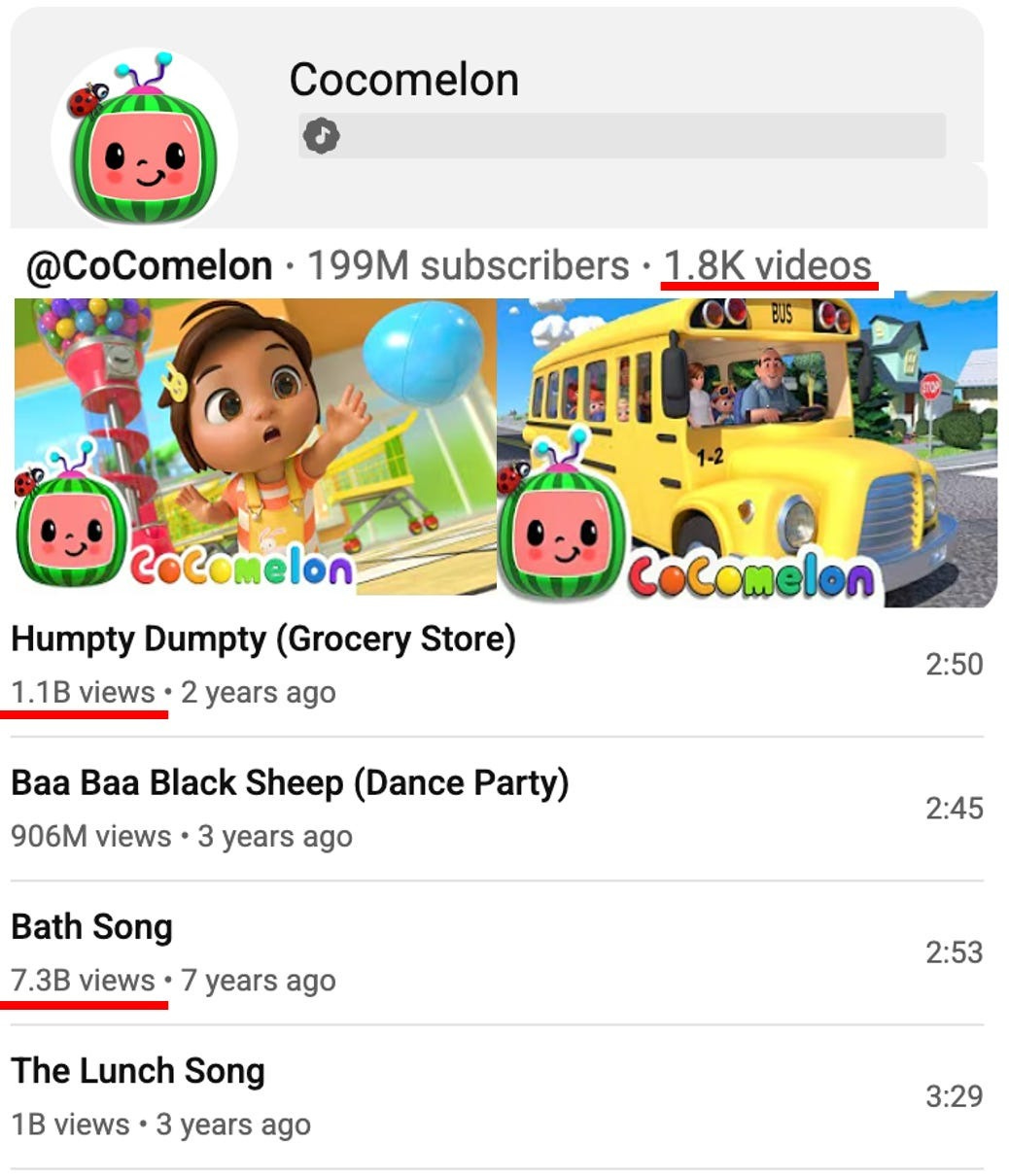
So why are addictive and harmful YouTube shows like Cocomelon allowed to exist?
This isn’t about bad parenting or weak discipline.
The mechanics of how dopamine hijacks attention—especially in children—are deeply unsettling.
A Midwestern Doctor’s full article connects dots most people never see.
The Hidden Dopamine Trap
Many parents are relying on screens to calm distressed children.
It works short-term because dopamine overrides discomfort.
But long-term, it teaches the nervous system that relief comes from external stimulation—not self-regulation.
The child becomes dependent on artificial soothing.
That’s bad. Really, really bad.
And that dependency follows them into adolescence, where it can affect everything from school and work to relationships.
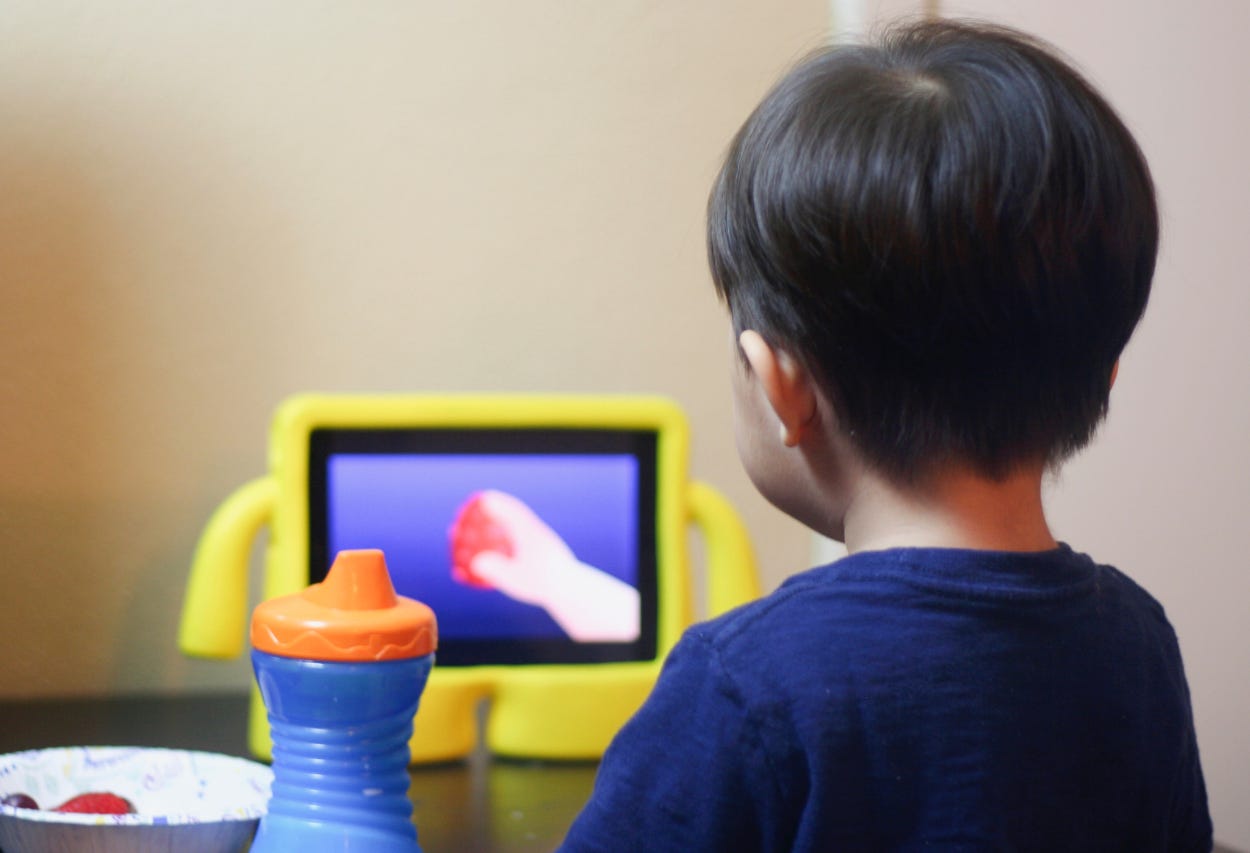
This pattern directly mirrors addiction.
Remove the stimulus and distress surges. Reintroduce it and calm returns.
Over time, baseline satisfaction drops, and stronger stimulation is needed to achieve the same effect.
Children aren’t choosing this. Their brains are being trained into it.
They’re being set up for a life of challenges just because someone wants to profit from the attention of a toddler.

Platforms profit from attention, regardless of the age of the viewer.
Algorithms reward whatever keeps eyes glued longest.
Developmental health isn’t the metric—engagement is.
And children are uniquely vulnerable because their brains are still wiring reward pathways.
Profit and protection aren’t aligned.
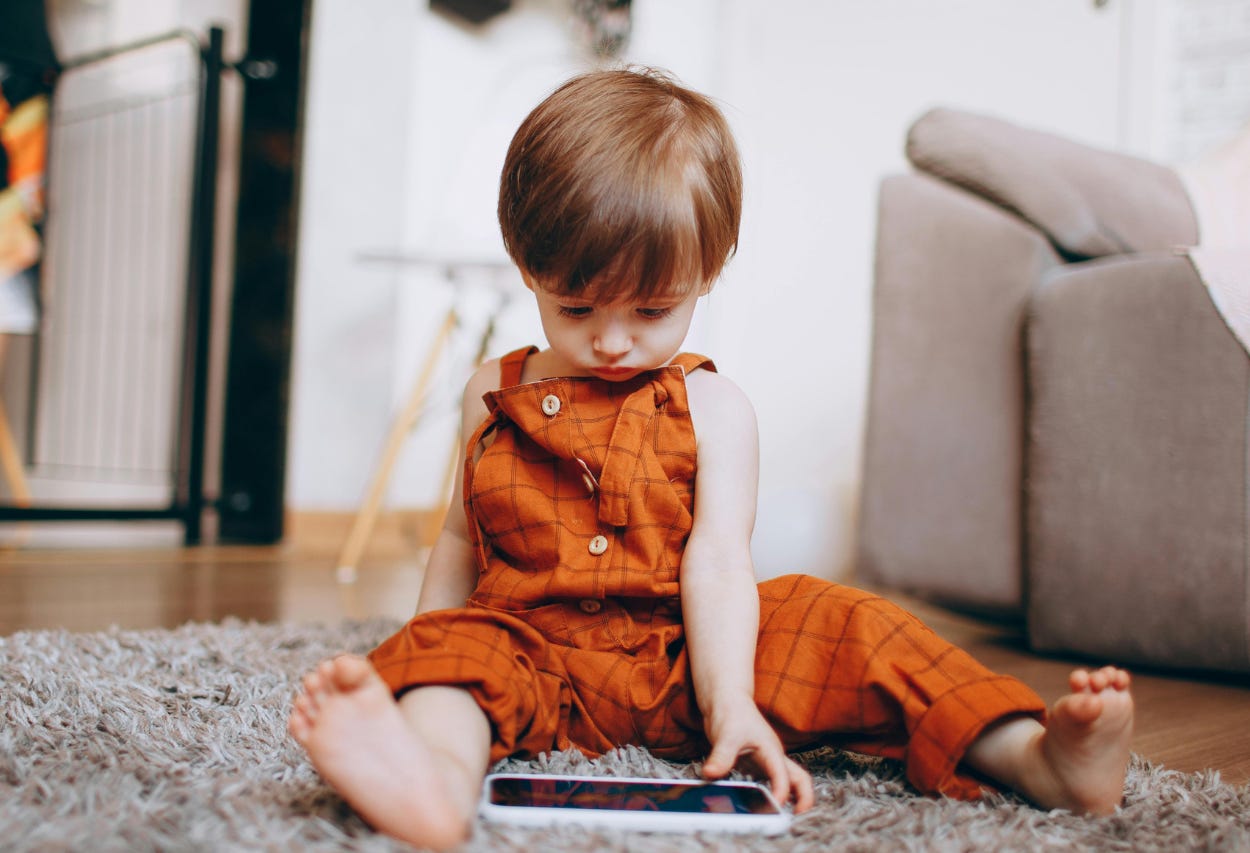
But this isn’t just an issue during childhood.
A nervous system conditioned to constant dopamine spikes struggles with delayed gratification, deep focus, emotional resilience, and stable joy.
It seeks intensity instead of meaning, stimulation instead of presence.
The groundwork for lifelong dissatisfaction is being laid earlier than ever before.
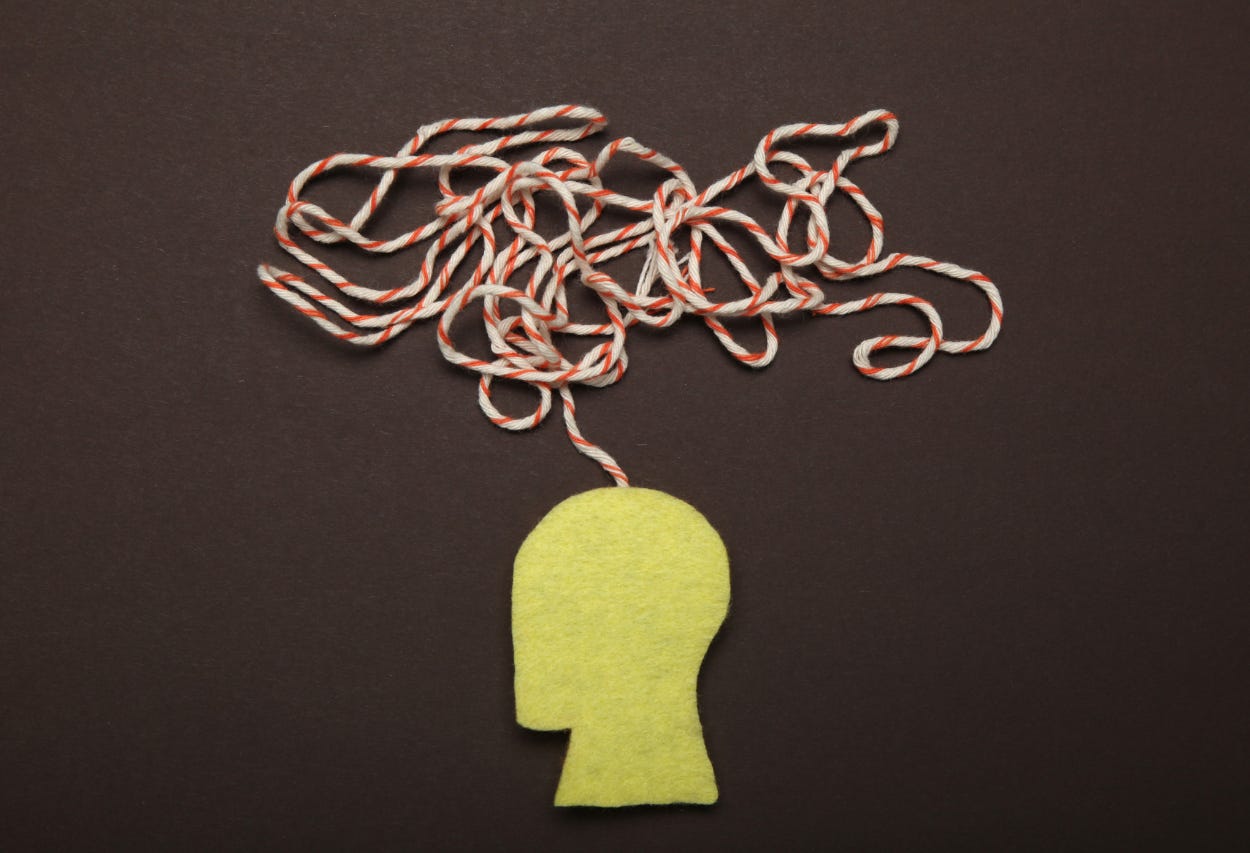
This isn’t just about screens.
It’s about how a dopamine-driven world that is quietly shaping what joy, attention, and connection even feel like. And it’s starting in early childhood.
We have to do something before it’s too late.
The Hidden Dopamine Trap
Children are paying the highest price. But that doesn’t mean adults are immune to this.
When the nervous system is constantly overstimulated, subtler pleasures disappear—completely.
Quiet becomes uncomfortable. Stillness feels empty. Real relationships feel dull compared to engineered highs.
That gap drives further consumption and more disconnection from the real world.

A healthy nervous system resists addiction.
When regulation, safety, and connection are intact, artificial stimulation loses its grip. Dopamine spikes become unnecessary instead of irresistible.
Unfortunately, a lot of people are walking around with nervous systems that are seriously out of whack.
And chronic overstimulation further erodes that internal stability.
Young children need protection while that system is forming.

This is why limits alone don’t work.
You can restrict screens—but if the nervous system is already dysregulated, the craving remains.
Real change requires rebuilding regulation through sleep, movement, connection, reduced sensory overload, and good old-fashioned play.
Replacement matters more than restriction.

The tragedy is that much of this harm is invisible at first.
Kids seem “advanced,” “engaged,” “quiet.”
The costs show up later—as attention problems, emotional volatility, anxiety, or dependence on constant stimulation to feel okay.
By then, the habits are entrenched.
Parents don’t set out hoping to damage their children’s nervous systems. They trust that these products made for children are not harmful to their target audience.
Once they realize they’ve been sucked into a trap, it can be hard to escape it.
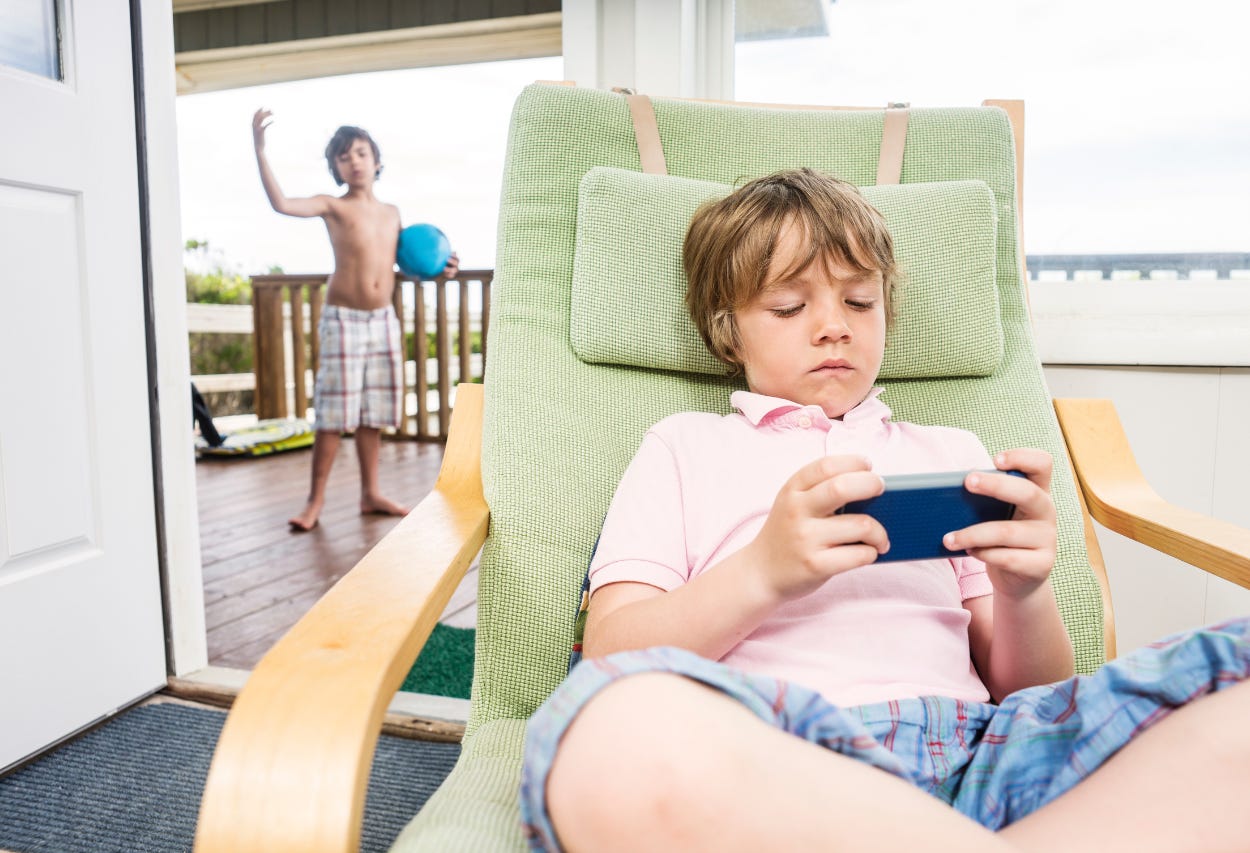
But there is a way out of this trap.
It doesn’t require rejecting technology—it just requires understanding how nervous systems actually heal.
The full article from A Midwestern Doctor maps a path forward.
The Hidden Dopamine Trap
This isn’t about blaming parents.
Families are navigating a constantly changing environment engineered against them. The responsibility belongs with systems that monetize neurological vulnerability—especially in children who can’t consent or defend themselves.
Awareness is the first form of protection.
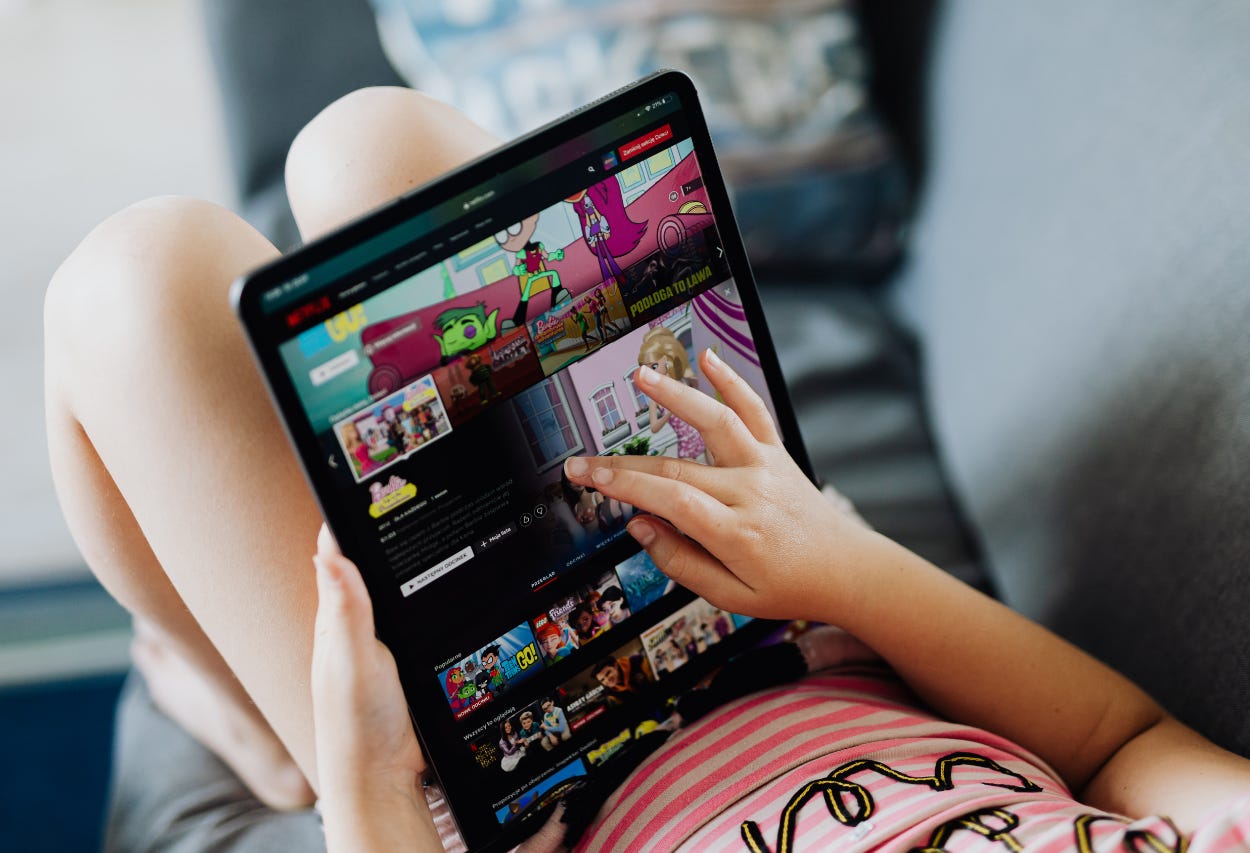
Children don’t need constant stimulation to thrive.
They need safety. Rhythm. Boredom. Presence.
They need time for their nervous systems to settle and integrate.
These things build resilience, focus, and real joy—the kind that doesn’t crash.
Depth beats intensity.

What’s at stake isn’t just attention spans.
It’s whether the next generation grows up capable of sustained thought, emotional regulation, and meaningful connection—or locked into chasing hollow highs that never satisfy.
That outcome is being shaped now. And if most kids stay on this path, the outcome could be disastrous.

Thankfully, nervous systems are adaptable.
When overstimulation is reduced and regulation is restored, attention improves. Emotional volatility softens. Joy returns in quieter, more stable forms.
Healing isn’t instant—but it is real.

Protecting our children doesn’t mean isolating them from the modern world.
It means understanding how that world works—and choosing environments that support development rather than exploit it.
That choice matters more than most people realize.

A society that trades children’s nervous systems for engagement metrics is borrowing against its future.
Reversing that trajectory starts with clarity, restraint, and a willingness to value long-term health over short-term convenience.
That work begins at home.

Thanks for reading! This information was based on a report originally published by A Midwestern Doctor. Key details were streamlined and editorialized for clarity and impact. Read the original report here.
The Hidden Dopamine Trap
For a deeper dive into what modern medicine has overlooked—or intentionally buried—check out these other eye-opening reports by A Midwestern Doctor:
This Is What Happens When You Stop Taking Ozempic
The FDA’s 50-Year War on the Safest Painkiller Ever Discovered
The #1 Killer in Hospitals Isn’t a Disease — It’s a Word
While you’re at it, give A Midwestern Doctor a follow. No one brings more research, clinical insight, or historical context when it comes to exposing the health myths we’ve all been fed. This is easily one of the most valuable accounts you’ll ever follow.

If you haven’t subscribed to this Substack yet, take a moment to read what some of the most powerful voices in the medical freedom/truth movement have to say:
“The Vigilant Fox has been putting in a lot of work to create a news platform that shares the stories we want to hear about and brings attention to the most important things to know about.”
– A Midwestern Doctor, The Forgotten Side of Medicine
“The Vigilant Fox absolutely is on top of things. We must support our fighters, and the Fox is fighting with truth.”
– Tom Renz, Tom Renz’s Newsletter
“Excellent capture of key video presentations on evolving pandemic science.”
– Peter A. McCullough, MD, MPH, FOCAL POINTS (Courageous Discourse)

It’s deliberate. The uber wealthy don’t send their kids to public school or daycare…..that’s for the peasants who must both work to exhaustion to buy food and pay a mortgage. The elite hire highly qualified nannies to care for and teach the youngest while the older children attend competitive, difficult private schools where "screens" of all types are forbidden and the material taught follows a rigorous classical approach….
The problem is also the PARENTS' screens. I stood in line at a coffee shop today for 5 minutes behind a young mother and her ~2-month-old baby in a stroller. The baby was awake, making faces, looking around, and she stood there staring at her stupid phone. She looked at him once - literally. Mothers used to make eye contact with their children, talk to them, sing, whatever. Now they just stare at phones and destroy the opportunity to form their children's brains in a positive manner. Then when the child can hold a screen, they hand them their own. It makes me sick to see this younger generation of parents. They're so totally clueless.