
This article originally appeared on ZeroHedge and was republished with permission.
Guest post by Tyler Durden
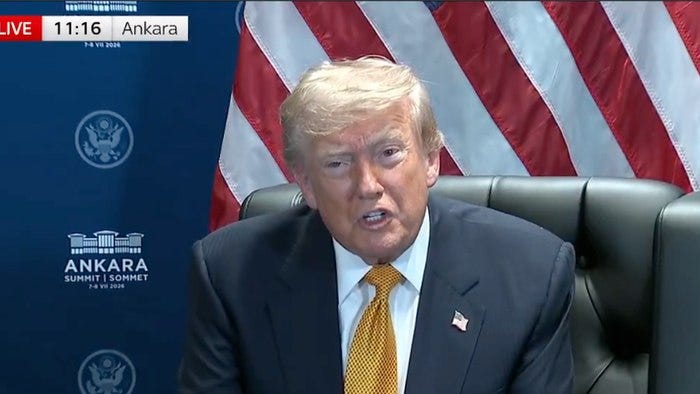
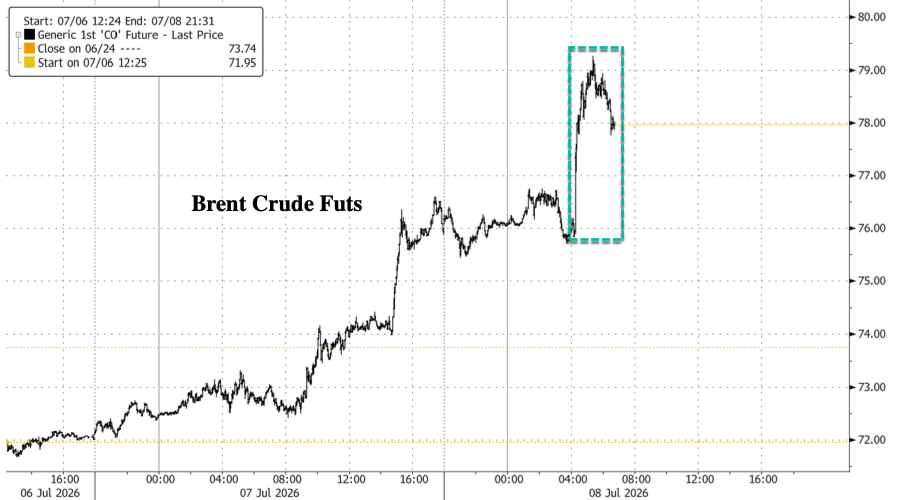
Brent crude futures jumped more than 6% in London after President Trump told reporters at a press conference in Ankara that the tentative ceasefire with Iran is over.
“To me, I think it’s over. I don’t want to deal with them anymore; they’re scum,” Trump told reporters.

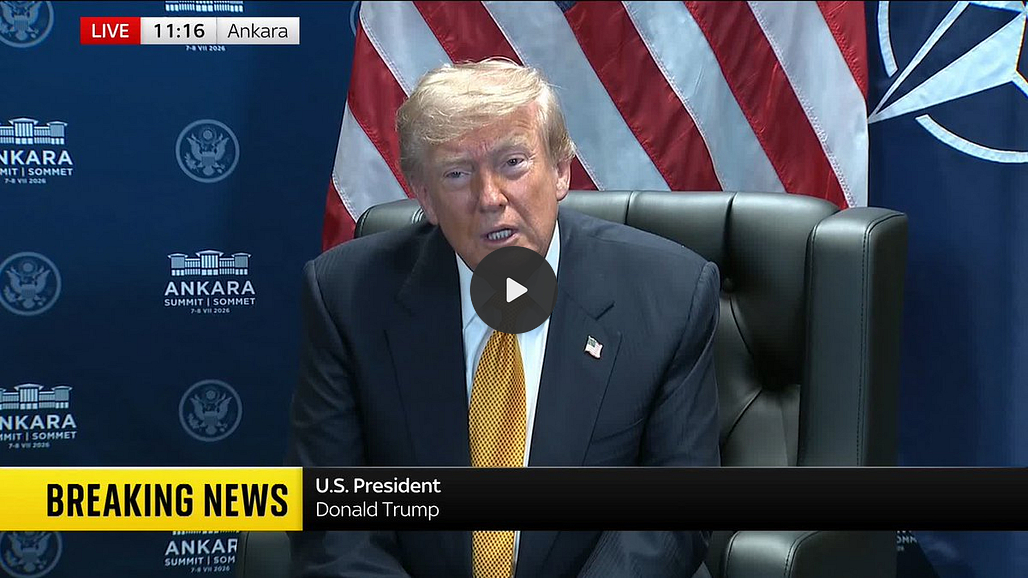
Trump’s remarks came after Iran launched missiles and kamikaze drones at several merchant vessels in the Hormuz chokepoint on Tuesday. This was countered by overnight US strikes, as fears of conflict erupting once more are on the rise.
However, Trump stopped short of saying the U.S. would restart the war and said he would let talks continue if the parties were willing.
In European trade, front-month Brent crude futures jumped 6% to $78.63 a barrel, while West Texas Intermediate rose 6.2% to $74.85 a barrel. Natural gas prices rose as well, with the benchmark Dutch TTF contract up 4.8% to 49.04 euros per megawatt-hour.
Hours before the strikes, the US Treasury revoked a sanctions waiver that had allowed Tehran to sell oil, reversing a key element of the interim deal.
Trump also told reporters that he would continue to let his negotiators talk to Tehran, though he thought “they’re wasting their time.”
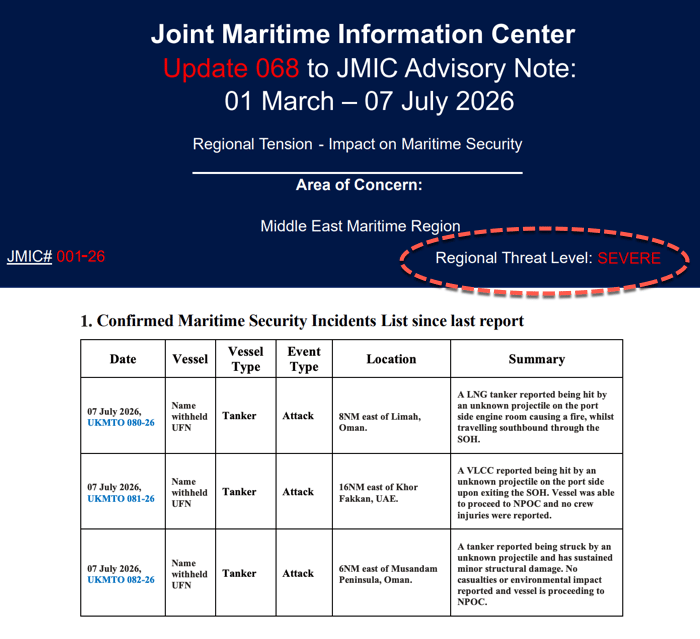
On Tuesday afternoon, the Joint Maritime Information Center upgraded the Hormuz risk rating to “Severe“ after three tankers were targeted by Iran. This renewed uncertainty in the critical waterway will only pressure the normalization of vessel flows.
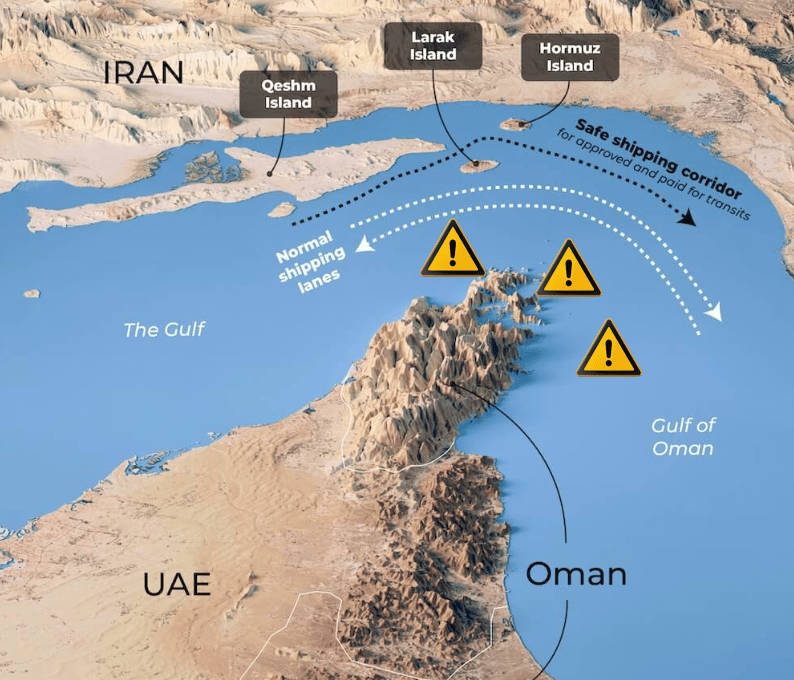
“Every renewed attack on commercial shipping further erodes confidence in the Strait’s reopening, making each future recovery more fragile than the last,” said Michelle Brouhard, head of policy and geopolitical risk at Kpler. “If every reopening is assumed to be temporary, freight rates remain elevated, insurance costs remain high and fewer vessels are willing to re-enter the Gulf.”
Dominic Ellis, UBS equity analyst covering oil and gas, wrote in a note:
The US carried out a new round of strikes against Iran in response to recent Iranian attacks on commercial vessels in the Strait of Hormuz. Iran in turn launched missile and drone attacks on US assets in Kuwait and Bahrain. While this latest escalation does not mean an end to the diplomatic progress made in recent weeks, it underscores the challenges of diplomacy when both sides believe they have the upper hand.
Markets were too quick to buy into the de-escalation narrative in my view, and while there has been evidence of progress and of a rebound in vessel flows via the Strait of Hormuz, the latest developments may lead to more realistic expectations on the return to normalcy and a slightly higher range for oil in the near term.
The likelihood of a spike above $100/b remains low, however, even in the event of further tit-for-tat strikes in the Middle East, given the surprise sustained drop in Chinese crude imports.
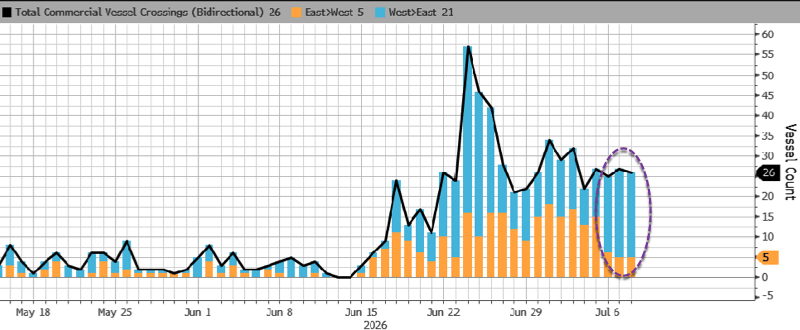
Latest Bloomberg data tracking ships transiting the Hormuz chokepoint with transponders on remain elevated, but the number of vessels making the East-West route has fallen dramatically, while West-East remains steady.
Also, note that the oil market’s forward curve has shifted into backwardation. This occurs when near-term futures trade at a premium to longer-dated contracts. The shift shows traders are once again willing to pay up for immediate crude supplies.
Copyright 2026 ZeroHedge

Those dastardly Iranians, upset that they're being attacked by US/Israel in the name of ME power.
War, war and more war. Brought to you by your government.