


The following information is based on a report originally published by A Midwestern Doctor. Key details have been streamlined and editorialized for clarity and impact. Read the original report here.
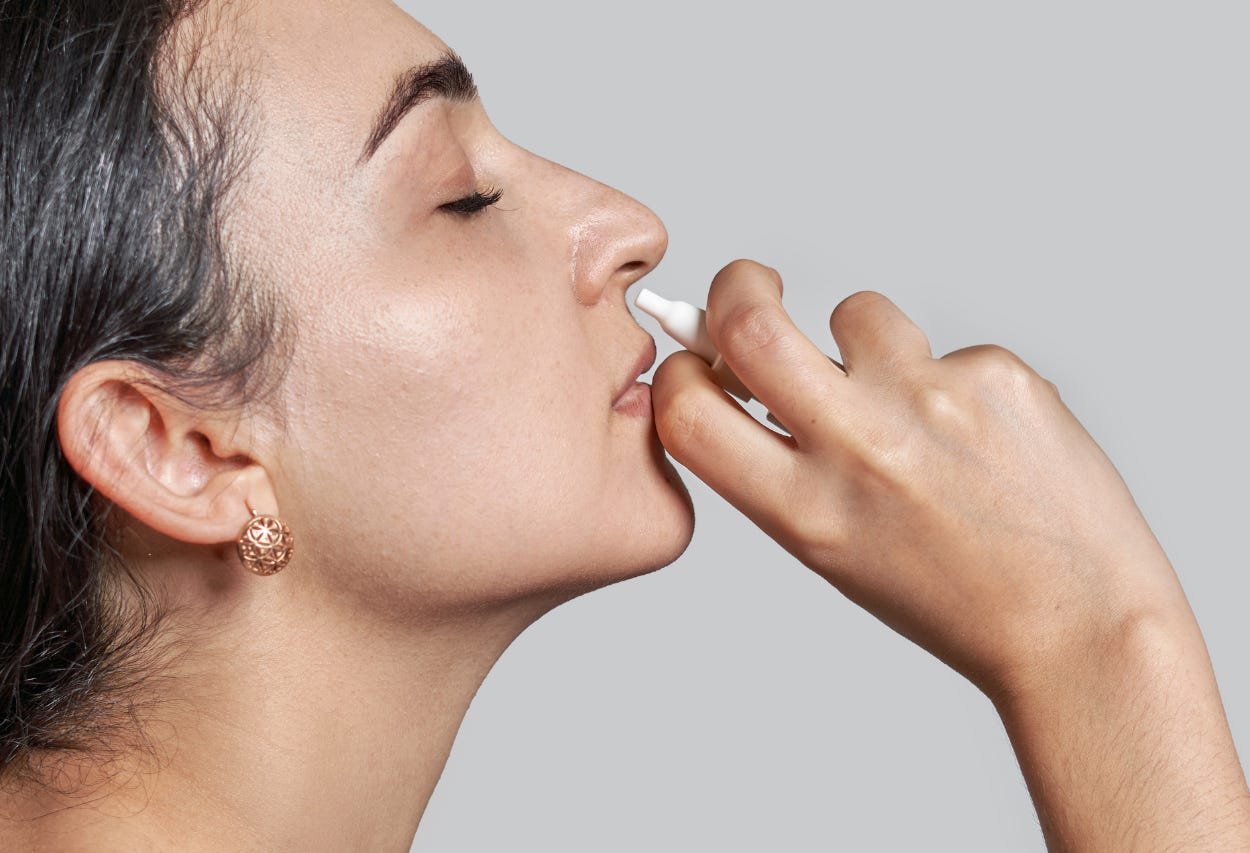
YouTuber Dan Schaeffer says he “completely cleared” his sinuses by combining DMSO, purified water, and colloidal silver into a nasal spray.
One squirt up each nose twice a day, and the results were “amazing.”
“No pressure, no nothing.”
Dan’s experience is not an isolated one.
In 1992, Russian researchers found that treating children with sinusitis using a 10% DMSO solution followed by local oxygenation provided complete relief in 49 of 52 cases.
DMSO is a cheap substance you can typically find online for under $30.
Turns out it can do much more for your respiratory system than just clear your sinuses.
Most people think respiratory infections are something you just have to “ride out.”
You get congested. Your throat hurts. Your sinuses clog. Maybe it turns into a cough, maybe it doesn’t. Maybe it moves into your chest, maybe it doesn’t.
So you take a decongestant, stock up on tissues, drink fluids, wait a few days, and hope it passes.
But that entire model skips one of the most important parts of the story:
Where many respiratory infections actually begin.

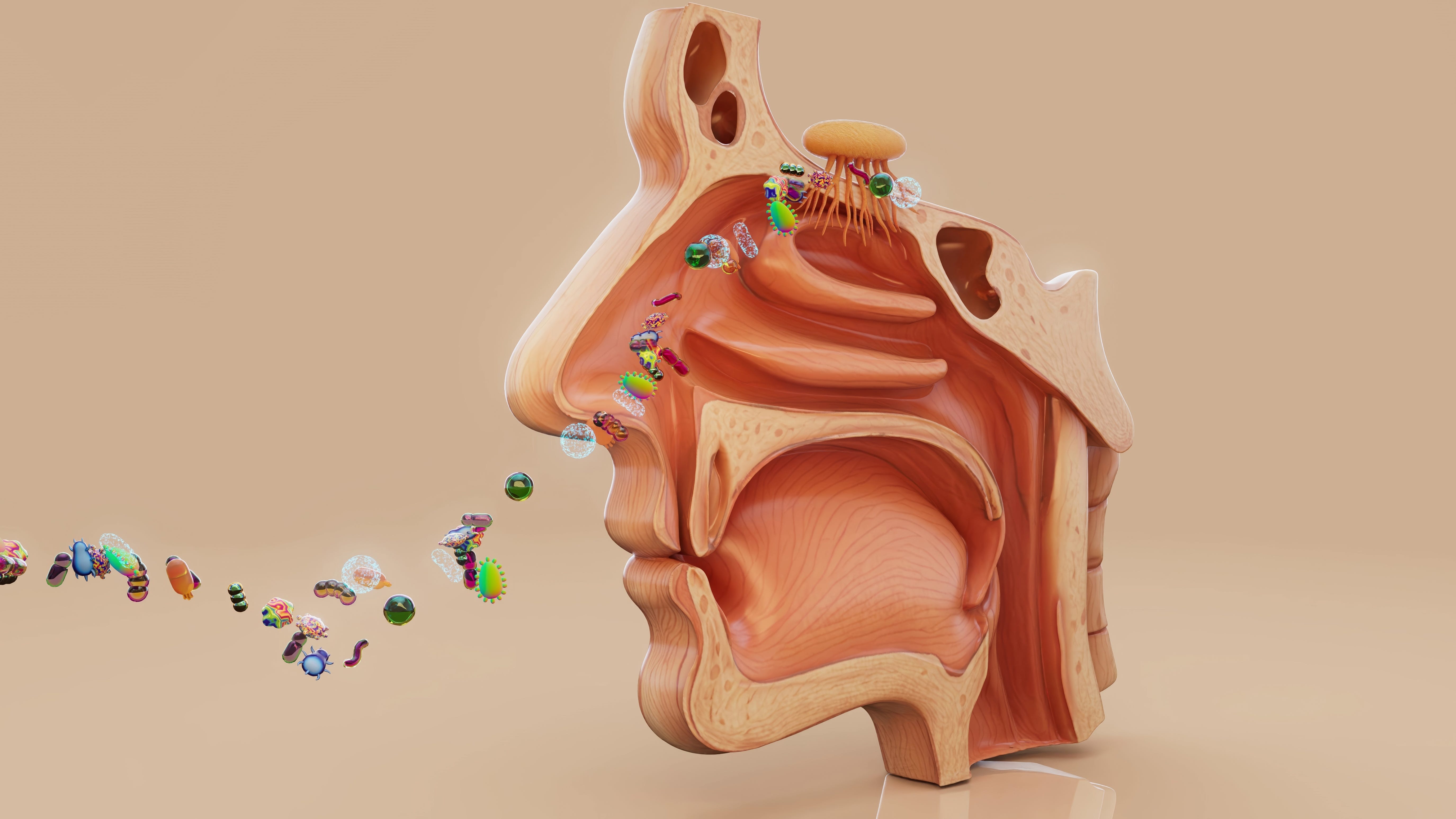
Respiratory viruses don’t typically start as deep lung infections.
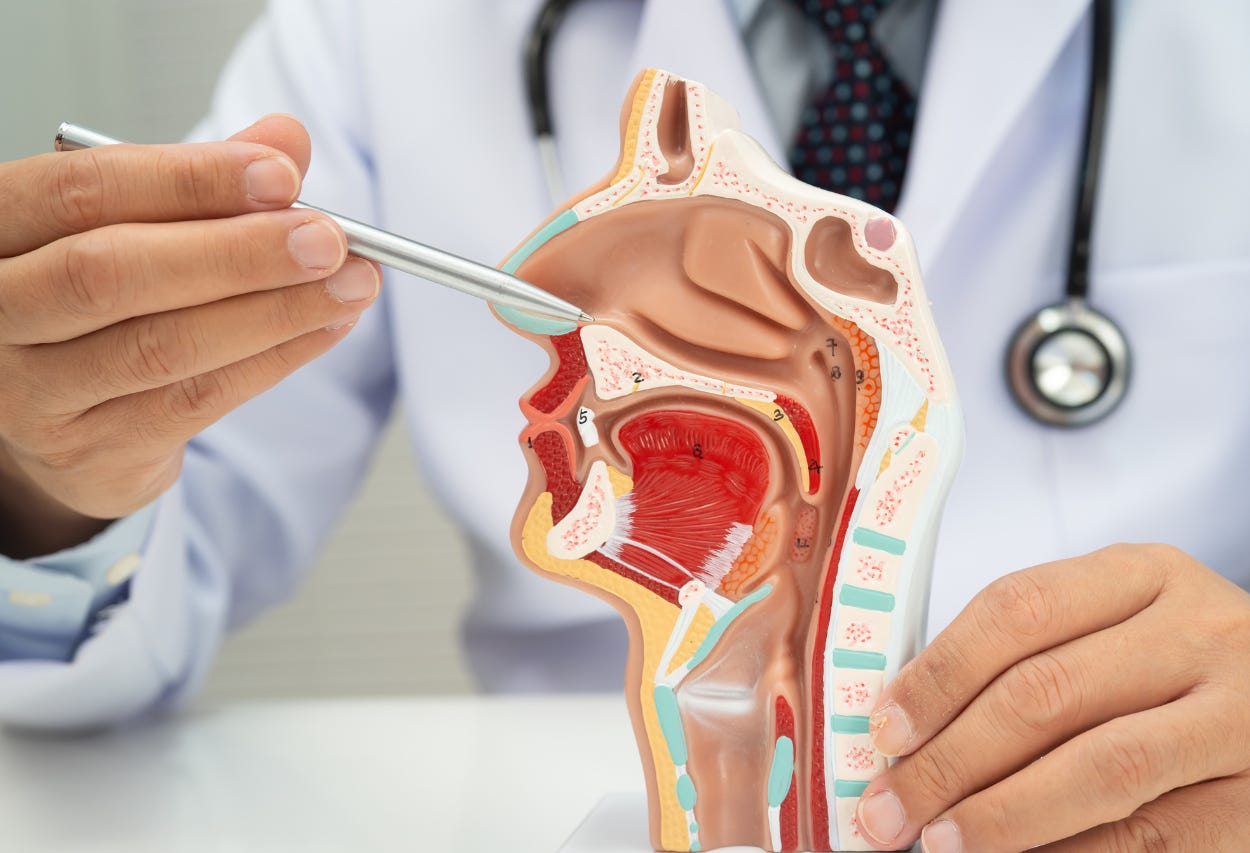
They often begin in the upper airway—the nose, sinuses, throat, and nasopharynx.
That matters because the early stage of the illness may be happening in areas that are much easier to reach than the lungs.
In other words, by the time people are talking about bronchitis, pneumonia, oxygen levels, and hospital care, they may have already missed the window of opportunity.
This information comes from the work of medical researcher A Midwestern Doctor. For all the sources and details, read the full report below.
The Sinus and Respiratory Treatments You Were Never Told About

This should completely change how we talk about colds, flus, and even COVID.
If a virus is replicating in the nasal cavity and throat before it migrates deeper into the respiratory tract, then the nose isn’t just where symptoms happen.
It is part of the battlefield!
And if it is part of the battlefield, then ignoring it makes zero sense.

That doesn’t mean every infection can be stopped with a simple sinus rinse.
It doesn’t mean serious symptoms should be treated casually.
And it definitely doesn’t mean people should avoid medical care and focus on the nose when they’re getting worse elsewhere.
But it does mean the usual advice—rest, fluids, wait, maybe take something for symptoms—has always been incomplete.
Because in many respiratory illnesses, the early fight is happening in the upper airway.
In the full article, A Midwestern Doctor makes an important point that should have been obvious during COVID:
If the virus is replicating in the nose and throat before it reaches the lungs, then early upper-airway care is not “alternative.”
It is basic terrain control!
The Sinus and Respiratory Treatments You Were Never Told About
COVID made this especially clear.
SARS-CoV-2 showed a strong preference for upper-airway tissue early in infection, particularly the nasal cavity and nasopharynx.
For many people, the virus replicated there for days before the immune system cleared it—or before the infection moved lower and became more dangerous.
That window mattered, yet the public conversation barely touched it.

Instead, the entire conversation became centralized around massive interventions.
Vaccines
Mandates
Masks
Lockdowns
Expensive drugs
Deadly hospital protocols
But one of the simplest questions was barely asked in public:
What can people do early, when the virus is still concentrated in the nose, throat, and sinuses?
That question should have been everywhere.
This isn’t just about COVID.
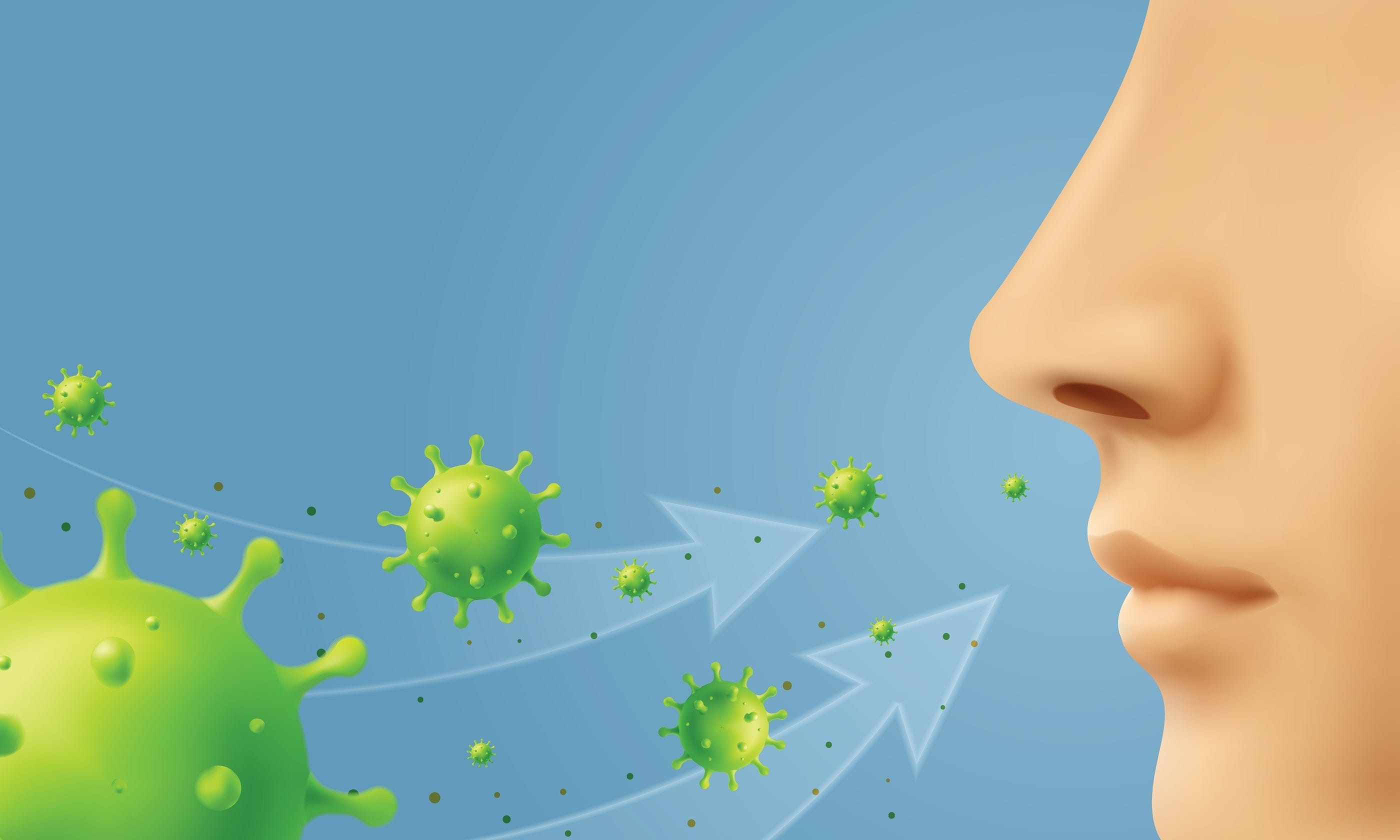
Common cold viruses strongly prefer the upper airway.
Influenza often begins there too, even though it is more capable of moving into the lower airway and lungs than a typical cold virus.
This pattern isn’t new or mysterious. A respiratory infection often begins in the exact place people are told to treat only as a comfort issue, not as an opportunity to stop the illness from progressing.
Congestion isn’t just annoying.
Post-nasal drip isn’t just annoying.
Sinus pressure isn’t just annoying.
A sore throat isn’t just annoying.
Those symptoms can be signs that the upper airway is where the infection is actively unfolding.
And if that’s true, then the first few days of illness aren’t just something to endure and to watch unfold.
It may be the most important window to take effective action.

This is where nasal and sinus hygiene becomes much more interesting.
For most people, “sinus rinse” sounds like something you do when you’re congested and miserable.
But it isn’t. What you’re trying to do with an early sinus rinse is reduce the burden in the area where many respiratory viruses first replicate.
That’s a very different frame. The nose shifts from a symptom zone into a strategic target.

One randomized trial of 1,252 COVID patients reportedly found that a DMSO-containing oral spray with zinc iodide and xylitol produced a dramatic day-7 difference:
Symptoms fell from 68% to 3%.
PCR positivity fell from 93% to 9%.
So why wasn’t this front-page news?

That trial is especially revealing because it cuts against the entire pandemic narrative.
The public was trained to think the only serious answers had to come from centralized institutions, patented products, or emergency authorizations.
But here was a low-cost, practical, upper-airway approach showing a major signal.
And most people never heard about it.
The same neglected territory in respiratory infections—the nose, sinuses, throat, and eustachian tubes—is also where millions of people suffer chronically.
Not for a few days. For years.
Recurring sinus infections.
Sinus headaches.
Blocked nostrils.
Post-nasal drip.
Facial pressure.
Ear pressure.
Difficulty breathing.
And many are told there’s not much to do besides attempts at basic symptom relief.
But what about the underlying cause?

Anyone who has dealt with chronic sinus problems knows how miserable this can be.
It affects sleep.
It affects breathing.
It affects energy.
It can make people feel foggy, inflamed, and constantly half-sick.
And because it often isn’t dramatic enough to look like an emergency, patients get stuck in a loop of temporary fixes.
A spray here.
An antibiotic there.
An antihistamine.
A decongestant.
Maybe surgery.
Then the symptoms come back. Again and again and again.

To be fair, conventional treatments do help some people.
Steroid sprays can reduce inflammation.
Antibiotics can help when there is a real bacterial infection.
Surgery can be necessary in certain structural cases.
But that’s not the whole story.
Because there’s a large group of people who do everything “right” and still remain congested, inflamed, blocked, infected, or dependent on repeated interventions.
This is where DMSO becomes hard to ignore.
DMSO is not usually discussed in mainstream sinus care, but the forgotten literature around it is surprisingly broad.
It has been reported in sinusitis going back decades.
It has been used in studies involving rhinitis, sinus infections, post-surgical sinus recovery, eustachian tube dysfunction, and difficult chronic sinus conditions.
That doesn’t mean it’s a magic cure. But it does mean it shouldn’t have disappeared from the conversation.

One of the more striking details is that Merck investigated DMSO in thousands of patients and reportedly found it had demonstrated efficacy in sinusitis.
The observation was simple but important:
A diluted solution applied to the nasal mucosa could lead to discharge of infected material from the sinuses and relief of pain.
That’s exactly what many chronic sinus patients are desperate for: Drainage and relief!
Other reports followed the same pattern.
In one study of seven women with sinusitis, two reportedly had a good response and five had an excellent response.
Another study found that sinusitis in children treated with DMSO to the sinuses followed by local oxygenation resolved completely in 49 of 52 cases within two years.
Those are the kinds of signals that should trigger curiosity—not silence.
In the full article, A Midwestern Doctor also details DMSO reports involving frontal sinusitis, chronic purulent sinusitis, acute rhinitis, maxillary sinus infections, post-surgical sinus recovery, aerotitis, aerosinusitis, and eustachian tube dysfunction.
That is not one isolated anecdote. It’s a pattern.
The Sinus and Respiratory Treatments You Were Never Told About
The eustachian tube connection is especially important because many people with “sinus problems” also have ear pressure.
They feel popping, fullness, dizziness, muffled hearing, or pressure changes when flying, driving through elevation, or diving.
They may be told their ears look fine. But the underlying issue can still be drainage, inflammation, and pressure regulation in the connected upper-airway system.

This is why the sinus conversation needs to be bigger than “are you congested?”
The nose, sinuses, throat, ears, and upper airway are all connected.
A problem in one area can show up somewhere else.
Sinus inflammation can affect breathing.
Post-nasal drip can irritate the throat.
Eustachian tube dysfunction can affect the ears.
Poor drainage can keep people trapped in recurring infections.
The body is treating this as one connected system, but medicine often treats it as disconnected parts.
Real people are reporting their own experiences using DMSO.
One person described decades of chronic sinusitis, a prior sinus surgery, and recurrent infections that could last months.
After adding DMSO to twice-daily sinus rinses, he said his susceptibility to sinus infections dropped—and when he did get one, it was much less severe and resolved much faster.
For someone living in that cycle, that is not a minor improvement.
That can change daily life!

Another report described a man with a nasal polyp completely obstructing his right nostril.
A $25,000 surgery cleared it, but tragically the polyps returned within six weeks.
Steroids helped, but they were not a long-term answer.
Diluted DMSO drops reportedly cleared him more completely than anything else had, and after 30 days he said the nostril was “more clear than it ever has been in his life.”
That is the kind of story chronic sinus patients immediately understand.

Another person described sneezing more than 100 times per day for six months, along with sinus congestion and itching.
After using a DMSO nasal spray, they said everything cleared in two weeks.
Another described severe congestion and throbbing facial pain late in pregnancy, then said that rolling DMSO across the sinuses and forehead produced relief within minutes.
These are not small quality-of-life issues.
When you can’t breathe normally, it affects everything.

Upper-airway medicine has been strangely neglected.
We built an entire public health model around fear of respiratory viruses while barely teaching people how to care for the area where many of those viruses first take hold.
We built a sinus-care model that often manages symptoms while leaving many chronic patients unresolved.
And we let inexpensive, practical, forgotten approaches disappear from view.
That is the real scandal.
Not that one compound was overlooked, not that one protocol was ignored.
But that the nose, sinuses, throat, and upper airway were treated like secondary details when they may be central to both acute respiratory infections and chronic sinus suffering.
Sometimes the most important medical blind spot isn’t hidden in a lab.
Sometimes it is right under your nose.
Thanks for reading! This information was based on a report originally published by A Midwestern Doctor. Key details were streamlined and editorialized for clarity and impact. Read the original report here.
The Sinus and Respiratory Treatments You Were Never Told About
For a deeper dive into what modern medicine has overlooked—or intentionally buried—check out these other eye-opening reports by A Midwestern Doctor:
The Real Causes of ED and the Fixes That Actually Work
Exposing The Great Acid Reflux Scam
What’s The Healthiest Water To Drink?

While you’re at it, give A Midwestern Doctor a follow. No one brings more research, clinical insight, or historical context when it comes to exposing the health myths we’ve all been fed. This is easily one of the most valuable accounts you’ll ever follow.
If you haven’t subscribed to this Substack yet, take a moment to read what some of the most powerful voices in the medical freedom/truth movement have to say:
“The Vigilant Fox has been putting in a lot of work to create a news platform that shares the stories we want to hear about and brings attention to the most important things to know about. If you want a daily newsfeed in alignment with our ...”
– A Midwestern Doctor, The Forgotten Side of Medicine
“The Vigilant Fox absolutely is on top of things. We must support our fighters, and the Fox is fighting with truth.”
– Tom Renz, Tom Renz’s Newsletter
“Excellent capture of key video presentations on evolving pandemic science.”
– Peter A. McCullough, MD, MPH, FOCAL POINTS (Courageous Discourse)

Is there a commercially available nasal spray combining these ingredients? Or can I make it myself. I have DMSO.
I am totally surprised that you didn't disks the effects of xylitol more. Just a simple mention that a Nadal spray with iodine, dmso, and xylitol worked. Published studies show that just a xylitol nasal spray reduced covid, ear infections, etc by 65-80%. That xylitol nasal spray in the studies was only half the concentration of xylitol in commercially available xylitol nasal sprays.
The data behind xylitol and how it works goes back decades...55yrs they have known about xylitol.