
This article originally appeared on TrialSite News and was republished with permission.
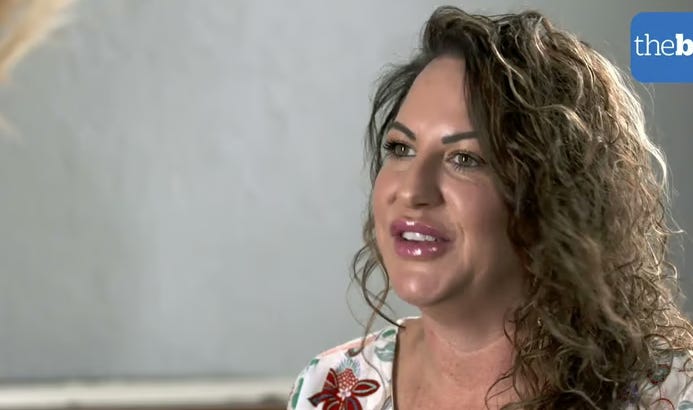
Brook Jackson, a clinical trial professional and regional director turned whistleblower, oversaw Pfizer’s pivotal COVID-19 vaccine trial at contractor Ventavia Research Group in 2020. What she witnessed, she says, was a storm of serious misconduct: falsified data, unblinded patients, poorly trained vaccinators, and delayed follow-up on adverse events. These violations flouted the trial protocol and basic research integrity, potentially skewing efficacy and safety data. Jackson was alarmed enough to email a complaint to the U.S. Food and Drug Administration (FDA) in September 2020 – expecting regulators would “swoop in and take care of everything”. Instead, Ventavia fired Jackson within hours of her contacting the FDA, dismissing her as “not a good fit”. The FDA, for its part, never inspected the Ventavia trial sites in question.
TriaSite has interviewed Ms. Jackson on multiple occasions, including a Sonia Elijah piece in March 2022. See “An Interview With Ventavia and Pfizer-BioNTech COVID Vaccine Trial Whistleblower Brook Jackson.”
Brook Jackson---Legal Door Slammed Shut

Source: Brook Jackson
What was at stake with Jackson’s case? Pfizer’s vaccine was racing through Operation Warp Speed, a government-funded sprint to approval. In fact, Pfizer had a federal deal worth $1.95 billion for 100 million doses – payment contingent on any sort of authorization. Time and money pressures were enormous. Jackson’s allegations suggest that in the rush to produce results, basic trial standards were ignored or subverted – an issue not just of protocol deviations, but of possible fraud against the U.S. government. If data were falsified or adverse events hidden, regulators and the public were misled about the vaccine’s true safety and efficacy. “If the alleged activity turns out to be true, there must be severe consequences for Ventavia and those involved,” one bioethics expert noted. Yet so far, accountability has been elusive.
Jackson’s claims were first made public in November 2021, when The BMJ published a damning investigation detailing Ventavia’s trial misconduct.
In addition to unethical data practices, according to allegations in the complaint based on discovery data, Ventavia staff even enrolled ineligible participants (including Ventavia employees and, in some cases, their family members) and failed to maintain blind testing conditions. At times, physical vaccine vials were labeled in a way that revealed whether they were vaccine or placebo, and Ventavia employees did not promptly report this error. Jackson recounted that Ventavia’s management seemed aware of these problems but covered them up – for example, by placing “notes to file” in patient charts instead of alerting Pfizer or regulators per the complaint. She also noted Ventavia’s habit of “quality checking” data by forging entries or backdating records to hide violations. In short, Ventavia appeared to prioritize speed and appearance over scientific integrity, despite certifying to Pfizer and the FDA that it would follow all protocols and regulations.
These allegations strike at the heart of public trust in the COVID-19 vaccine rollout. While the overall trial enrolled over 44,000 participants across 153 sites, misconduct at even a few sites could call into question data reliability for the entire study. It’s true that Pfizer’s final trial results were aggregated, and proponents argue that “bad data from a few rogue centers or trial sites is unlikely to fatally undermine” the vaccine’s success. According to TSN advisor, Dr. David Wiseman, this is erroneous, as errors from one site could have a large impact on study results, particularly when there are low event counts.
As the BMJ later reported, FDA oversight during the pandemic was lax: out of Pfizer’s 153 trial sites, the FDA inspected only 9 before licensure, and none of the Ventavia sites where Jackson worked. The agency even failed to inform the public or medical journals about known violations, effectively hiding scientific misconduct from the medical establishment. Specifically, according to Wiseman, in the protocol attached to the two papers in the NEJM (here and here) that Pfizer published.
“10.1.1. Regulatory and Ethical Considerations: This study will be conducted in accordance with the protocol and with the following:
• Consensus ethical principles derived from international guidelines, including the Declaration of Helsinki and CIOMS International Ethical Guidelines
• Applicable ICH GCP guidelines”
The violations alleged by Jackson, which have remained uncontested in any of the court documents, according to Wiseman, appear to constitute a breach of GCP rules and therefore a misrepresentation as to the study quality. In an age where papers are being retracted for far more minor “offences,” this should be grounds for the retraction of both papers. Further, according to Wiseman, these breaches constitute a significant source of bias that was not disclosed to CDC’s ACIP in their GRADE and Evidence to Recommendation Framework analyses, on which ACIP’s recommendations of Pfizer’s vaccine were based. Accordingly, these recommendations must be considered suspect or even void.
Jackson’s experience fits a troubling pattern of regulators turning a blind eye at the very moment rigorous scrutiny was most needed.
Government Moves to Silence the Case
Unable to ignore what she had seen, Brook Jackson filed a federal whistleblower lawsuit in January 2021, United States ex rel. Jackson v. Ventavia et al., under the False Claims Act (FCA). This qui tam action accused Ventavia, Pfizer, and another contractor (ICON PLC) of fraudulently presenting false information to the government to secure emergency approval and lucrative vaccine contracts. The core of Jackson’s claim: had the U.S. government known the truth – that protocol violations and data manipulation were occurring – regulators might have paused the trial or corrected its deficiencies, albeit delaying the approval of Pfizer’s vaccine. By allegedly deceiving the FDA, the defendants secured the Emergency Use Authorization (and subsequent purchase contracts) under false pretenses, thus defrauding taxpayers.
One might expect such a lawsuit to pique the government’s interest; instead, the Department of Justice (DOJ) tried to snuff it out from the start. In early 2022, the DOJ declined to intervene on Jackson’s behalf, despite her voluminous evidence. Then, in an unusual move, the government filed a statement of interest siding with Pfizer and Ventavia – explicitly urging the court to dismiss Jackson’s case. By October 2022, federal attorneys argued that Jackson’s allegations, even if true, did not warrant a lengthy legal battle. They fretted that her suit would impose “substantial litigation and discovery burdens” on the government and private companies, and claimed that proceeding could conflict with “the government’s public health policy goals” as covered by Bloomberg Law and others. In a striking admission of priorities, the DOJ effectively argued that pursuing the fraud claims was not in the government’s interest – an argument critics interpret as “we’d rather not know, or let the public know, if something went wrong.”
The judge obliged. In March 2023, the U.S. District Court in Texas dismissed Jackson’s lawsuit with prejudice, meaning she is barred from bringing these claims again. The court held that any misrepresentations alleged by Jackson were not “material” to the FDA’s authorization and to the payments made. In the court’s view, Pfizer’s federal contract paid for doses, not for perfect trial conduct, and the FDA’s authorization – even if influenced by subpar data – wasn’t a claim for payment per se. Moreover, the defendants pointed out that regulators were aware of Jackson’s allegations (she had reported to the FDA, after all), yet the government went ahead and authorized and paid for the vaccines regardless. In essence, Pfizer and Ventavia argued you can’t defraud the government about problems the government already knows about.
Moreover, the DOJ argued, even if Jackson’s claims were true and the clinical trial was compromised, since the EUA only required a “totality of evidence,” a regulatory term that does not require the conduct of clinical trials, having ANY data from Pifier’s trial, was immaterial to their EUA decision. Wiseman argues that this is disingenuous at best. The FDA and CDC had before and after represented that even though an EUA was given, the standards applied to Pfizer’s submission were equal to those for a conventional approval, in almost every respect. FDA cannot have it both ways - on the one hand, claiming adherence to high standards to the public and then claiming it did not need to adhere to those standards in court. Even if this could be justified, the issue of materiality as to the legal theory that Pfizer induced the USG to enter into a contract surely extends beyond the FDA’s EUA decision. The size of the order placed by USG was surely based on the demand for the vaccine that would be increased by a CDC recommendation, as well as the willingness of physicians to give the vaccine. Both of these elements depended in large part on the high scientific quality of Pfizer’s study being represented to ACIP and in the medical literature, notably the NEJM.
#ad: Looking for high-purity DMSO you can actually trust?
Earth Harmony’s DMSO is USP Grade with 99.99% purity, non-diluted, with no added water, and stored in glass bottles to prevent plastic contamination.
NOTE: DMSO (Dimethyl Sulfoxide) is a powerful solvent. This product is for research and development purposes only. Only use as recommended by your healthcare provider.
Choose purity. Choose performance. Choose Earth Harmony DMSO.

DISCLOSURE: This post contains affiliate links. If you make a purchase through Earth Harmony, we may earn a small commission at no extra cost to you.
Jackson’s lawsuit also included a claim that Ventavia illegally retaliated against her – firing her for whistleblowing – in violation of the False Claims Act’s protections. That, too, was tossed out. Ventavia insisted (with no small irony) that Jackson never told them she was raising concerns about fraud against the government, thus her activities weren’t “protected” under the FCA. The company maintained she was fired for being a problematic employee, not for any altruistic whistleblowing. The court agreed Jackson hadn’t sufficiently pled that Ventavia knew she was engaging in protected activity. As a result, the person who tried hardest to blow the whistle on these trial violations was not only silenced but left without a job, without a court remedy, and facing nearly $20,000 in personal legal sanctions (the judge ordered her to pay some of Pfizer’s legal costs).
The outcome was a devastating blow to transparency and accountability. Instead of probing Jackson’s claims, the system closed ranks. The False Claims Act is meant to empower insiders to expose fraud on the government – even, notably, when government officials themselves might be complicit or prefer not to act. As argued by Jackson’s attorney, Warner and Mendenhall, that was exactly the scenario Congress envisioned in strengthening the FCA in 1986: to enlist whistleblowers as a check against government collusion with corporate wrongdoing. Yet in this case, the DOJ became an obstacle, effectively shielding Pfizer and Ventavia from discovery. No independent investigation of Jackson’s evidence has ever been given the opportunity to be aired in court. No witnesses deposed, no documents subpoenaed – nothing beyond what intrepid journalists and volunteers have uncovered via Freedom of Information requests. (Those FOIA releases of Pfizer’s trial data, by the way, have bolstered some of Jackson’s concerns, revealing, for instance, a slightly higher number of deaths among vaccine trial participants than placebo, and other anomalies. But without a court case, these findings remain contentious and unresolved.)
“Radical Transparency” vs. Continuing Cover-Up
Fast forward to December 2025. A new presidential administration is in charge – one that came to power promising a clean break from the opacity of its predecessors. President Donald Trump (back for a second term) campaigned on “draining the swamp” once again, and in a stunning bipartisan gesture, he appointed Robert F. Kennedy (RFK) Jr. – leader of the Make America Healthy Again (MAHA) movement, and of course, a prominent critic of the COVID-19 government response and transparency advocate – as Secretary of Health and Human Services (HHS). A collaborator with (Kennedy invited this media to join with him and others suing Trusted News Initiative, which is ongoing) Kennedy had long railed against government secrecy in public health, declaring during his confirmation that “only through radical transparency can we provide Americans with genuine informed consent.” Indeed, upon taking office, RFK Jr pledged “radical transparency” at HHS. This raised hopes among medical freedom advocates that the truth about COVID-19 vaccines – good, bad, or ugly – would finally come out.
And yet, Brook Jackson’s case remains muzzled. The Trump DOJ not only affirmed but embraced the Biden DOJ’s intervention in the case ON BEHALF of Pfizer! In a blistering appellate hearing on December 3, 2025, a three-judge panel of the Fifth Circuit Court of Appeals heard Jackson’s lawyers argue that the dismissal should be reversed. They contended that the DOJ had abused its discretion by intervening only to shut the case down, and that under the law, the government needed to show “good cause” to justify such an intervention. Instead, the DOJ argued that the USG’s mere desire to dismiss the case constituted sufficient “good cause,” according to the FCA Act rules. Further, the DOJ argued, the dismissal WITH prejudice that would preclude refilings by Jackson was justified by its futility based on, as DOJ stated explicitly, the fact that “the government has determined that it doesn’t want these cases to go forward.”
Jackson’s counsel called this absurd.
“Their contention is that all they have to do is desire to dismiss it, and that is good cause,” attorney Warner Mendenhall argued, calling the government’s stance a threat to the False Claims Act itself. If mere political discomfort or embarrassment is enough to scuttle a fraud lawsuit, what remains of accountability? As Judge Jerry Smith pointedly asked the DOJ attorney during the hearing, could the government simply shut down a case because it conflicts with its “public health policy” or political agenda? This cuts to the core of the matter: is truth subservient to narrative?
The DOJ’s response in court was chilling to transparency advocates. The DOJ maintained that the government could dismiss an FCA suit whenever it “determines its interests are not served.” In other words, the executive branch claims virtually unreviewable power to bury a whistleblower’s allegations, even if those allegations may be true, simply because airing them could be inconvenient. So much for the separation of powers. When pressed, the DOJ attorney admitted that nothing would change its position – not a better pleading, not new evidence, not even a new administration. Again, “[t]he government has determined that it doesn’t want these cases to go forward.” It was a stark declaration: transparency be damned.
For observers of Kennedy’s HHS—and for that matter, Trump’s promise to drain the swamp--this was a jaw-dropping moment of cognitive dissonance. Here was a DOJ, operating under an administration that is touting openness, actively perpetuating a cover-up – the very antithesis of “radical transparency.” “This is not radical transparency. This is not in the public interest. This is not justice,” lamented Wiseman, echoing the frustration of many watching the case. Is the new leadership serious about exposing the truth, or has the entrenched bureaucracy simply co-opted them?
Critics point out that nothing prevented Secretary Kennedy or Attorney General Pam Bondi (a Trump appointee) from withdrawing the government’s motion to dismiss when they took office in January 2025. They could have allowed Brook Jackson’s case to proceed, or at least remained neutral. Instead, the DOJ doubled down on the previous administration’s position, defending Pfizer’s victory and urging the appeals court to uphold the dismissal with prejudice (permanently). “If there was a moment to demonstrate a break from past secrecy, this was it – and the administration more than blinked,” stated TrialSite News founder Daniel O’Connor.
The contrast between words and actions could not be sharper. Secretary Kennedy’s own agency is historically tied to this case – the FDA (a part of HHS) was the entity Jackson alerted, and that seemingly did nothing in response. Kennedy has publicly castigated the FDA in other contexts for being too cozy with pharma, for failing to rigorously monitor vaccine safety, and for hiding data. Yet when presented with a live example – a whistleblower alleging exactly those problems – his department’s lawyers (via DOJ) opted to silence her. The optics are terrible: It appears the government would rather protect Pfizer’s reputation and its own rollout narrative than reckon with a possible scandal. So much for “informed consent” built on truth.
A Blistering Assessment: Public Trust on the Line
From a legal perspective, the handling of Brook Jackson’s case sets a damaging precedent. The False Claims Act was designed to empower private citizens to fight fraud, even when the government is unwilling. By intervening to dismiss (especially after initially declining to act), DOJ may have weaponized its authority to shield political interests. This discourages future whistleblowers: As Jackson’s attorney warned, the message to anyone aware of fraud during a government-backed program is that if the fraud implicates government decisions or complicity, “don’t bother reporting it.” Allowing the dismissal with prejudice (as the district court did) only twists the knife—preventing Jackson from ever refiling her claims, even if new evidence emerges. One Fifth Circuit judge noted that normally, a case dismissed before trial is without prejudice by default, raising questions about why Jackson’s was permanently shut down. The DOJ insisted that it wanted the door firmly closed, effectively saying that no matter what comes out about Pfizer’s trial, the government will not pursue it. Such an adamant stance is baffling and alarming in light of the public interest at stake.
Politically, this saga highlights a continuity between administrations that belies partisan narratives. Under President Biden, officials no doubt wanted to defend the vaccine program’s legitimacy and avoid any admission of flaws. Under President Trump (with RFK Jr. at HHS), one might have expected a pivot – at least a willingness to err on the side of openness given their rhetoric. Instead, both administrations’ actions converged on the same result: keep the Pfizer trial story under wraps. This suggests that the machinery of government, when it comes to the COVID-19 vaccine enterprise, remains more aligned with industry and self-preservation than with “draining the swamp” or exposing uncomfortable truths. TrialSite’s Daniel O’Connor elaborated, “We have been aware since Trump’s swearing in for the second presidency that he did not want to field problems linked to the COVID-19 vaccines. This was an electric third rail.” So this raises the specter of regulatory capture – the notion that agencies like FDA (and by extension DOJ) protect the very companies they oversee, perhaps fearing that any concession now could fuel vaccine hesitancy or liability. And this and other examples are very familiar to RFJ Jr—see The Real Anthony Fauci.
But short-term damage control can backfire; the long-term damage to public trust is immense. When people eventually learn that a whistleblower’s detailed fraud claims were never even allowed to air in court, confidence in both the vaccine and institutions, including Trump-Kennedy, will further erode.
Ethically, what is happening is often described with one word: cover-up. Millions took Pfizer’s vaccine based on assurances of its safety and 95% efficacy in a trial conducted to the highest scientific standards. If Ventavia’s mismanagement and data corruption were substantial, perhaps some of those assurances were misleading. We know, for example, that Pfizer’s trial reported an imbalance of deaths (more in the vaccine group than placebo). If key data were omitted or glossed over, patients were denied informed consent. Shouldn’t the public have a right to know? Instead, the government’s relentless blocking of Jackson’s case gives the impression it cares more about preserving a narrative and shielding powerful actors from scrutiny.
This runs counter to basic principles of ethics in public health. Transparency isn’t a luxury in a public health crisis; it’s a necessity to maintain credibility. By punishing a whistleblower and concealing potential evidence of trial fraud, officials have arguably betrayed the very public they serve. As one open-government advocate put it when HHS recently took actions contradicting its transparency promises: It’s “a direct attack on the idea that [a public health agency] should have to tell the public everything that it’s doing.”
In the court of public opinion, the entire credibility of “radical transparency” is now on trial. RFK Jr and President Trump face a pivotal choice: continue to cover up in the Brook Jackson case, or intervene at this late hour to let sunlight in. “Your entire record will be judged on your next move,” Wiseman wrote in an appeal to Kennedy, urging him to instruct the DOJ to withdraw its opposition and “get out of Brook Jackson’s way.” If he was serious, he would instruct DOJ to join Jackson. It is a rare showdown between rhetoric and reality. If the administration truly believes in accountability and truth-telling, allowing a full airing of Jackson’s evidence – in court, under oath – would demonstrate that commitment. It would also signal respect for scientific integrity: showing that even a successful vaccine is not beyond critique or improvement, and that learning from mistakes is healthier than burying them.
So far, unfortunately, what we’ve seen leans toward the latter. The government’s posture resembles a cover-up more than any “radical transparency.” From the FDA’s failure to act on Jackson’s warnings, to the DOJ’s maneuvers to quash her lawsuit, to the current administration’s acquiescence in that strategy, the pattern is consistent. Protect the program. Protect Pfizer. Protect ourselves. In doing so, officials may think they are safeguarding public confidence, but false confidence is built on sand. Sooner or later, the truth emerges – and when it does, the fallout is much worse than if one had been forthright.
Is this radical transparency? Clearly not. It looks like a continuation of the cover-up, merely under new management. The hypocrisy is palpable: those who once championed openness are now complicit in opacity. The Brook Jackson saga stands as a test of whether our government institutions will prioritize truth and accountability over expediency and image. Thus far, they are failing that test.
Unless corrective action is taken – allowing whistleblowers to be heard, investigating their claims without fear or favor, and leveling with the American people – the “radical transparency” mantra will ring hollow, just another broken promise. And the public’s faith in both vaccines and government, and increasingly MAHA, will continue to crumble, one hidden truth at a time. Jackson’s treatment in this case raises serious constitutional issues. TSN predicts that if the US Court of Appeals for the Fifth Circuit rules against Jackson, we will be seeing this case in the Supreme Court.
Article Contributors: David Wiseman, Ph.D. and Daniel O’Connor, J.D.
Copyright 2025 TrialSite News

Can't say this often enough and reiterating for the sake of newbies and to support this post.
I am a FREE SPEECH absolutist! All the censorship out there is pure evil!
Without freedom of speech and expression, there is nothing but a 'boot stamping on your face forever', total tyranny and slavery! Free speech must be protected and preserved at all costs!
citizensforfreespeech.org
thefire.org
END ALL WARS NOW! END ALL MILITARY MADNESS NOW BEFORE IT ENDS ALL OF US!
Can't say this often enough! STOP BEING PLAYED - TARGET THE PUPPETMASTERS WHO WANT US AT EACH OTHER'S THROATS - ALL WARS ARE BANKERS WARS AS THEY PROFIT FROM DEATH AND DESTRUCTION!
THEY want you dead or a slave every which way from Sunday and actual kinetic warfare ops are major components in THEIR arsenal.
Divide and rule! Agents provocateurs anyone, FALSE FLAGS, propaganda social engineering psyops? Keeping us proles at each others' throats while the globalist technocrat predators laugh all the way to the BIS and The Bank of Rothschild's!
Can't say this often enough! The Military/Industrial Complex and the Biowarfare/industrial Complex, WEF agenda and the evils assaulting humanity are from one and the same source - it is the 99% against the diabolical GREED of the 0.01% who should not be in charge of anything!
And BIG pHARMa is an arsenal making permanently sickly addicted slaves dependent on their products - the complete opposite of actual health.
Peddling pure poison! Folks have to wake up to reality: health comes from organic diet, daily exercise and clean living and never from a needle or a pill except in dire, rare traumatic injuries.
Can't say this often enough!
It was NEVER about health! The Powers That Should Not Be were ALWAYS about they want you DEAD or a SLAVE! This is a painful truth to accept but we the people must wake up and fight back! And toxic injections/pills were/are a huge part of their arsenal! Mistakes were not made!
KEEP FIGHTING! All the perps who pushed this greatest crime against humanity, all the way down to the local level, must get their comeuppances!
Proudly ANTI-VAXX! Reiterating for the sake of newbies and to support this post.
Ban all vaccine jabs! There has never been a 'safe and effective' vaccine since Edward Jenner's fraud over 200 years ago as per 'Dissolving Illusions' by Suzanne Humphries and 'Turtles All the Way Down' by Anonymous. Health can never come from a needle or pills, but from healthy eating, healthy exercise and healthy living! virustruth.net
JAB INJURIES: GROSS CALAMARI BLOOD CLOTS/AUTISM TSUNAMI/SADS/TURBO CANCER/BIZARRE TERMINAL ILLNESSES: More tragic victims of the ruling parasite genocidal enslavement agenda, sacrificed on the altar of psychopathic greed and hatred of humanity.
PSYCHOPATHS! MEGALOMANIACS!
The monsters in human skin suits who rule the world get a sadistic vampiric thrill and boost from perpetrating the vilest most demonic crimes against the most vulnerable (babies and small children) and then corrupting the system to get away with it scot free! We the People must stop them, there are a lot more of us than them!
This horrifying Congress Critters, Gates, Governor 'Gruesome Newscum', 'Lone Scum', Soros, 'Benedict' Biden and Harris and even Trump, Vance, and 'Ramaswampy' et al are blatant fully owned and operated puppets of their globalist technocrat parasite masters same as other numerous 'PUBLIC SERPENTS' infesting by design from above, the bureaucratic apparatus.
BURN BACK BETTER!
CREATIVITY! ARTISTRY! IMAGINATION! SPIRITUALITY! HUMOR! LOVING KINDNESS! These are the best ways to fight THEM!
HELL NO TO GENESIS MISSION/STARGATE/DEEPSEEK! HELL NO TO AI! technocracy.news
Life everywhere is being assaulted by THE TECHNOCRATIC OMNIWAR! RESIST! DO NOT CONSENT TO ALL THINGS DIGITAL, 'SMART', AI, 5G, NO CASH - ALL OF IT! dhughes.substack.com Technocrat ruling class psychos get a sadistic thrill from their powers over life and death and hurting all who stand in their way and they need the resources worldwide to build their digital total slavery control grids (herd survivors into 15 minute city digital prisons)!
AI is designed to be anti-human/anti-life programmed by technocrat control freak psychos - garbage in = garbage out. Everyone got along just fine without all these absurd and downright satanic electronic gadgets that did not exist until recently. NOBODY NEEDS THIS AI CRAP!
Bless and thank you for doing what you do.