


The following information is based on a report originally published by A Midwestern Doctor. Key details have been streamlined and editorialized for clarity and impact. Read the original report here.
RFK Jr. told Tucker Carlson the CDC buried its own internal study showing a 1135% INCREASE in autism risk from hepatitis B vaccination.
The researchers were shocked.
So they covered it up.
How?
“They got rid of all the older children essentially and just had younger children who are TOO YOUNG TO BE DIAGNOSED [with autism],” Kennedy explained.
Imagine discovering evidence of catastrophic harm and making sure no one ever found out.
Then, telling everyone it’s “safe.”
If health authorities are willing to keep a signal this alarming hidden from you, what else are they not telling you about vaccines?
Is it possible that your child’s allergies or chronic immune issues didn’t appear organically, but were triggered by vaccination instead?
The vaccine-autism fight is usually framed as one bad paper versus settled science.
Hands down. No questions.
That framing is emotionally powerful and far too small.
The question is not whether a single case series proved causation. It’s whether modern medicine has built a system that can even detect rare, subgroup-specific neurological injury.
And if it can detect it, is the system even capable of admitting it?

Before digging into the evidence, one thing has to be understood:
The official public-health position is that vaccines have not been shown to cause autism.
But that doesn’t end the discussion. Not even close.
It actually narrows the real question: are there vulnerable subgroups, injury patterns, or mechanisms that broad population studies are just not designed to see?
If your studies are designed to not see something, can you ever expect to see it?
The prevalence problem is real.
Autism has risen from roughly 1 in 10,000 children to about 1 in 31 today.
That number doesn’t prove causation. But it does raise the stakes and a question that still hasn’t been answered.
What changed so dramatically in such a short period of time?
Whether the rise comes from better diagnosis, broader criteria, environmental exposure, or some mix, society cannot simply hand-wave it away.

This information comes from the work of medical researcher A Midwestern Doctor. For all the sources and details, read the full report below.
Why Do Vaccines Cause Autism?

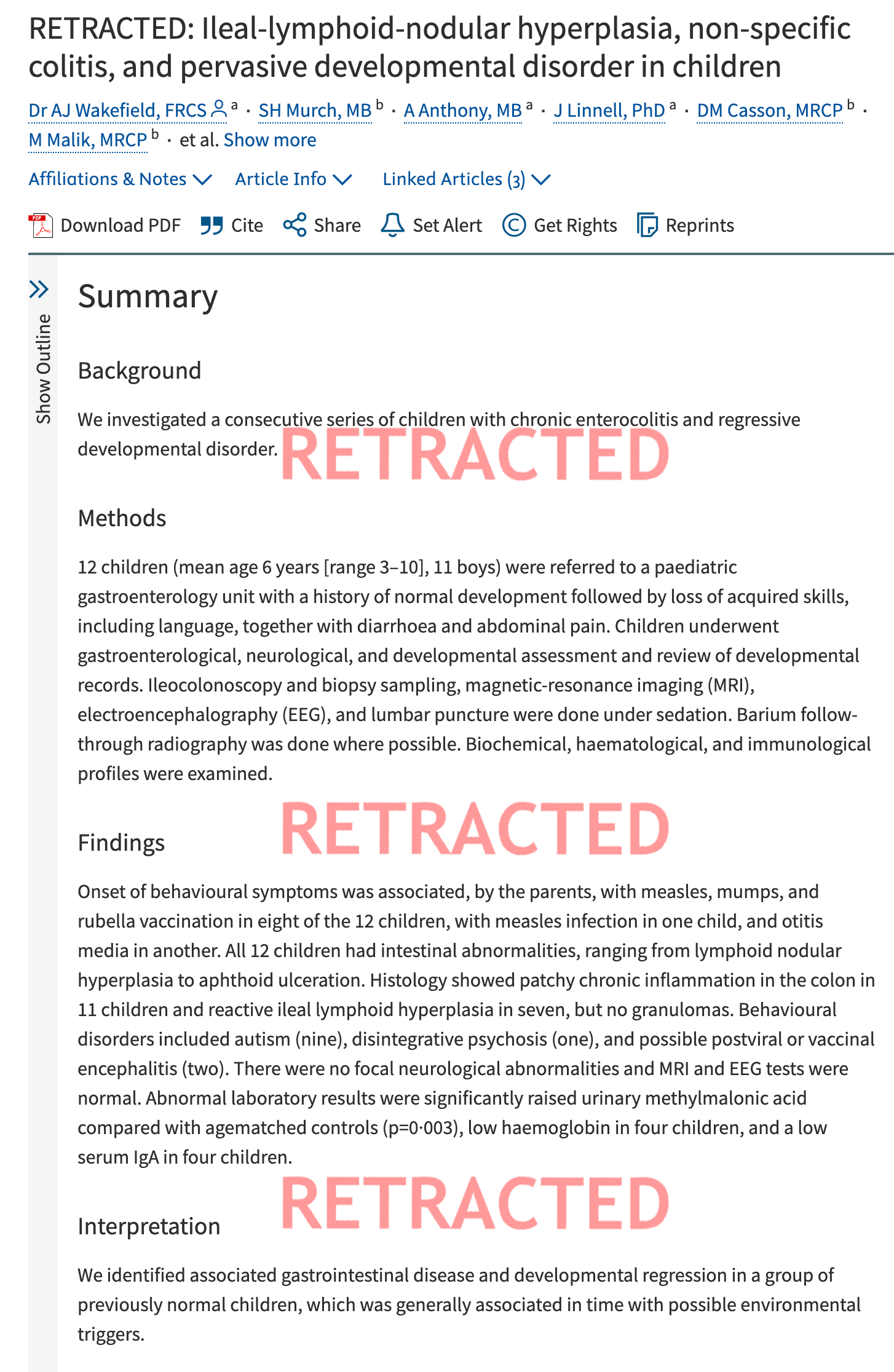
The official narrative often collapses the entire debate into one man: Andrew Wakefield.
His 1998 Lancet paper became the symbol—before it was fully retracted in 2010.
But the original controversy wasn’t simply “one man claimed vaccines cause autism.” It was real children experiencing real developmental regression, gastrointestinal disease, and a cry from parents for further investigation.
That distinction matters.
A case series can be weak evidence for causation and still point toward a biological pattern worth studying.
Medicine is supposed to do that constantly: observe a cluster, define the phenotype, ask what mechanism could explain it, then test the model.
So why didn’t that happen? Why did this topic became uniquely radioactive?
And that radioactivity has persisted for decades. Even now, people reading this thread will react as though simply discussing this topic and asking basic questions is absurd and dangerous.
It’s not organic.

For decades, the vaccine-autism debate has been framed as “settled science.”
But buried underneath that slogan are actual signals.
The deeper you go, the stranger the entire story becomes.
A Midwestern Doctor has all the details.
Why Do Vaccines Cause Autism?
Before the internet era, televised news sometimes aired hard segments on vaccine injuries: 1978 swine flu injuries, 1982 DPT brain-injury reporting, and other stories that would now trigger instant reputational warfare.
But the media environment changed once pharmaceutical advertising became embedded in broadcast economics.
This isn’t about proving everything in one leap.
It is about something narrower: when an injury pattern becomes unspeakable, the search for mechanism can disappear before it starts.
Why Do Vaccines Cause Autism?
One proposed mechanism is inflammation.
Immune-activating events during sensitive developmental windows may produce brain or gut inflammation in susceptible children.
Which doesn’t mean every child has the same risk.
It means the wrong biological signal, at the wrong time, in the wrong host, could matter.
Why is it that for some things society understands that not every child is identical, but when it comes to others, it’s common to hear statements like, “I was vaccinated and I’m ok?”

The strongest version of the inflammatory argument is not “autism equals inflammation” or “all inflammation causes autism.”
It’s more specific. Some children show regressive onset, immune abnormalities, gastrointestinal symptoms, food sensitivities, altered cytokines, and brain-inflammation markers. Some.
And if those features cluster, the right question isn’t ridicule.
It’s subgroup analysis.
We’re supposed to listen to the signal.

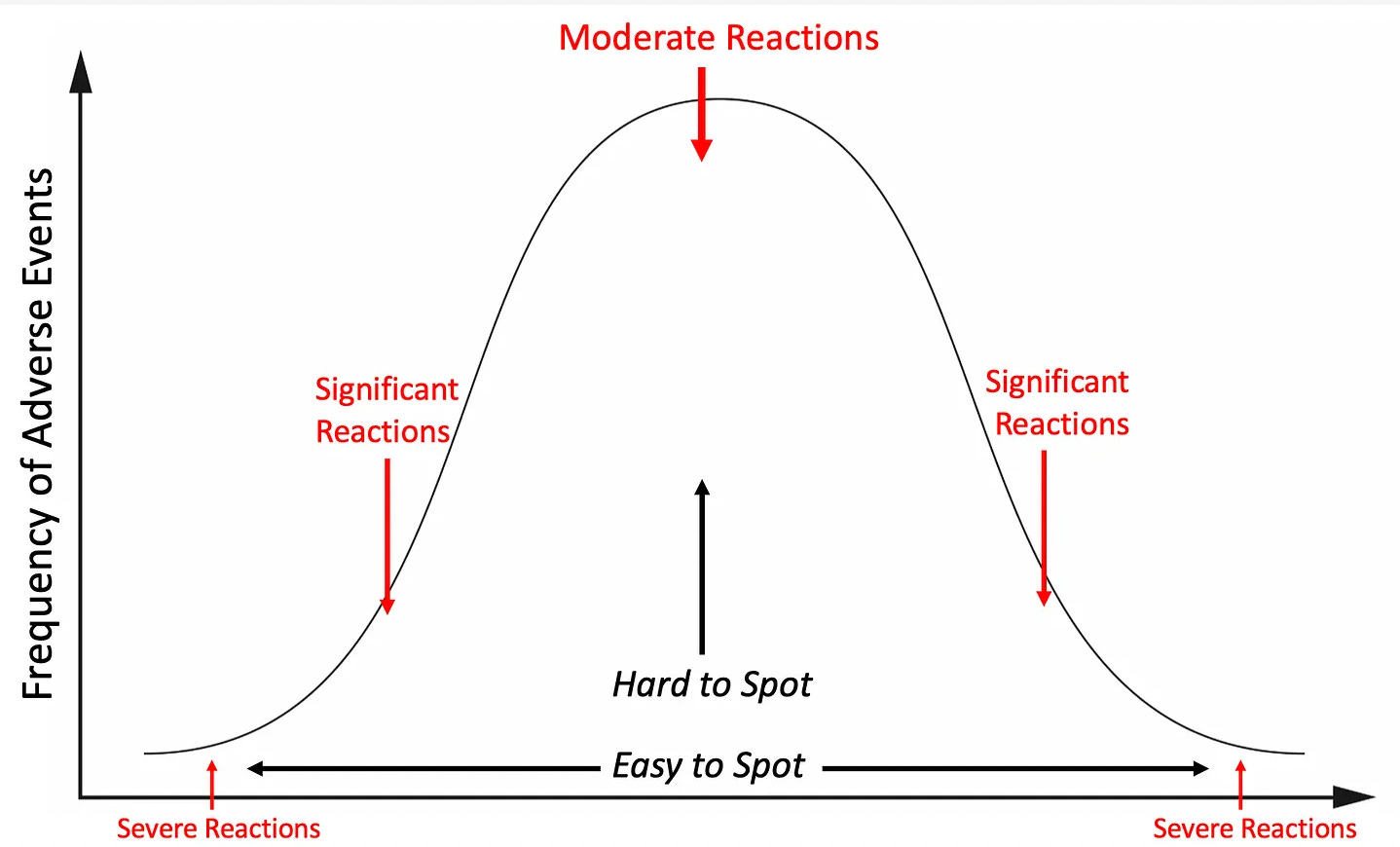
The most useful model here is the toxicity bell curve.
In real life, harms don’t appear evenly.
Whether it’s a vaccine, a toxin, a medication, or an allergen, most people may have no obvious reaction while some have subtle, yet significant changes, changes. Only a small group has severe injury but those most visible cases become the only ones debated.
One of the most unsettling parts of this entire debate is that both sides may be talking about completely different populations.
If neurological injury exists on a spectrum, subtle cases could disappear into statistics while only the catastrophic cases become visible enough to fight over.
Don’t miss the full report from A Midwestern Doctor.
Why Do Vaccines Cause Autism?
That bell curve is why “most children are fine” and “some children may be vulnerable” are not mutually exclusive claims.
Drug safety works this way.
Infection risk works this way.
Environmental toxicology works this way.
A population average can absolutely hide a subgroup that deserves to be seen. The challenge is finding the subgroup before the harm becomes irreversible.
And the additional challenge is trusting the system to not cover it.

The second mechanism is the cell danger response.
In simple terms, cells under threat shift from normal function into defense mode. The mitochondria help coordinate that shift.
In the healthy version, the cycle resolves.
In the chronic version, cells get stuck in a protective state that starts looking like disease or disorder.
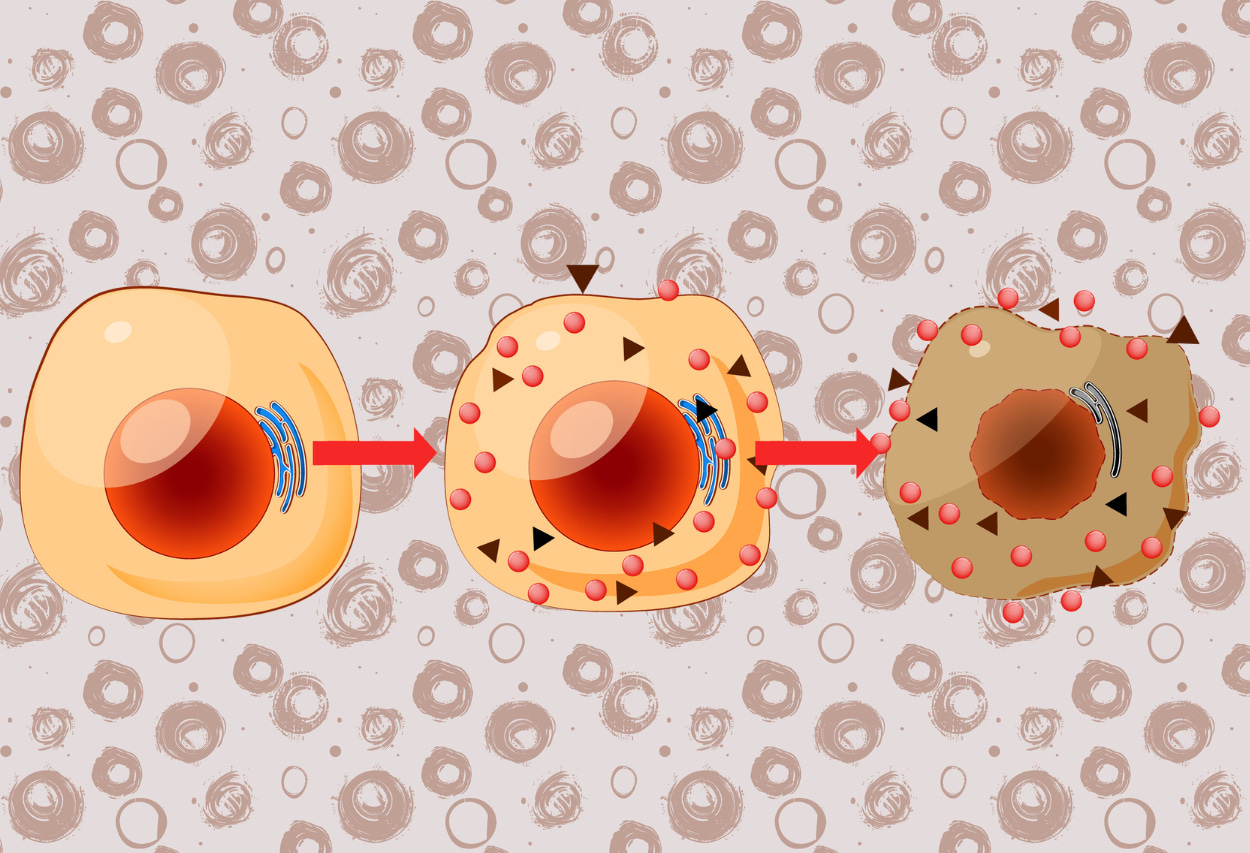
This gives the vaccine-autism hypothesis a broader logic. The trigger may not need to “break” the brain in one dramatic event.
It may push already-vulnerable systems into a persistent defensive state—immune activation, altered metabolism, mitochondrial dysfunction, autoimmunity, gut disturbance, and neurological symptoms reinforcing one another.

The debate changes once you stop arguing over slogans and start asking real questions.
Inflammation.
Gut injury.
Cell danger signaling.
Blood-flow disruption.
The real divide is whether these patterns deserve deeper investigation—or automatic dismissal.

The third mechanism is zeta potential, an unfamiliar concept to many.
Blood and lymph are colloidal fluids. If the electrical charge that keeps particles dispersed weakens, cells can clump, circulation can slow, and tiny vessels can become vulnerable.
In this model, injury is fluid-dynamic.
This is where Andrew Moulden enters the story.
His argument was that some post-vaccine neurological signs looked less like vague behavioral change and more like small vascular injuries: cranial nerve palsies, eye deviations, and microstrokes too small for routine imaging.
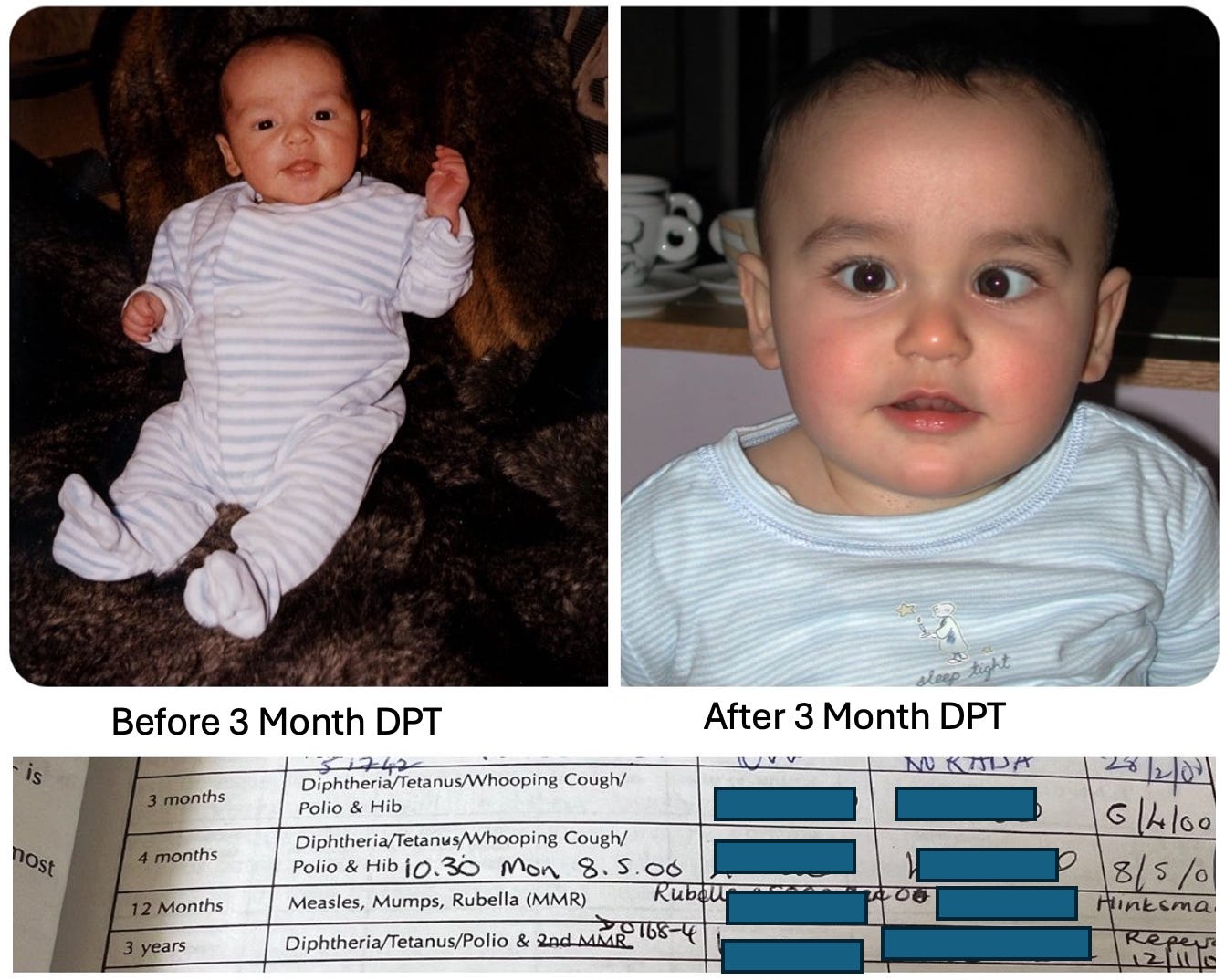
The emotional force comes from parents describing normal development followed by rapid regression, seizures, eye changes, or loss of speech after a shot.
While anecdotes cannot settle causation, when the same timing and phenotype are reported repeatedly, the correct scientific response is careful investigation—not automatic dismissal.
One of the most concerning patterns in this entire debate is how often parents describe the same sequence.
Normal development.
Vaccination.
Then rapid regression shortly afterward.
The full report from A Midwestern Doctor goes deeper into this tragic pattern.
Why Do Vaccines Cause Autism?
Here’s the catch and what most people miss: autism is not one thing.
“Autism spectrum disorder” includes children needing lifelong full-time care and people who are socially atypical but highly functional.
That ambiguity changes the politics.
It can make prevalence increases seem harmless in one moment and severity impossible to discuss in the next.
The same ambiguity exists with vaccine injury.
Severe cases are easy to see. Subtle cases are easy to miss.
If a child has a minor cranial nerve problem, sleep disruption, food intolerance, speech delay, or behavioral shift, each symptom can be explained away separately.
The system rarely asks whether they belong to the same biological pattern.

The most unsettling part is not any single mechanism.
It’s the pattern.
The severe cases become emotional outliers.
The subtle cases become statistically invisible.
And once that happens, almost every debate turns into an argument over definitions instead of causes.
Most people are missing the part entirely. And the vaccine manufacturers and public health organizations don’t seem to mind.

The broader systemic argument is where this becomes bigger than autism.
It links the rise in neurological, allergic, autoimmune, and chronic illness to three recurring processes: unresolved inflammation, cell danger signaling, and impaired blood or lymph flow.
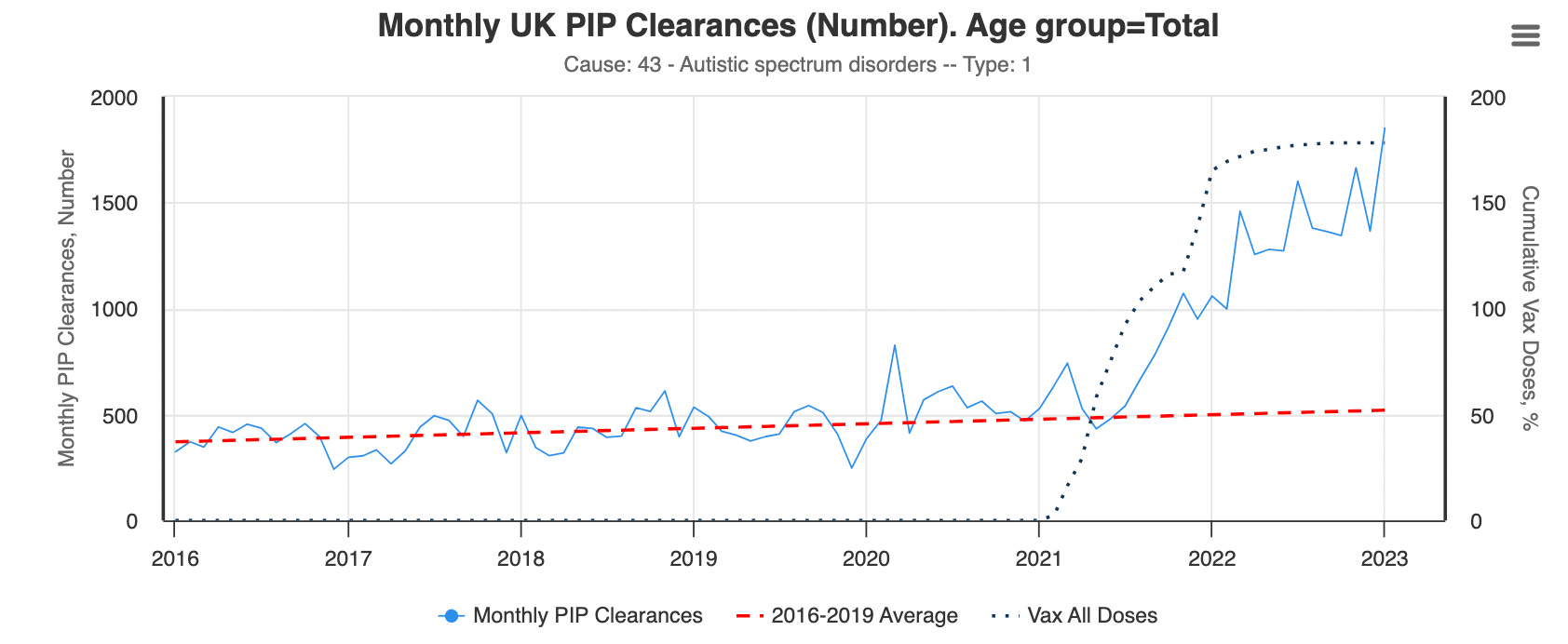
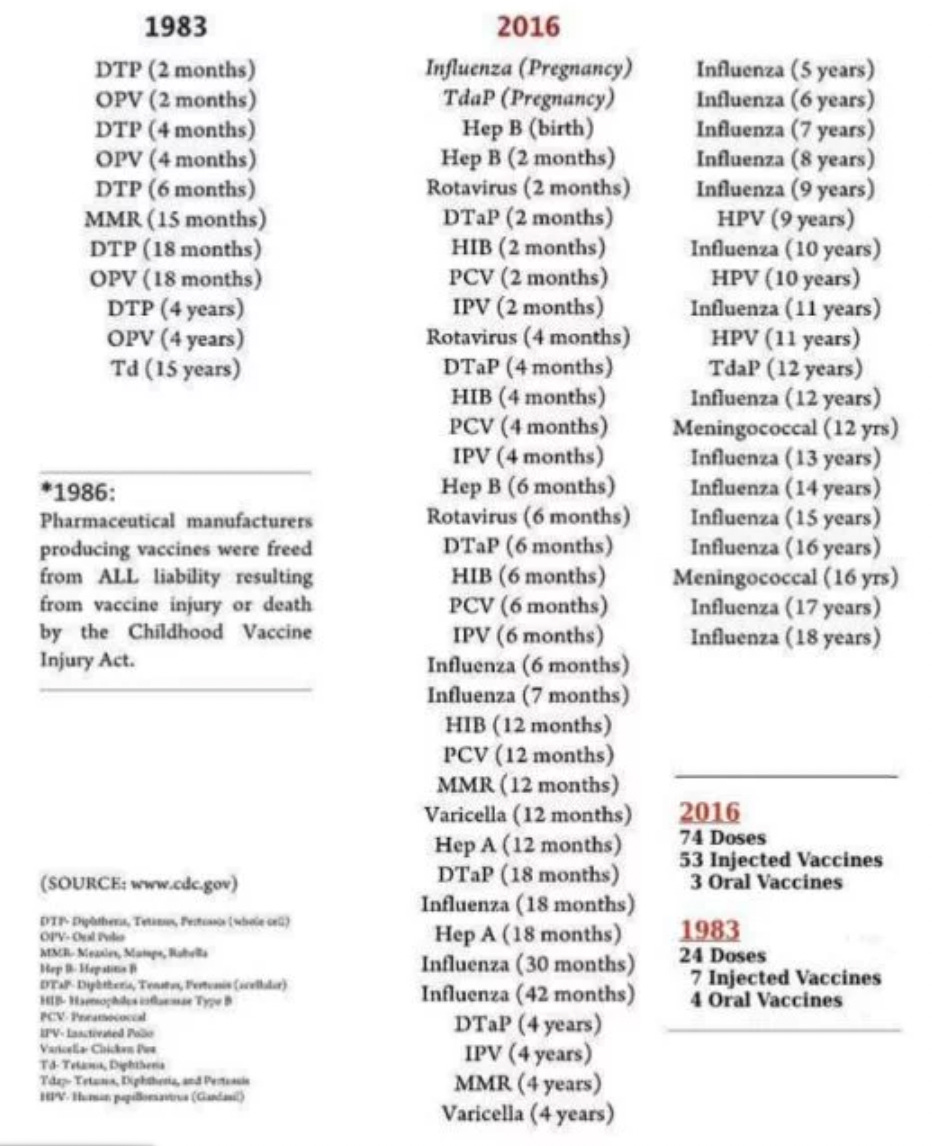
The childhood vaccine schedule expanded dramatically between 1983 and 2016.
More shots.
More total exposures.
More vaccines administered at younger ages and in tighter clusters during early development.
That does not automatically prove those changes caused autism.
But it’s one reason many people argue exposure intensity itself deserves far more serious investigation.
This isn’t an anti-medicine rant.
The question is whether a product category can be beneficial at population scale while still producing rare or subgroup-specific harms that institutions are poorly incentivized to detect, admit, and study.
You can choose to vaccinate and think the system isn’t handling this correctly at the same time. Both realities can exist.
We don’t need statements and press releases.
We need to define subgroups: regressive versus non-regressive autism, GI versus non-GI cases, premature infants, immune-reactive children, mitochondrial or metabolic vulnerability, timing of symptom onset, and total exposure patterns.
And then ask which mechanisms actually survive contact with the data.

The real divide here isn’t “science versus parents.”
It is whether science is allowed to follow uncomfortable patterns without first protecting an institutional narrative.
If the answer is no, then the system will keep producing certainty in public—and unanswered questions in private.
All at the expense of our most valuable and vulnerable asset—our children.

Thanks for reading! This information was based on a report originally published by A Midwestern Doctor. Key details were streamlined and editorialized for clarity and impact. Read the original report here.
Why Do Vaccines Cause Autism?
For a deeper dive into what modern medicine has overlooked—or intentionally buried—check out these other eye-opening reports by A Midwestern Doctor:
The FDA’s 50-Year War on the Safest Painkiller Ever Discovered
The Hidden Dangers of Hospital Births & How to Protect Your Family
What’s The Healthiest Water To Drink?
While you’re at it, give A Midwestern Doctor a follow. No one brings more research, clinical insight, or historical context when it comes to exposing the health myths we’ve all been fed. This is easily one of the most valuable accounts you’ll ever follow.

If you haven’t subscribed to this Substack yet, take a moment to read what some of the most powerful voices in the medical freedom/truth movement have to say:
“The Vigilant Fox has been putting in a lot of work to create a news platform that shares the stories we want to hear about and brings attention to the most important things to know about. If you want a daily newsfeed in alignment with our ...”
– A Midwestern Doctor, The Forgotten Side of Medicine
“The Vigilant Fox absolutely is on top of things. We must support our fighters, and the Fox is fighting with truth.”
– Tom Renz, Tom Renz’s Newsletter
“Excellent capture of key video presentations on evolving pandemic science.”
– Peter A. McCullough, MD, MPH, FOCAL POINTS (Courageous Discourse)

It's hard to read this as a parent and not get angry. The "1 in 31" is a punch-in-the-face statistic that every parent should be aware of before ever submitting their precious child to what might be (directly or indirectly) a causative agent. Is it supposed to be a comfort to a parent that an injection may have a "beneficial population scale" effect if there's a 1 in 31 chance of my child being the sacrificial offering? Have we lost our minds?
The power to mandate unlimited numbers of "vaccines" before children can enter and get through school must be scrutinized and changed. Where are the "studies" of the cumulative effects of those "vaccines?" Well, our children ARE those studies, bearing in their bodies and minds those "anecdotal" evidences of vaccine effects that are glibly rejected as valid by a community whose primary objective seems to be the protection of a liability shield.
We have seen and lived through a recent dystopian time of "science-so-called" being used as the lackey of obscene profiteering and control-agenda furtherance. Why would anyone trust these same folks to make the decisions, especially via mandates, that bear so heavily on our children's well-being? This article ends with the question of whether "science" would be "allowed" to depart from the official narrative to free the truth. I ask - allowed by whom??
Who is it that "allows" the lie over the truth? The one who speaks it.
The foundation of what we refer to as our medical system is vaccination. The harms of vaccination make lifelong customers of the vaccinated. Doctors have become drug pushers instead of healers. We need to throw the system out and create one based on actual health care and not based on reaction to the harms doctor have caused with their drug pushing.