
This article originally appeared on Jon Fleetwood’s Substack and was republished with permission.
Guest post by Jon Fleetwood
S.3853 targets the 1986 legal framework that rerouted vaccine injury claims into a federal compensation system.
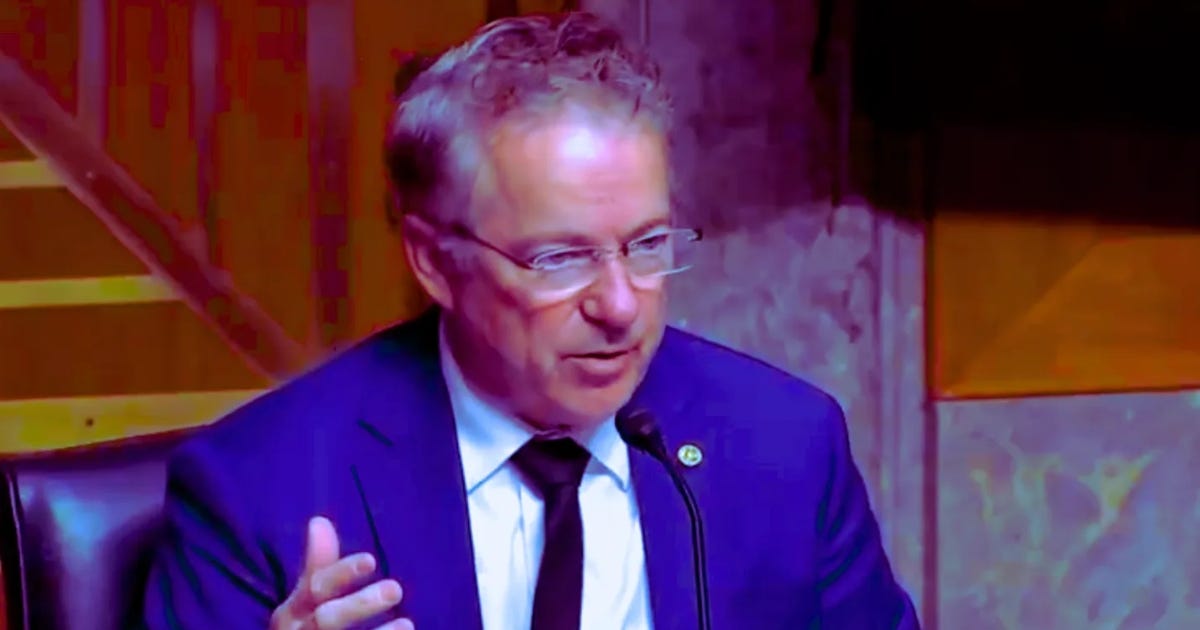
On Wednesday, U.S. Senator Rand Paul (R-KY) introduced federal legislation that would dismantle the long-standing liability protections shielding vaccine manufacturers from civil lawsuits in the United States.
CDC data confirm millions of injury reports submitted following vaccination, though an HHS–Harvard Pilgrim analysis concluded the agency’s vaccine tracking system captures fewer than 1% of adverse events.
The bill, S.3853, formally titled “A bill to amend the Public Health Service Act to end the liability shield for vaccine manufacturers, and for other purposes,” was introduced on February 11, 2026, and referred to the Senate Committee on Health, Education, Labor, and Pensions (HELP).
The measure is cosponsored by Sen. Mike Lee (R-UT).
If enacted, the legislation would amend federal law to remove legal protections that have insulated vaccine manufacturers from product-liability lawsuits since 1986.
The Legal Structure Targeted
The liability shield stems from the National Childhood Vaccine Injury Act of 1986, which created the National Vaccine Injury Compensation Program (NVICP).
Under that framework, individuals claiming vaccine-related injury must generally pursue claims through a federal compensation system rather than through traditional civil litigation.
Manufacturers are broadly protected from design-defect claims and most tort actions in state courts.
The legal architecture was justified at the time as necessary to prevent vaccine market collapse amid rising lawsuits.
S.3853 would directly amend the Public Health Service Act to eliminate those protections.
Although the full statutory text has not yet been published, the bill’s title makes clear that its purpose is not procedural reform but termination of the federal liability shield itself.
What Would Change
If the shield were removed:
Vaccine manufacturers could face direct product-liability lawsuits in state and federal courts.
Design-defect claims previously barred under federal law could potentially proceed.
The financial and insurance landscape for vaccine production would shift immediately.
The federal compensation program’s exclusivity could be undermined.
In practical terms, vaccine manufacturers would operate under the same tort framework as other pharmaceutical companies whose products are not covered by statutory immunity.
Political & Institutional Implications
The liability protections have been defended for decades by establishment public health officials and pro-vaccine industry groups as essential to maintaining vaccine supply stability.
Critics argue the shield removes market accountability and eliminates standard legal recourse available for other medical products.
The introduction of S.3853 marks a direct legislative challenge to that structure at the federal level.
Historically, measures altering vaccine liability protections have faced resistance from Big Pharma and politicians, many of whom are funded by the medical industry.
The proposal places the issue squarely on the Senate agenda and signals that the liability question is no longer confined to academic or activist debate.
It is now a live legislative matter on the national level.
Whether S.3853 advances or stalls in committee will determine whether Congress is willing to reopen one of the most entrenched public health legal frameworks in modern U.S. law.
Copyright 2026 Jon Fleetwood

And…. Chances of it going anywhere…. .01% But thank you, Senator.