This article originally appeared on ZeroHedge and was republished with permission.
Guest post by Tyler Durden
Summary
Israel strikes Iran Navy in Caspian Sea. Iran FM Discusses Strait of Hormuz with EU’s Kallas, oil dumps, amid reports of Iran launches on KSA. Largest Qatar LNG export hub hit by Iranian missiles. Doha expels diplomats.
Some Gulf states want to ensure Iran’s missile arsenal destroyed for good, as EU, Russia, China demand ceasefire; Beijing ignores Trump’s Hormuz plea
Israel says Iran’s intelligence chief Esmail Khatib was eliminated overnight as pace of top leadership killings accelerates.
Iran says upstream oil and gas assets are under attack for first time since war began, readies retaliatory action against oil/gas assets in Gulf area, including Qatar, Saudi Arabia, & UAE; Iraq reroutes some flows through Ceyhan Pipeline to Turkey
Iran reiterates new rules in place for Hormuz transit as traffic remains de-minimus, sparking reports that “the blockade is now the worst disruption to oil flows ever...“
Trump Waives Jones Act to “mitigate the short-term disruptions to the oil market“; VP Vance will meet with Big Oil Execs on Thursday to discuss plan to combat surging gas prices at the pump
* * *
Qatar Expels Iranian Diplomats
In the wake of the major Iranian missile attack on Ras Iaffan Industrial City and Qatar’s main LNG export hub, Doha has declared Iranian military and security attaches in the country persona non grata, effectively expelling the diplomats. Oil is also ramping back up again on the late in the day headlines of ongoing Iranian retaliation against Gulf energy:
BRENT OIL EXTENDS GAINS IN POST-SETTLEMENT TRADE TO ABOVE $110
War Expands To Israeli Strikes in the Caspian Sea
The war has once again expanded geographically, as Israeli media is reporting fighting in the Caspian Sea.
Jerusalem Post reports that for the first time, the Israeli Air Force is currently striking the Iranian navy in the Caspian Sea. Axios is also reporting the Caspian action.


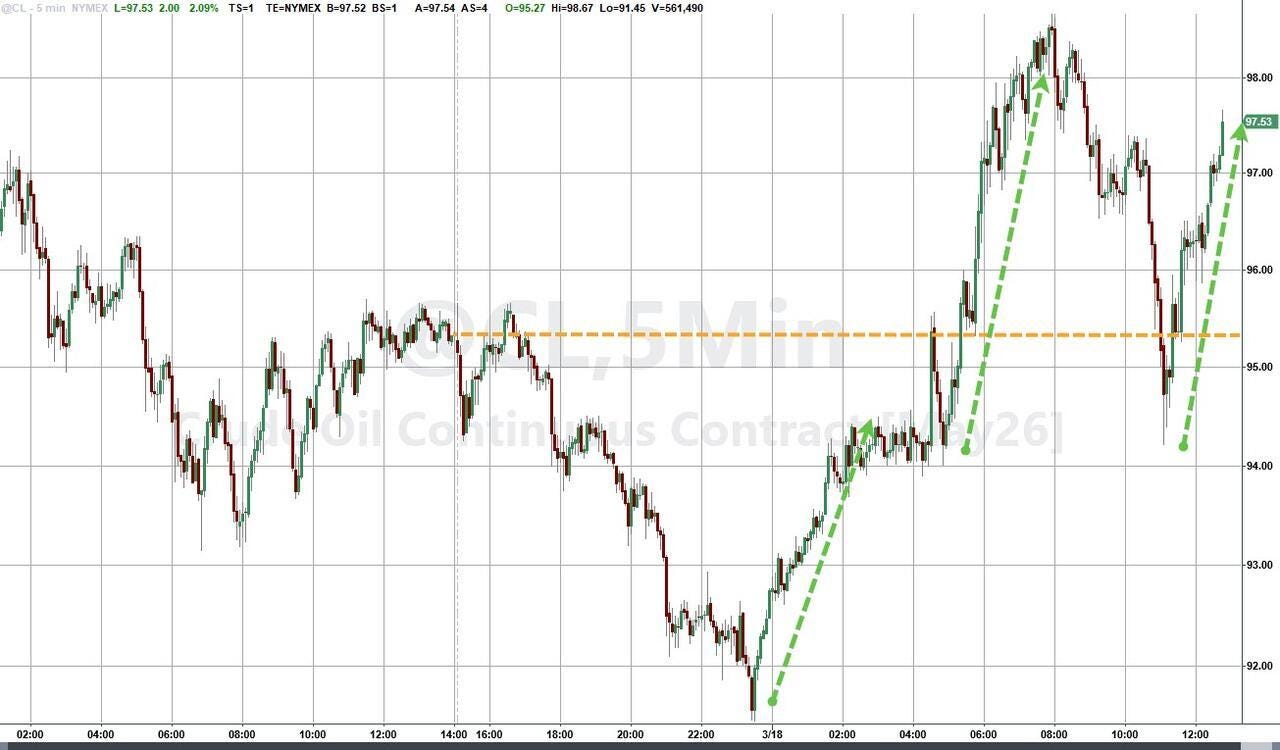
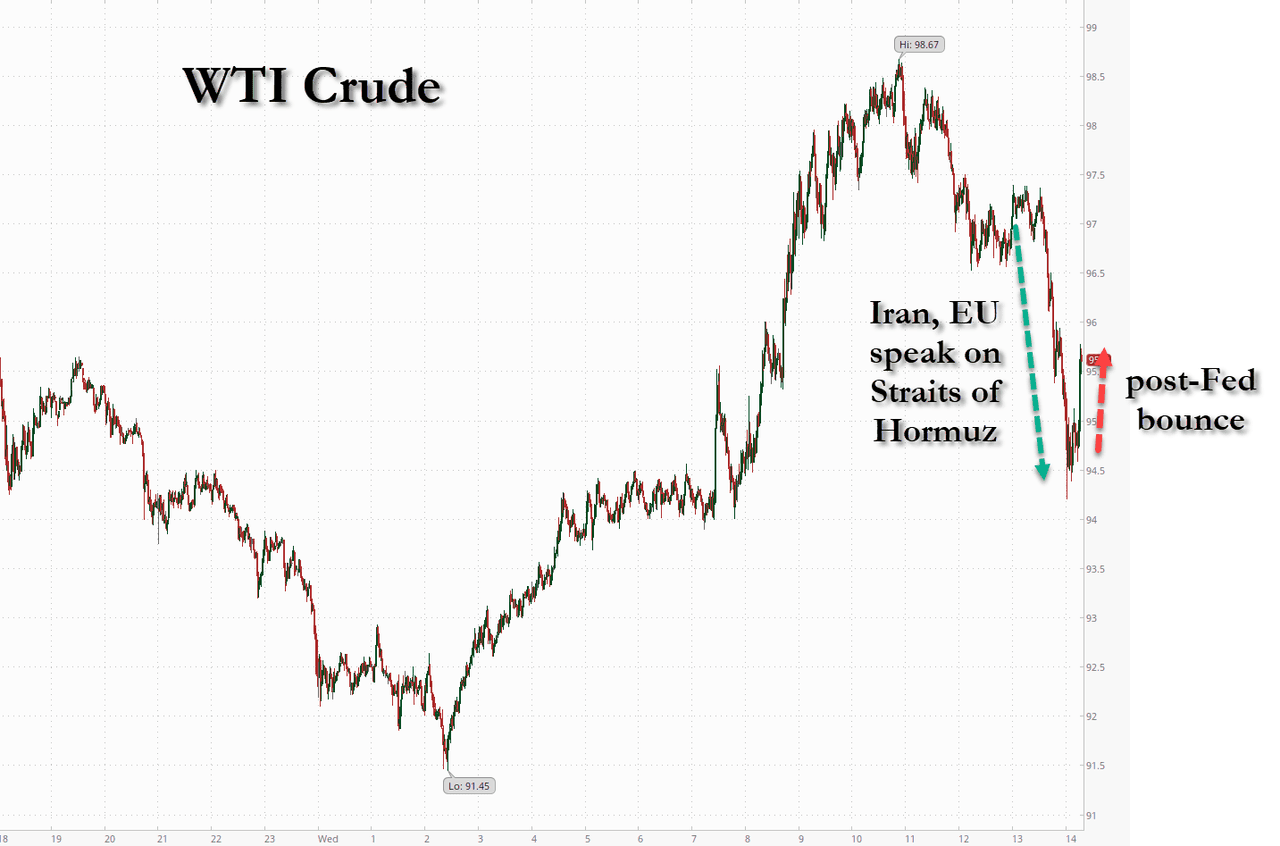
WTI futures rebounded late in the day, inching back towards triple-digit territory.
Also, Iran’s Fars News Agency claims IRGC missiles attacked gas facilities in Bahrain:
ATTACK ON LNG REFINERY IN BAHRAIN STILL ONGOING, FARS REPORTS
IRAN’S FARS REPORTS LNG REFINERY IN BAHRAIN TARGETED, DAMAGED
NatGas prices also surged...
A barrage of headlines out of the Middle East today only shows an escalating conflict, as US-Israeli forces targeted upstream Iranian energy assets, including the South Pars gas field, while IRGC forces launched missile strikes across Gulf states in a retaliatory attempt to hit critical energy infrastructure.

The trajectory of the conflict took a turn for the worse today, with a shift toward an economic war focused on degrading each side’s energy production capacity.
* * *
Qatar Confirms New Wave of Missile Strikes on Energy; US Had Foreknowledge of Israeli Attacks on Pars
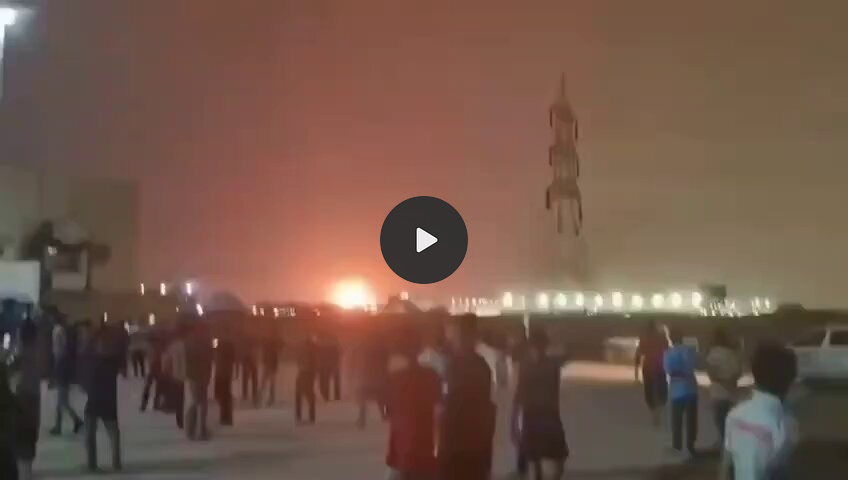
After the earlier Israeli strikes on Iran’s Pars gas field, Iran’s vowed ‘retaliation’ appears underway, as QatarEnergy has confirmed a wave of missiles on Ras Iaffan Industrial City. Extensive damage has been reported, in what looks to be a significant cross-Gulf attack on Qatar LNG. Emergency services are responding to a fire at the site.
Saudi Arabia has also reported inbound drone action, targeting a gas facility. Fox’s Trey Yingst writes, “This is a major development. Qatari officials spoke out about the strikes earlier today against Iran’s South Pars field over concern that Iran could target their energy infrastructure in response. Ras Laffan is the largest liquefied natural gas export facility in the world.”
Iran’s ‘brutal targeting’ of Ras Laffan industrial site is a direct threat to national security and regional stability: Qatar’s Foreign Ministry
Importantly, the US knew Israel was going to escalate attacks on Iranian energy, with the Pars gas field hit, per AP.

* * *
Iran FM Discusses Strait of Hormuz with EU’s Kallas
Yesterday, here’s what EU Foreign policy chief Kaja Kallas said: “Nobody is ready to put their people in harm’s way in the Strait of Hormuz. We have to find diplomatic ways to keep this open so that we don’t have a food crisis, fertilizers crisis, energy crisis as well.” And on Wednesday, oil dumped on new EU contacts with top Iranian officials:
IRAN’S ARAGHCHI SPOKE WITH EU’S FOREIGN AFFAIRS CHIEF KALLAS
IRAN’S ARAGHCHI DISCUSSED REGION, STRAIT OF HORMUZ WITH KALLAS
And then stabilized on this, via WH Reuters correspondent: “Trump admin expected to announce soon that it will temporarily lift federal smog-cutting restrictions on summer-blend gasoline to curb rising energy prices stemming from the Iran conflict.”
Iran Begins Retaliation Strikes Over South Pars Attack
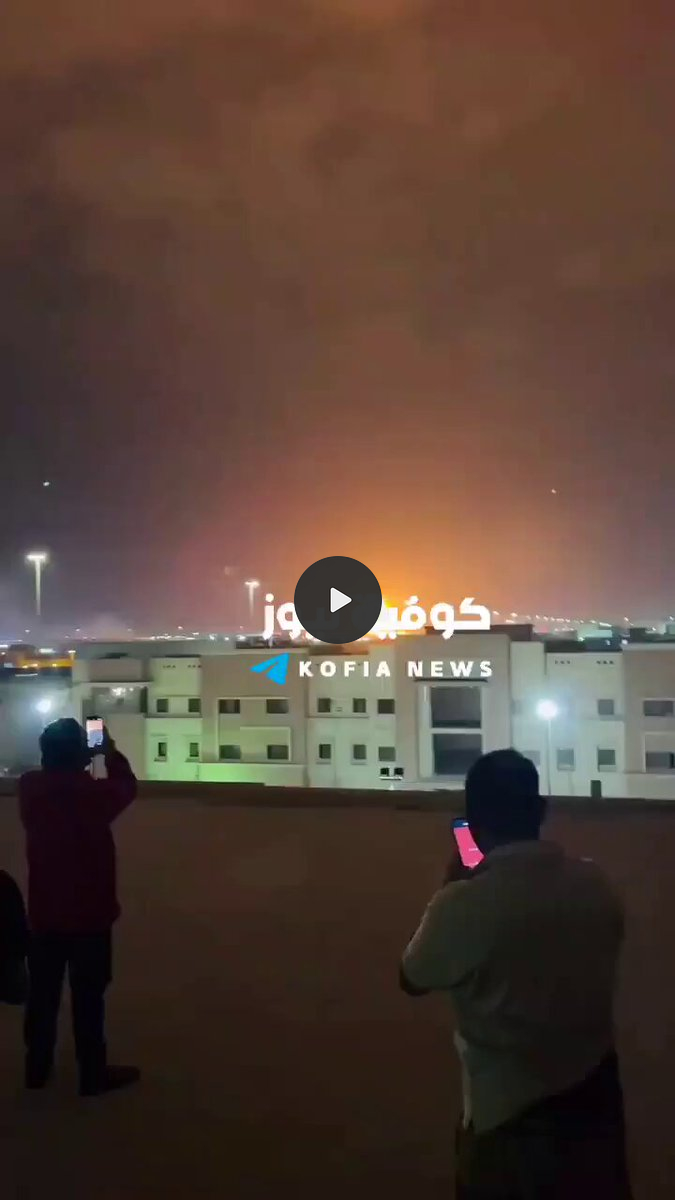
Following the US-Israeli attack on Iran’s South Pars gas facility earlier today, and Tehran’s angry comments about imminent retaliation for the attack on its upstream energy assets, Iranian ballistic missiles have been launched at surrounding Gulf states, with reports on X that one struck a target in the Saudi capital, Riyadh.
Headlines:
RIYADH RESIDENTS GET MOBILE ALERT OF HOSTILE AERIAL THREAT
SAUDI: INTERCEPTION SHRAPNEL FELL IN SCATTERED AREAS OF RIYADH

* * *
Saudi Arabia Taps East-West Pipeline, Reviving More Than Half Of Its Oil Exports
JPMorgan’s commodities chief, Natasha Kaneva, states that Saudi Arabia has resumed half of its oil exports via the East-West pipeline amid disruptions in the Strait of Hormuz.
With Hormuz all but closed, Saudi Arabia has been rerouting oil through a 746-mile pipeline to the western port of Yanbu on the Red Sea. At the same time, it has quickly amassed a huge armada of tankers that have steamed toward the Red Sea to load oil and are now piling up around the port.
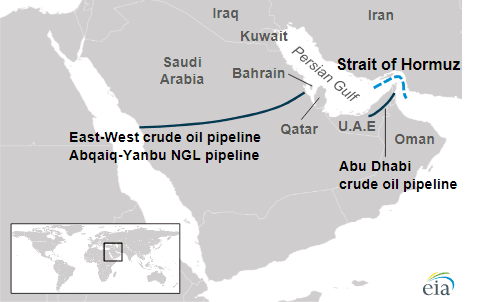
Earlier today, Iraq began rerouting some crude oil flows through the Ceyhan pipeline to Turkey.
The overall understanding here is that crude can flow out of the Gulf area in other ways besides the Hormuz chokepoint.
* * *
VP Vance To Meet With Top US Oil Execs On Plan To Rein In Surging Pump Prices
Vice President J.D. Vance and other senior Trump administration officials will meet with top oil executives at the American Petroleum Institute on Thursday to discuss ways to contain what is shaping up to be one of the biggest fuel-pump shocks in more than two decades, according to AAA data.
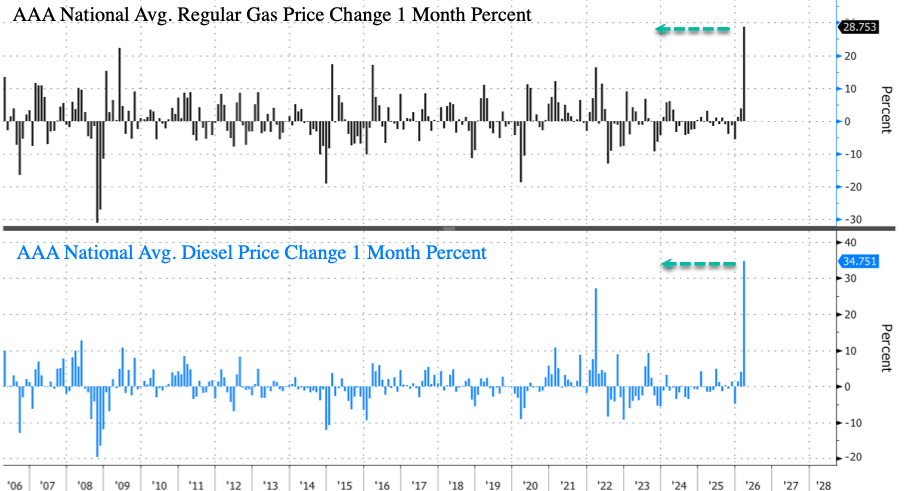
“We look forward to convening key officials, including Vice President Vance, Energy Secretary Wright, bipartisan leaders in Congress, and governors, to discuss the role of American oil and natural gas in supporting reliable energy supply amid global volatility,” Andrea Woods, a spokeswoman for API, said in a statement quoted by Bloomberg.
Woods said, “Our industry is focused on providing insight into market dynamics and strengthening American energy leadership and resilience for the long term.”
With Memorial Day weekend, one of the biggest driving periods besides Thanksgiving and the Fourth of July, just 67 days away, the Trump administration pulled another emergency lever this morning by waiving the Jones Act, allowing foreign tankers to transport crude and refined products among U.S. ports.
Last week, 32 IEA member countries announced the “historic” emergency SPR release to cap crude prices.
The pattern of behavior from the Trump administration to control surging crude oil prices appears to be following JPMorgan’s playbook (read more here).
* * *
Gulf Wants Iran’s Ballistic Arsenal Destroyed; China Ignores Trump Hormuz Plea
Fresh reports suggest that at least some Gulf states are now egging on the US-Israeli bombardment of Iran, hoping that the Islamic Republic’s significant ballistic missile can be blunted forever. Sultan al-Jaber, the U.A.E. minister of industry and advanced technology, was quoted by The Wall Street Journal as saying, “Any long-term political settlement must address the full spectrum of threats, including Iran’s nuclear program, ballistic missile capabilities, and their network of regional proxies.”
And yet, Israel and the US now extending their aerial attacks to Iran’s oil infrastructure has immediately resulted in Iran declaring that it will in turn target oil fields and infrastructure among America’s Gulf allies. As these easily predictable steps on the escalation ladder continue to play out, China is ignoring President Trump’s request to help reopen the Strait of Hormuz for vital global oil transit. What Beijing has made clear, however, is that it wants all parties to cease hostilities in an military engagement it believes should have never started.
* * *
Trump Waives Jones Act, Iran Halts Gas Flows To Iraq
Reuters reports that after US and Israeli fighter jets attacked Iran’s South Pars gas field - the largest in the world - gas flows to Iraq were halted.
Gas flows from Iran account for 40% of Iraq’s supply. An Iraqi official told the outlet that the gas flows had been diverted for domestic use.
Israel’s escalation of the conflict - now targeting Iran’s upstream energy assets - sent Brent crude futures above the $109/bbl level, as WTI prices inched closer to triple-digit territory.

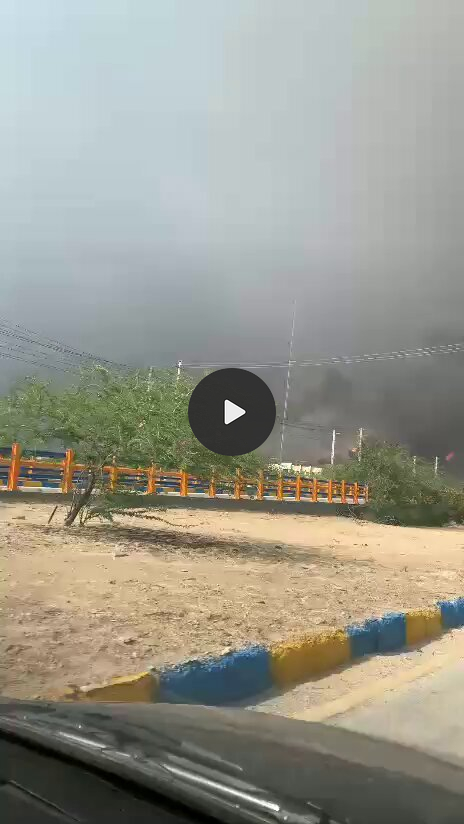
The surge in energy prices this morning was met with the Trump administration waiving the century-old Jones Act - a maritime law that will now allow foreign ships to transport energy products between US ports - to ensure there are no logistical bottlenecks and that shipping costs stay low amid the worst energy shock the world has ever seen.
* * *
Iran Plans Counterattack on Gulf Area Energy Infrastructure
Brent crude futures jumped from around $103.5/bbl to $108/bbl following Israeli airstrikes on Iran’s South Pars gas field in the Persian Gulf. This escalation in strikes underscores what Bloomberg commodities analyst Javier Blas said: “Both sides are now targeting upstream (i.e., production) oil and natural gas assets.”
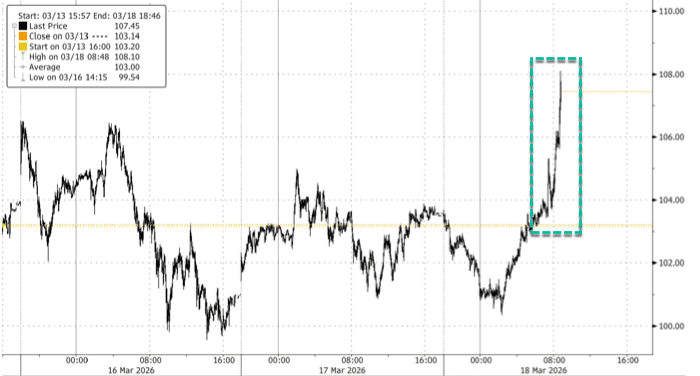
He asked, "Is this an attempt to escalate to de-escalate? Or is it simply a sign that escalation is spiraling out of control?"

Moments ago:
IRAN TO RETALIATE AGAINST ATTACK ON ENERGY INFRASTRUCTURE: FARS
IRAN WILL HIT ENEMY SITES PREVIOUSLY THOUGHT TO BE SAFE: FARS
The semi-official Fars news agency reports that Iran’s energy infrastructure “will not go unanswered, and Iran’s response will target enemy infrastructure previously thought to be safe.”
“These centers have become direct and legitimate targets and will be targeted in the coming hours,” Iran’s semi-official Tasnim news agency reports.
Qatar: Ras Laffan refinery phase 1 and 2, Mesaieed Petrochemical Complex
Saudi Arabia: Samref refinery, Jubail petrochemical complex
UAE: Al Hosn gas field
Translation: Major escalation inbound for Gulf states, with crosshairs likely on upstream energy infrastructure.
“With enemy missiles hitting the Asaluyeh refinery, the pendulum of war has effectively swung from limited battles toward an ‘all-out economic war’,” Fars stated, adding, “As of tonight, the red lines have shifted. If the enemy believed these attacks could increase pressure on Iran to force it to back down, they have made a fatal miscalculation, for this action has placed the trump card of reciprocal retaliation squarely in Iran’s hands.”
Qatar Foreign Ministry spokesperson Majed Al Ansari called Israel’s targeting of South Pars a “dangerous and irresponsible step.”

“Iran has calibrated its strikes on Gulf energy infrastructure to signal capability without triggering extended outages. That restraint has been deliberate. The question now is whether Tehran shifts from signaling to targeting critical components that could take months, if not years, to repair,” stated Fernando Ferreira, the Director of the Geopolitical Risk Service at Rapidan Energy.
* * *
Iranian Oil, Gas Assets Under Attack
Crude oil futures are surging after Iranian state TV reported that part of the South Pars gas field in the Persian Gulf area had been hit by an airstrike.
Bloomberg reports that Israel appears to be behind the air strike on Iran’s energy assets.
South Pars is the backbone of Iran’s gas system and part of the world’s largest natural gas field, which Iran shares with Qatar, where the same reservoir is called the North Field.
Oil and petrochemical facilities in nearby Asaluyeh also came under attack, it added.
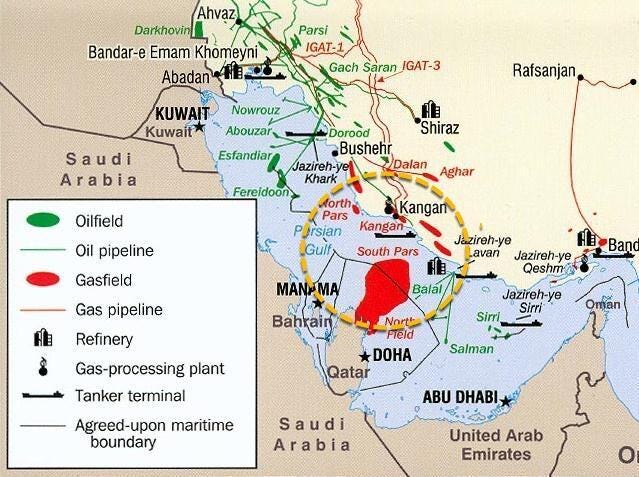
An attack, if confirmed, would mark the first time Iran’s upstream oil and gas facilities have been targeted in this war.
According to the Iranian oil ministry’s official news service, Shana, daily gas production at South Pars, which is shared with Qatar, reached a record 730 million cubic meters in 2025.
Iranian state TV says that South Pars phases 3, 4, 5, and 6 were hit by Israeli air strikes. This suggests damage to core upstream gas infrastructure at the backbone of Iran’s energy system, marking a major escalation in Gulf energy risk.
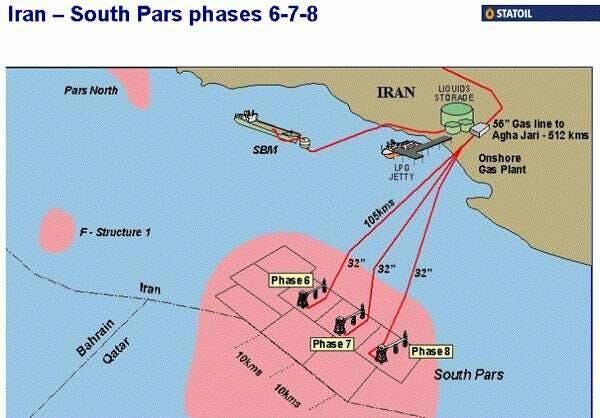
Most of Iran’s gas production comes from South Pars, making it central to power generation, industrial feedstock, petrochemical production, and winter heating demand.
Bloomberg noted that the gas field is the “key source of pipeline gas to Turkey via the Tabriz–Ankara line. Disruptions to those flows could force Ankara to seek more spot LNG on already tight global markets.”
WTI futures quickly surged to $95/bbl on the news.
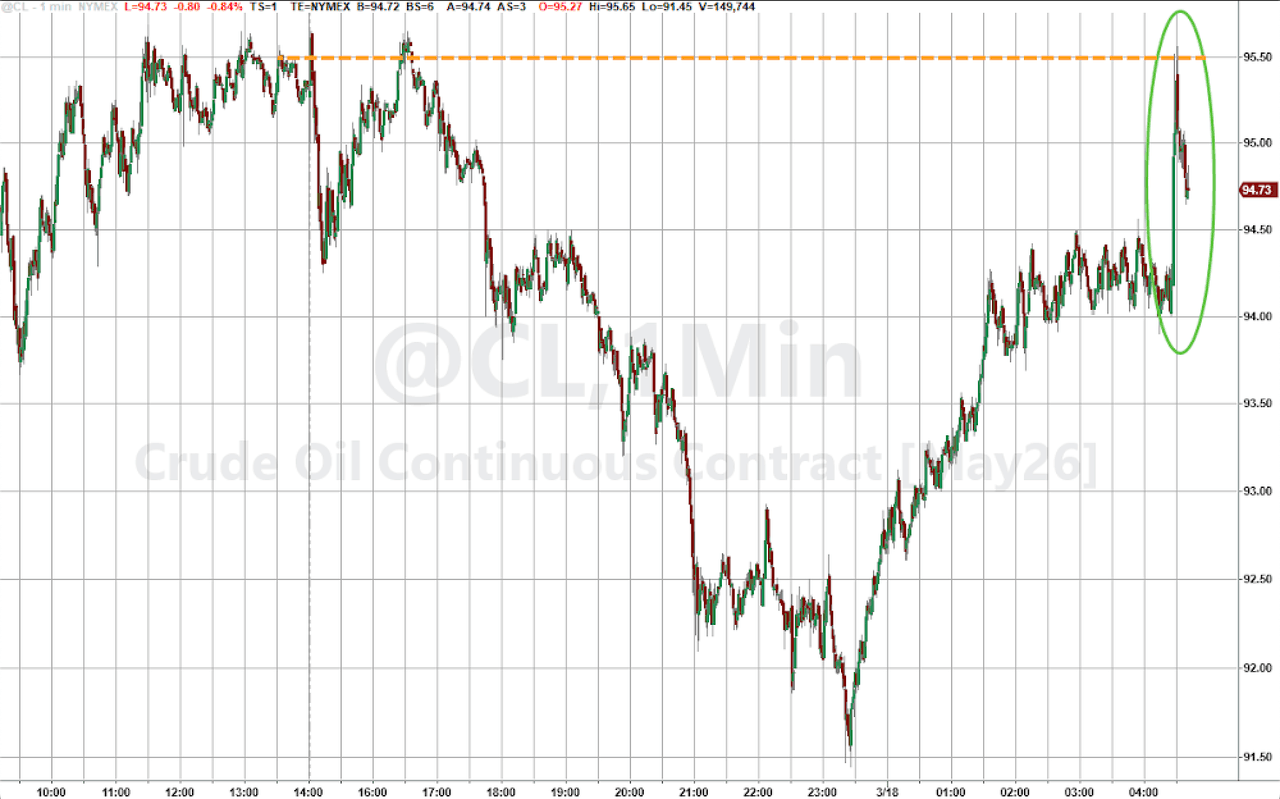
Operation Epic Fury appears to have shifted toward targeting the IRGC’s funding lines. This was evident last week with strikes on the Kharg Island export hub.
* * *
Iraq Reroutes Oil From Hormuz, through Ceyhan Pipeline to Turkey
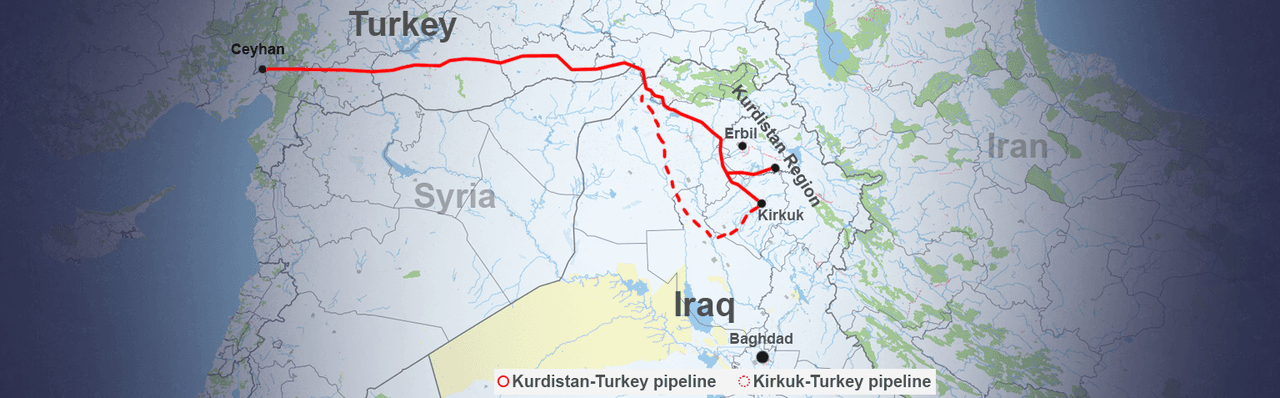
Brent crude futures roller-coastered, oscillating between $100 and $103 per barrel after news broke that Iraq had found an initial (though still limited) workaround for the Hormuz chokepoint by restarting exports through Turkey’s Ceyhan port.
Bloomberg reports that North Oil Co.’s oil pipeline to Ceyhan port, with an expected initial export capacity of 250,000 barrels, has begun operation. That is in addition to 210,000 barrels per day from Kurdistan through the northern pipeline, according to Oil Minister Hayyan Abdul Ghani.
Ceyhan exports crude from the Kurdistan and Kirkuk fields (Iraq) to the Mediterranean port, effectively bypassing the chaos at the Hormuz chokepoint and in the Gulf region.
Disruption of tanker flows in the critical waterway forced Iraqi oil production to plunge to about 1.4 million barrels per day, roughly one-third of pre-Hormuz closure levels.
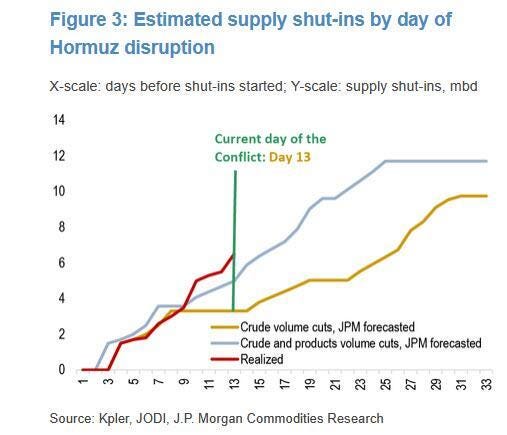
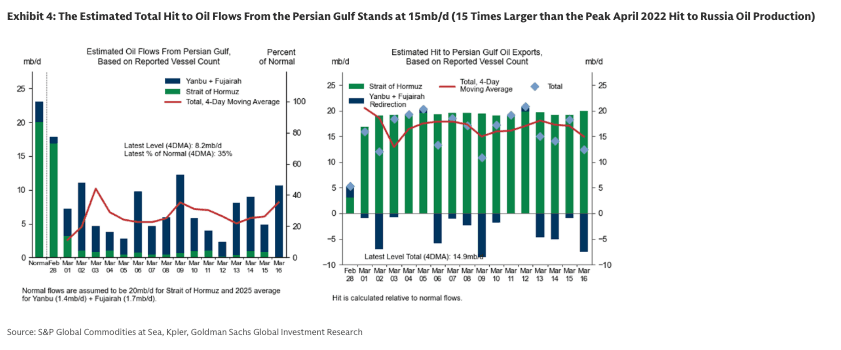
Three weeks into the US-Iran conflict, tanker activity on the waterway has slowed to a crawl, at just about 400,000 barrels per day, compared to the pre-Hormuz closure average of 14 million barrels per day.
Kpler oil analyst Muyu Xu warned, “The blockade is now the worst disruption to oil flows ever. Real barrels are now disappearing from global oil markets, which can lead to demand destruction in the weeks to come.”
Iraq is following Saudi Arabia’s playbook of shipping crude through pipelines rather than through Hormuz as IRGC drone and missile threats persist. Saudi Aramco shifted its crude flows through the East-West pipeline to export terminals at Yanbu and Al Muajjiz on the kingdom’s Red Sea coast.
* * *
Iran Remains In Control Of The Strait
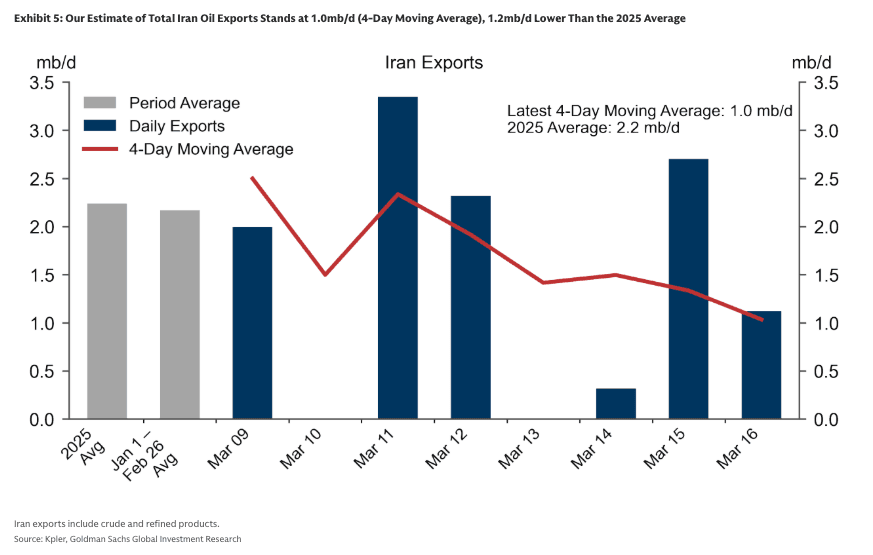
Meanwhile, Iran-linked vessels accounted for 35% of the 20 crude tankers that made outbound Hormuz transits in the first week of the conflict, according to Kpler. About a week later, that number rose to five of the eight tankers that left the region, suggesting that Iran’s control of the critical waterway has significantly increased.
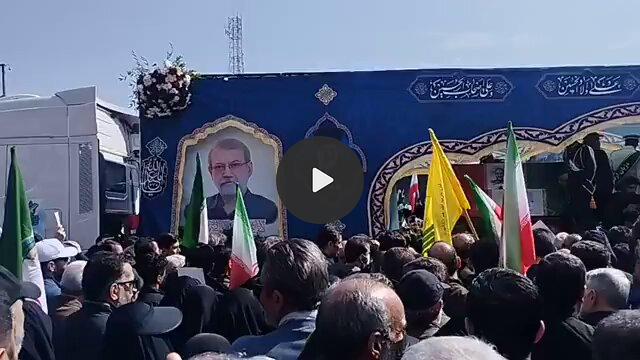
On Tuesday, the conflict escalated further with the confirmation of the killing of Ali Larijani, secretary of Iran’s Supreme National Security Council.
According to Aaron Stein, president of the Foreign Policy Research Institute, “The Larijani killing is a big deal, and may make Iran more desperate to disrupt oil flows.”
“Trump is obviously being pressured to escort tankers, so we’re in for the possibility of very tense US operations in ways I’m certain the Navy would like to avoid,” Stein said.
On Wednesday, Iran’s Foreign Minister Abbas Araghchi told Al Jazeera about new rules that should be imposed on the critical waterway.
“We need to design new arrangements for the Strait of Hormuz and the way ships pass through it in the future after the war so that peaceful navigation through this waterway can be permanently maintained under clear regulations with consideration for Iran’s interests and the interests of the region,” Araghchi said.
He said, “It should guarantee that safe passage through the strait takes place under specific conditions,” adding that conditions should “ensure peacefulness. We do not want to witness another war in the region and we do not want to see the strait closed again.”
* * *
Hormuz Traffic Remains Practically ‘Halted’
Goldman analysts, led by Yulia Zhestkova Grigsby, showed clients on Tuesday that shipping traffic through Hormuz remains down 98% from normal levels (4-day moving average).
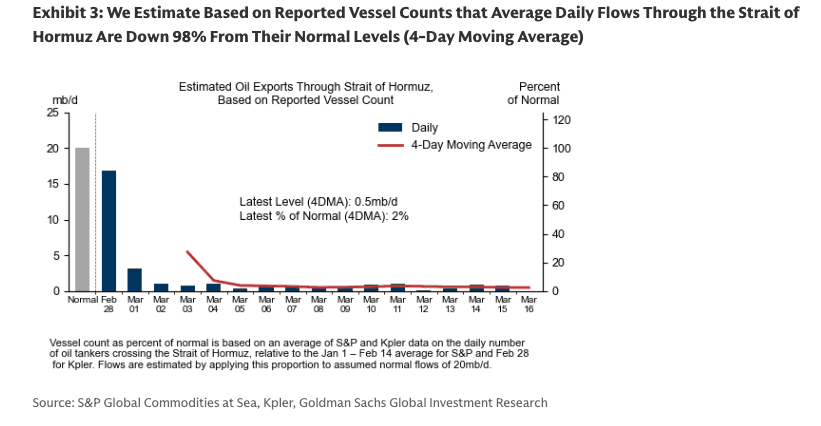
The estimated total hit to oil flows from the Persian Gulf stands at 15 mb/d, 15 times larger than the peak April 2022 hit to Russian oil production.
Iranian crude exports dominate the Strait.
“With no end in sight to hostilities, shut-ins rising on a daily basis, and the Strait technically closed, we remain of the view that Brent is set to remain in a new, higher $95-to-$110 range,” Westpac Banking analyst Robert Rennie wrote in a note.
“Were we to see a major refinery plant hit or confirmation of additional mining of the strait, we would expect that range to extend higher by another $10-$20,” Rennie added.
The takeaway here is that Gulf countries, such as Iraq and Saudi Arabia, are rerouting crude flows from tanker transit through the waterway to pipelines out of the hostile region, as Iran remains largely in control of the Strait, necessarily (and dramatically) reducing global energy supply (for longer).

...and now he is reportedly dead (among many other Iranian leaders).
* * *
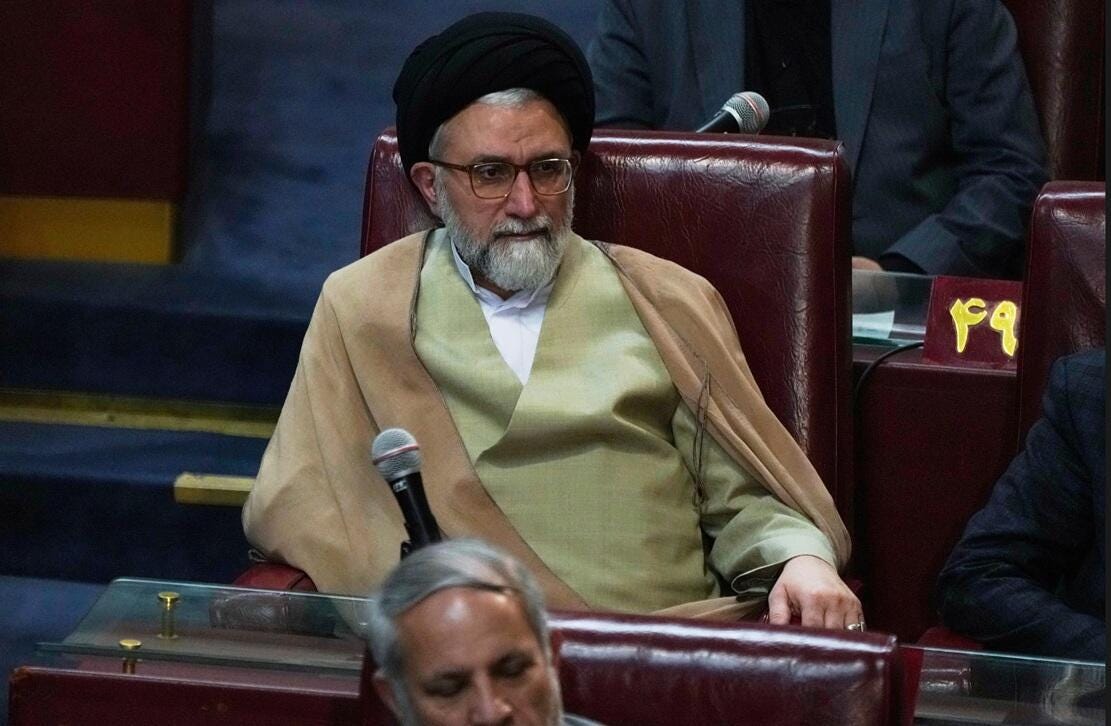
Iran Intel Chief Killed In 3rd High-Level Hit
More decimation of Iranian top leadership, as Israel’s defense minister Israel Katz has announced Iran’s intelligence chief Esmail Khatib was eliminated in an overnight strike, which marks yet another alleged high-level hit as the tempo of targeted killings accelerates. “On this day, significant surprises are expected across all arenas that will escalate the war we are conducting against Iran and Hezbollah in Lebanon,” Katz warned in a military briefing, according to Israeli media.
If confirmed, the reported hit would mark the third top-tier Iranian figure eliminated in just 48 hours, following Israeli strikes that reportedly killed national security chief Ali Larijani, who was likely effectively running the war, and Basij commander Gholamreza Soleimani.
President Donald Trump posts Wednesday: I wonder what would happen if we “finished off” what’s left of the Iranian Terror State, and let the Countries that use it, we don’t, be responsible for the so called “Straight?” That would get some of our non-responsive “Allies” in gear, and fast!
Trump also said in a rapid follow-up that “We are rapidly putting them out of business!”
Still, Iran is signaling continuity, not collapse, even as newspapers in America run celebratory headlines such as “Israel Is Hunting Down Iranian Regime Members in Their Hideouts, One by One.” Foreign Minister Abbas Araghchi pushed back on the narrative of systemic breakdown, insisting the Islamic Republic “does not rely on a single individual.”
Meanwhile, unconfirmed chatter suggests parliament speaker Mohammad Bagher Ghalibaf may have narrowly survived an assassination attempt in northern Tehran. There are indicators that he too may be running the day-to-day of the government and of the wartime response; however, it’s also clear the Islamic Revolutionary Guard Corps (IRGC) is firmly in control of the country.
Israel Gives Military Freedom Of Elimination Strikes
As a reminder of analysis we featured earlier in the conflict, “Endurance regimes do not need clean victory to change the game. They only need to survive the shock while making the old equilibrium too costly for their adversaries to restore.“ Journalist Jeremy Scahill, who starting over two decades ago covered the lead-up to the Iraq war from on the ground in Baghdad, has reiterated that “In asymmetric warfare, the less powerful side does not need to militarily defeat an adversary, but rather force it to a point where it determines the costs of continuing the war is too high.”
The US-Israeli operation is seeking to so utterly smash the country and its leadership, and potentially bring people out to the streets to topple the government, so as to avid reaching this dilemma. Israel is said to be working with spies and spotters on the ground, which Basij forces have sought to expose and arrest.


But just as Iran is clearly trying to adapt, by reportedly allowing autonomy of command among military units in the instance of being cut off from top leadership, so is Israeli too adapting its strategy and tactics. Katz has confirmed that he and Prime Minister Benjamin Netanyahu have granted the military standing authorization to eliminate additional senior Iranian officials, with no case-by-case approval required. Or in other words, the Israeli decapitation efforts are now on autopilot, signaling greater escalation.
Tehran Signals No Change in Nuclear Posture
Tehran, for its part, is surprisingly signaling that it has no intention of developing a nuclear weapon. It’s hard to evaluate any such official stance in the middle of a war for survival, but FM Araghchi on Wednesday reiterated that Iran’s nuclear posture “won’t significantly change” - even as military leaders warn of a “decisive and regrettable” response to Israeli strikes.

Nuclear sites have come under direct threat during the war, with Tuesday a projectile reportedly having near Iran’s Bushehr nuclear facility, though local officials say no damage occurred.
In Washington, there’s some clear doubling down militarily on the part of the Trump administration, while the question of finding an offramp is still likely being hotly debated within White House and national security circles. On the political front, the closer the US gets to Memorial Day travel with gas prices climbing higher, the more politically costly it is likely to be for Republicans.
Copyright 2026 ZeroHedge
Learn more: