
This article originally appeared on The Defender and was republished with permission.
Guest post by Jill Erzen
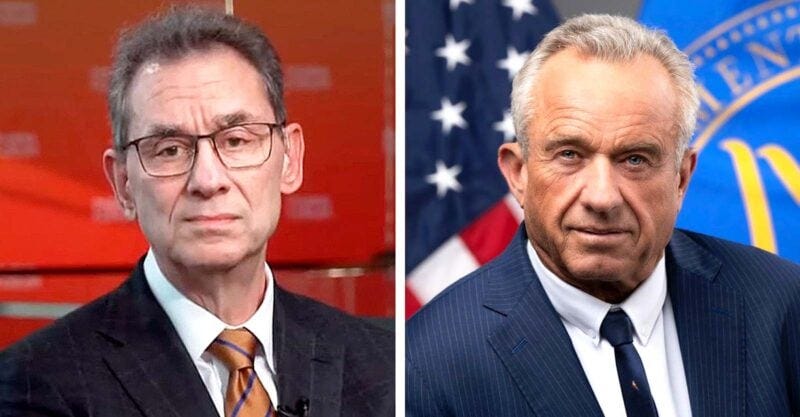
Drug industry executives are lashing out as U.S. Health Secretary Robert F. Kennedy Jr. tightens vaccine standards, re-examines childhood schedules and demands what he calls gold-standard science. “I’m seriously frustrated,” Pfizer’s CEO said of Kennedy’s changes, which are cutting U.S. vaccine sales and slowing new trials.
Vaccine industry executives are publicly blaming U.S. Health Secretary Robert F. Kennedy Jr. for tanking stock prices, declining vaccine sales in the U.S. and their reluctance to invest in clinical trials for new vaccines.
Asked what would need to change to move vaccine discussions forward, Pfizer CEO Albert Bourla answered: “The secretary of health,” The Wall Street Journal reported Wednesday.
Bourla has emerged as Kennedy’s most vocal critic, calling his approach “anti-science.”
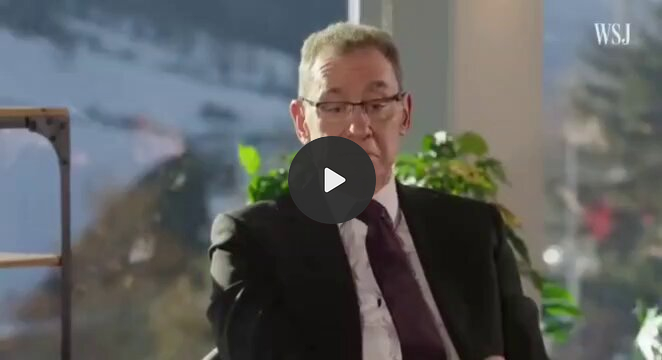
Speaking at a WSJ event at the World Economic Forum in Davos, Bourla said conversations with Kennedy collapse as soon as vaccines come up.
“I have very productive discussions when it comes to cancer cures. … It’s a different world when you start discussing vaccines,” he said. “There’s almost like a religion there.”

At the J.P. Morgan Healthcare Conference in San Francisco earlier this month, Bourla warned that Kennedy’s influence is driving down vaccination rates and raising disease risk.
“I’m seriously frustrated,” Bourla told reporters, according to Reuters. “What is happening has zero scientific merit and is just serving an agenda which is political and antivax.”
Sanofi CEO: ‘Very little’ to do but wait for elections
Other pharmaceutical executives at the conference echoed Bourla’s frustration.
Sanofi CEO Paul Hudson blamed Kennedy for “all the … misinformation that is going around,” Reuters reported.
“I’ve had conversations with Kennedy; we just try to stick to the facts,” Hudson said, according to the WSJ. “Not much we can do.”
Executives said the concern extends beyond any single vaccine or technology.
Moderna co-founder and chairman Noubar Afeyan warned that the current policy direction sets a broader precedent.
“Today it may be childhood vaccines or mRNA, but tomorrow it’s everything,” he said, according to Bloomberg. “We have to say not just ‘Why is this happening?,’ but ‘Where will it stop?’”
As a severe flu season unfolds, Merck Research Laboratories President Dean Li said political pressure on vaccination is already affecting routine flu shots. “With the pressure on vaccination, I cannot foresee flu vaccination increasing in this country over the next three years,” he said in a presentation. “There’s a chance that it will come down.”
Hudson offered a similar outlook, saying the administration shows “a particular sensitivity around vaccination, and indeed pediatric vaccination.” Asked how companies could reverse the trend, he said there was little choice but to wait. “There’s really very little else we can do” aside from waiting for elections, he said.
Kennedy, however, has emphasized that federal health agencies are prioritizing “gold-standard” science and vaccine safety.
In a November 2025 statement to The Defender, Andrew Nixon, communications director for the U.S. Department of Health and Human Services, said the agencies’ vaccine changes “reflect gold standard, evidence-based science.”
U.S. Food and Drug Administration Commissioner Marty Makary echoed that message in a November 2025 Fox News interview. “We’re not just going to rubber-stamp new products that don’t work, that fail in a clinical trial,” he said. “It makes a mockery of science if we’re just going to rubber-stamp things with no data.”
Vaccine sales declining in U.S.
The shift in federal vaccine policy is already affecting company earnings. In the third quarter of 2025, Pfizer and GSK reported global vaccine growth even as U.S. sales fell, the WSJ reported.
On an earnings call, Sanofi’s Chief Financial Officer François Roger cited “negative buzz” around vaccines in the U.S.
Companies more dependent on vaccines have been hit harder. CSL Seqirus, for example, abandoned plans to spin off its vaccine unit, citing “heightened volatility in the current U.S. influenza vaccine market.”
Moderna has gone further. CEO Stéphane Bancel told Bloomberg the company will not invest in new late-stage vaccine trials because of growing opposition from U.S. officials. “You cannot make a return on investment if you don’t have access to the U.S. market,” he said.
Bancel said regulatory delays and weak government support have sharply reduced the market’s size.
“It’s sad for us to see that vaccines that have been proven for decades helping people around the world are not recommended anymore,” he said.
Kennedy’s vaccine stance means ‘everybody will start litigating’
Investors say the consequences are real and lasting.
Fifteen investors and analysts told Reuters that Kennedy’s rapid overhaul of vaccine policy — including addressing financial rewards for vaccinations, changing the childhood vaccine schedule and cutting mRNA research funding — has weakened demand and undercut biotech investment.
“Vaccines will not be a growth area under the current administration,” said Stephen Farrelly, global pharma and healthcare lead at ING.
Executives also said Kennedy’s approach increases legal risk for drugmakers. Kennedy, an environmental lawyer, has profited from lawsuits against vaccine companies, as have some of his allies, Bloomberg reported.
“There is also a lot of plaintiffs’ playbook there. Everybody will start litigating,” Bourla said.
In 2018, Kennedy helped spearhead a mass legal action against Merck. The lawsuit alleged that Merck had misled customers about the safety and effectiveness of the HPV vaccine Gardasil.
But Kennedy is also facing legal challenges.
In late 2025, the American Academy of Pediatrics and several other medical organizations filed a federal lawsuit over Kennedy’s changes to the Centers for Disease Control and Prevention’s vaccine advisory panel.
The groups are seeking to disband the CDC’s Advisory Committee on Immunization Practices, overturn its recent recommendations and rebuild the committee under court supervision.
For Bourla, vaccine discussions with Kennedy have effectively ended. “I’ve chosen to try to work with him on things that we agree on,” he said. “So I don’t talk to him about vaccines at all.”
Related articles in The Defender
‘Informed Consent Is Back’: New COVID Vaccine Recommendations Give Families More Say
‘I Will Not Do Harm’: Pediatrician Suing CDC Explains Decision Not to Give COVID Vaccines to Kids
MAHA Commission Outlines Sweeping Agenda to Target Chronic Disease
‘Dangerous Games’: States Defy Federal Agencies, Create Their Own COVID Vaccine Rules
Donate to Children’s Health Defense

How does Bourla sleep at night?
Serious question...
“I have very productive discussions when it comes to cancer cures. … It’s a different world when you start discussing vaccines,” he said. “There’s almost like a religion there.”
Yah, Bourla should know.