
This article originally appeared on Focal Points and was republished with permission.
Guest post by Nicolas Hulscher, MPH
A major new peer-reviewed study we just published in Medical Research Archives has uncovered a shocking reversal: after two decades of steady progress, infant mortality surged 37% since 2020, congenital abnormality deaths jumped 46%, and registered live births collapsed by 24% — all coinciding with expanded vaccination campaigns in the Philippines.
The study is titled Global Implications of Vaccination and Rising Infant Mortality in the Philippines, authored by Sally A. Clark, Claire Rogers, Mila Radetich, Nicolas Hulscher (myself), Kirstin Cosgrove, Breanne Craven, M. Nathaniel Mead, and James A. Thorp.
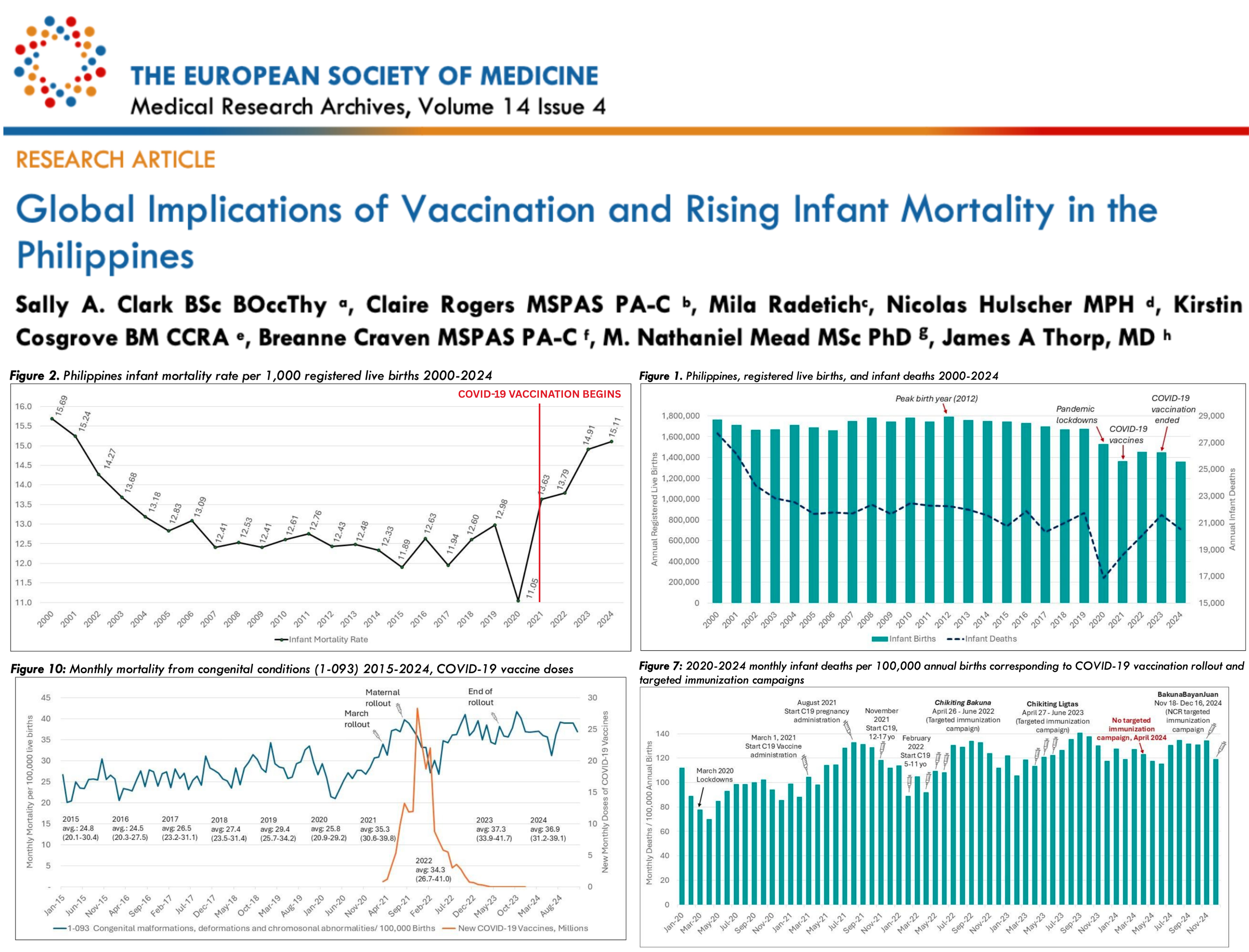
Using official Philippine Statistics Authority data on 41.7 million births and over 546,000 infant deaths from 2000–2024, plus Department of Health vaccination records, we documented a sharp turnaround after two decades of steady progress.
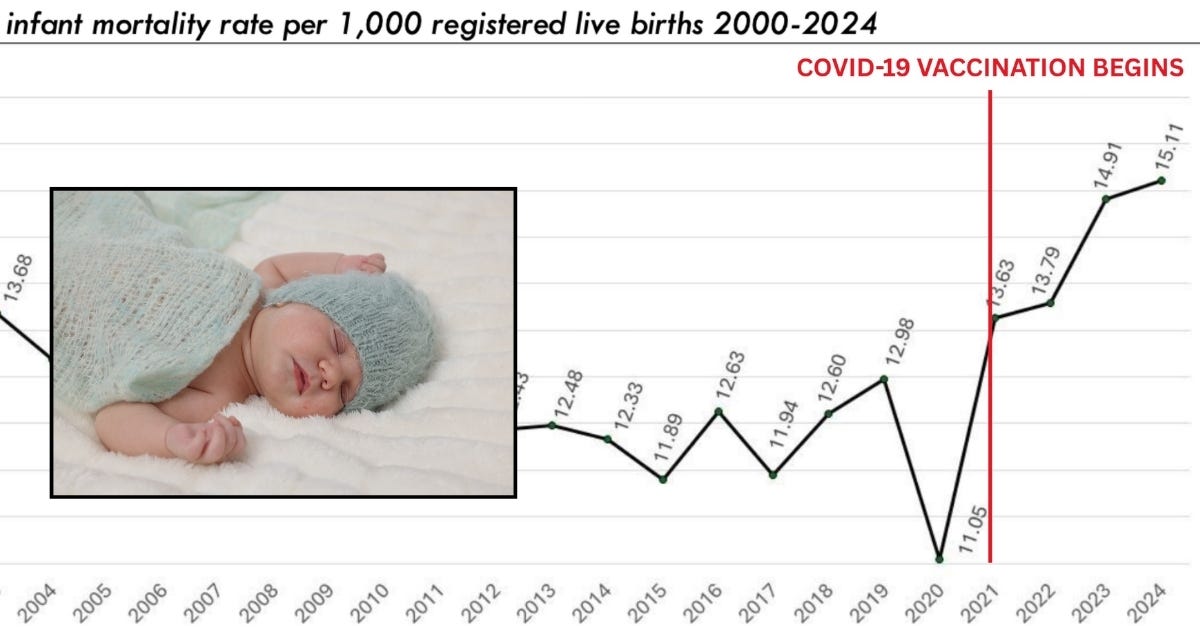
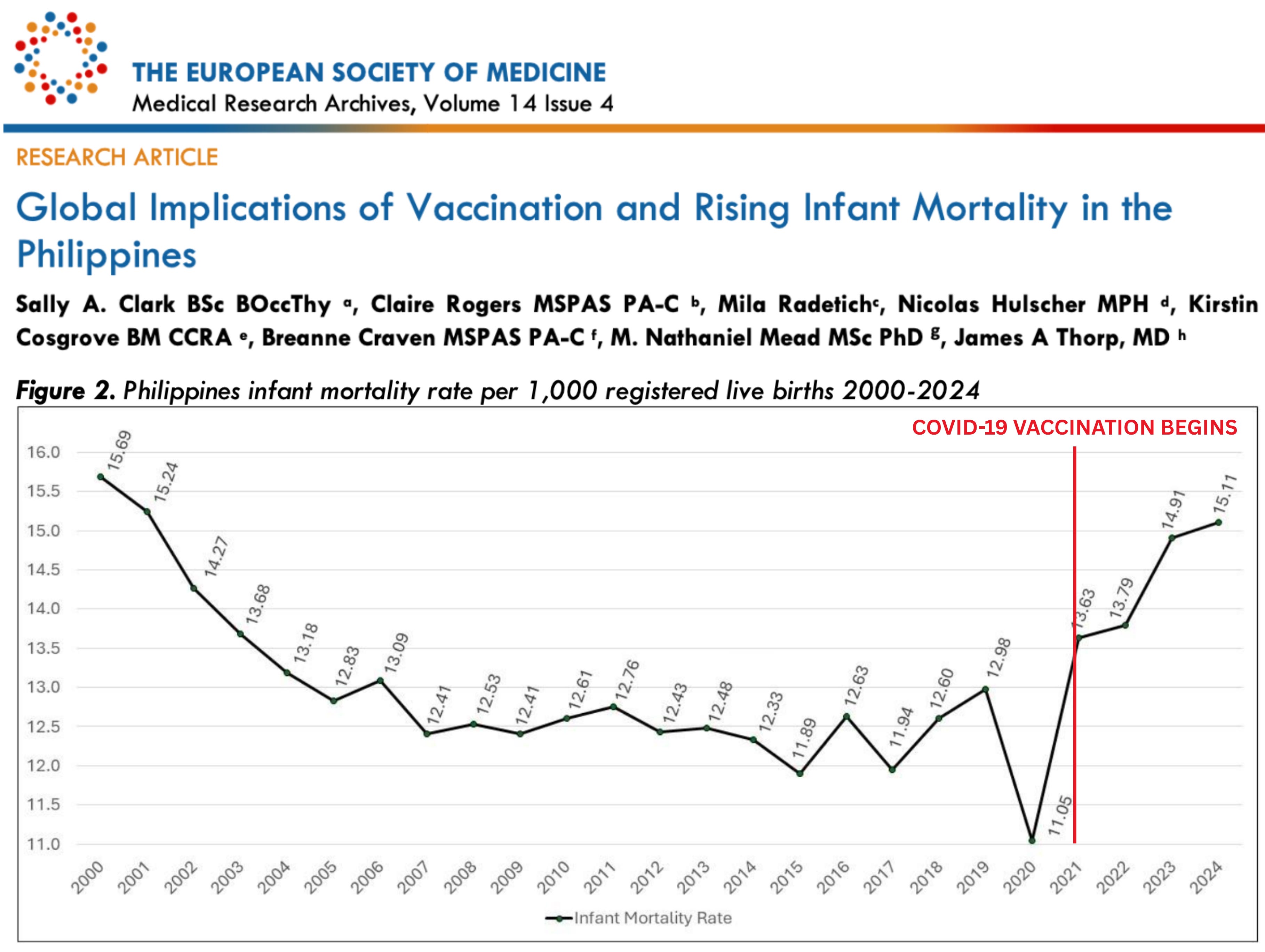
Infant mortality rate fell to a historic low of 11.05 deaths per 1,000 live births in 2020. Then it rose 37% to 15.11 by 2024 — a statistically significant jump (p < 0.0001) that erased more than 20 years of gains in just five years.
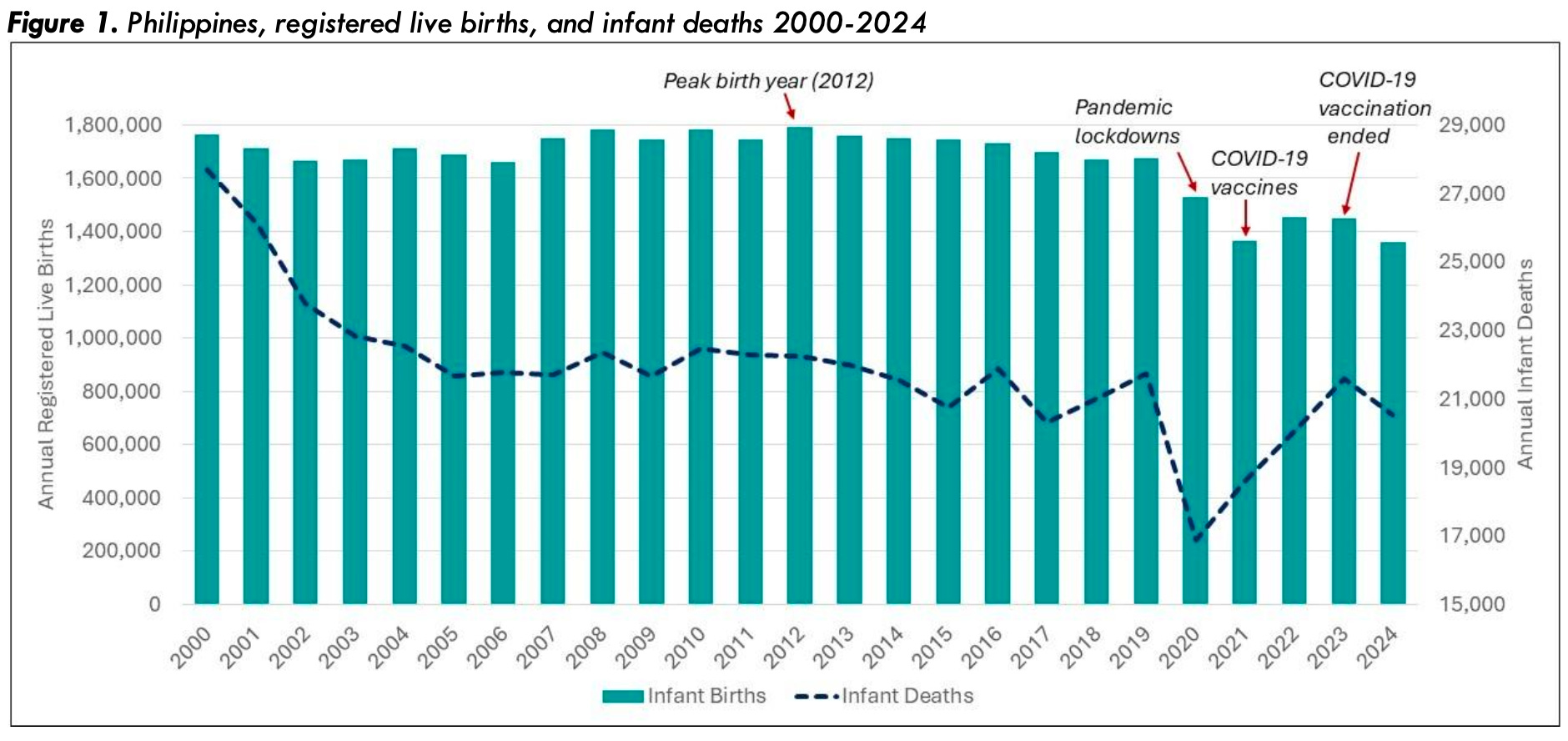
At the same time, registered live births dropped 24% from their 2012 peak (p < 0.0001), with an accelerating decline after 2019.
We found clear temporal links between rising infant deaths and key elements of the national vaccination program.
Pneumococcal Conjugate Vaccine (PCV) coverage surged from 24% in 2015 to 76% in 2023. The correlation with infant mortality was extremely strong: r = 0.93 (p = 0.00074) from 2015–2023 and r = 0.77 (p = 0.016) when including 2024 data.
Mortality peaks across the first year of life aligned precisely with the National Immunization Program schedule:
Birth doses of Hepatitis B and BCG coincided with early neonatal spikes.
6-, 10-, and 14-week doses of PCV, pentavalent, and polio vaccines matched major post-neonatal peaks (especially months 2–4 and month 7).
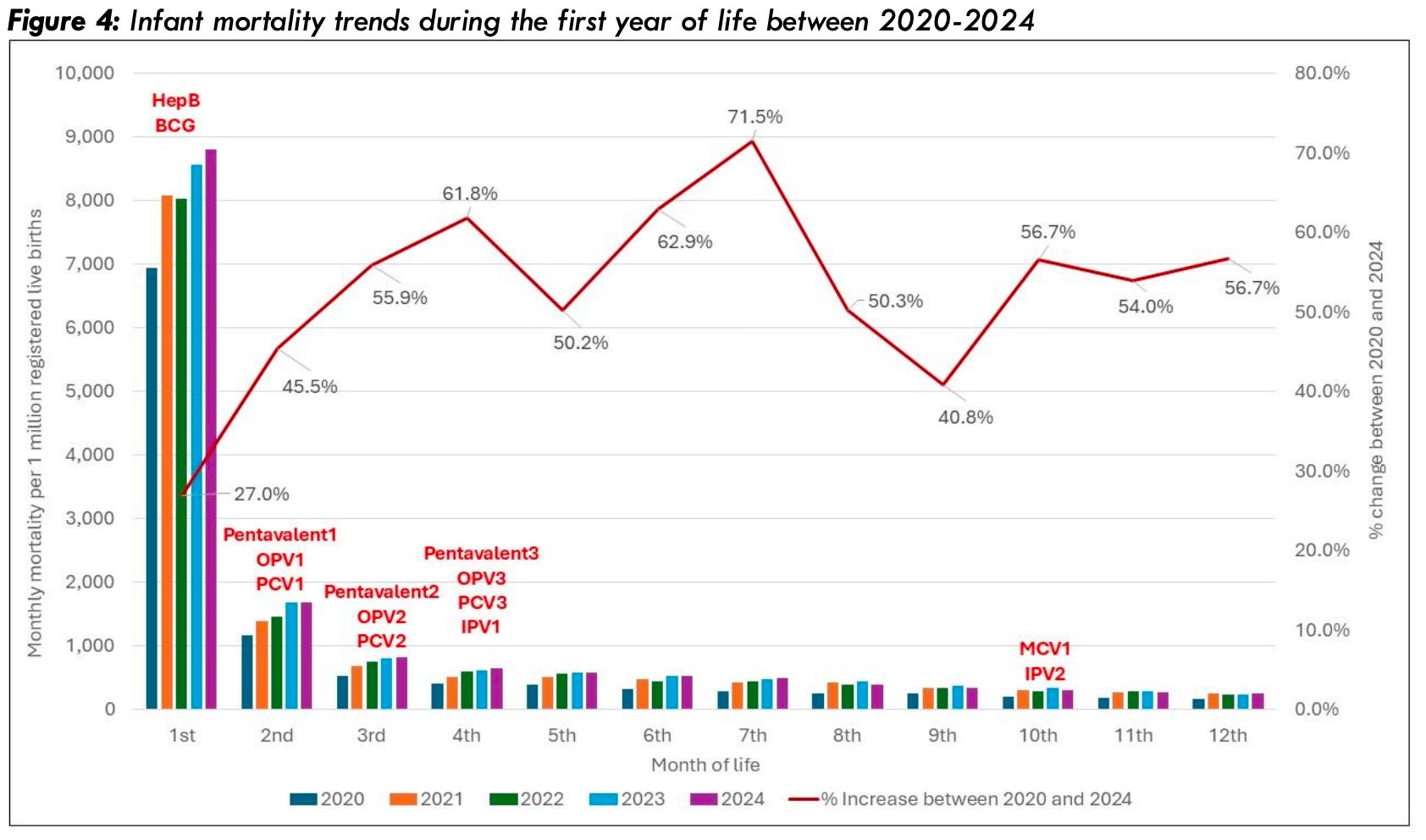
National “catch-up” vaccination campaigns in April–June 2022 and 2023 were followed by clear monthly spikes in infant deaths. In 2024, with no nationwide campaign, those peaks were noticeably lower.
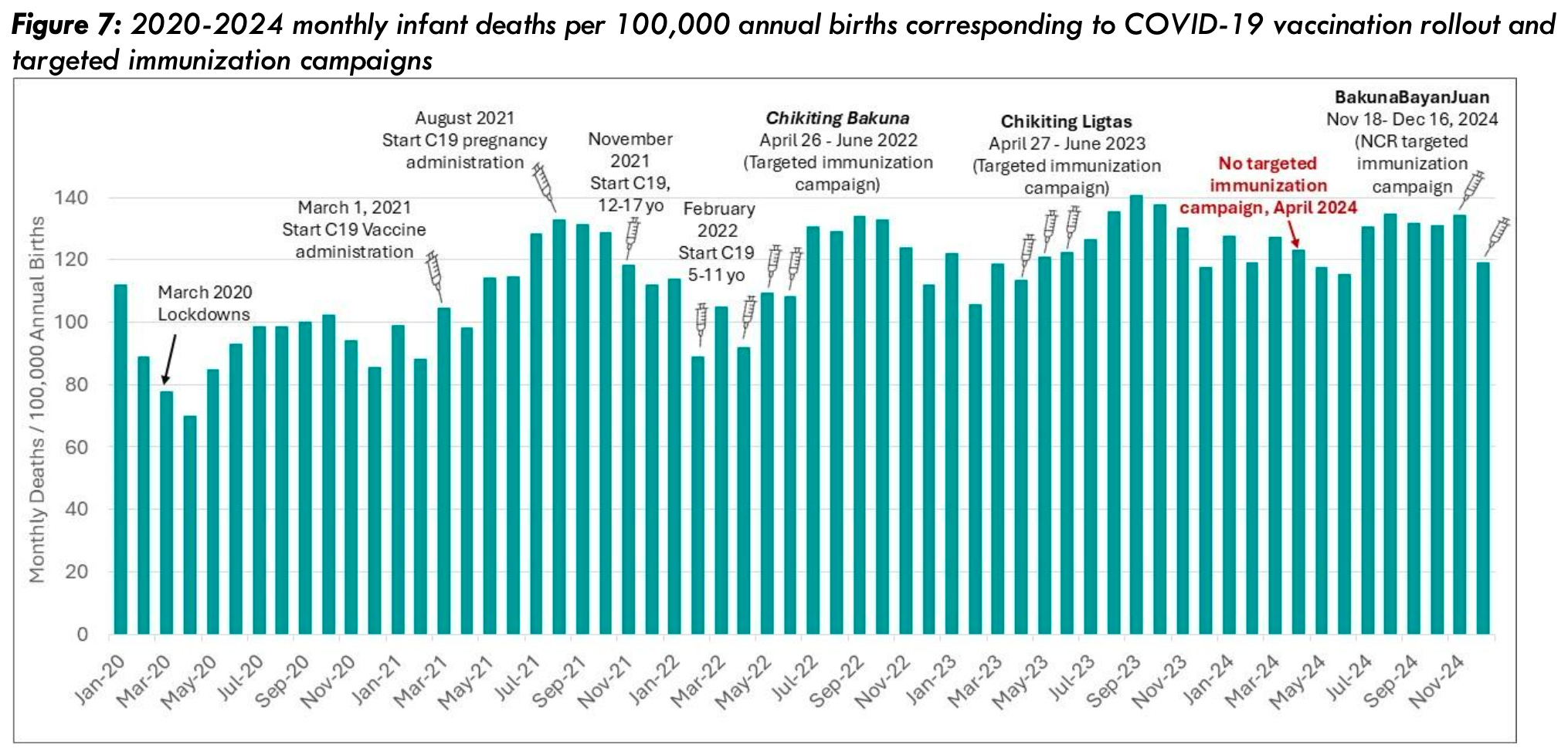
The sharp reversal also coincides precisely with the national COVID-19 vaccination rollout. The program launched in March 2021, with professional societies actively recommending the shots for pregnant women. By early 2023, 70.3% of the eligible population — and a striking 88.8% of adults aged 18-59 (the prime reproductive-age group) — were fully vaccinated.
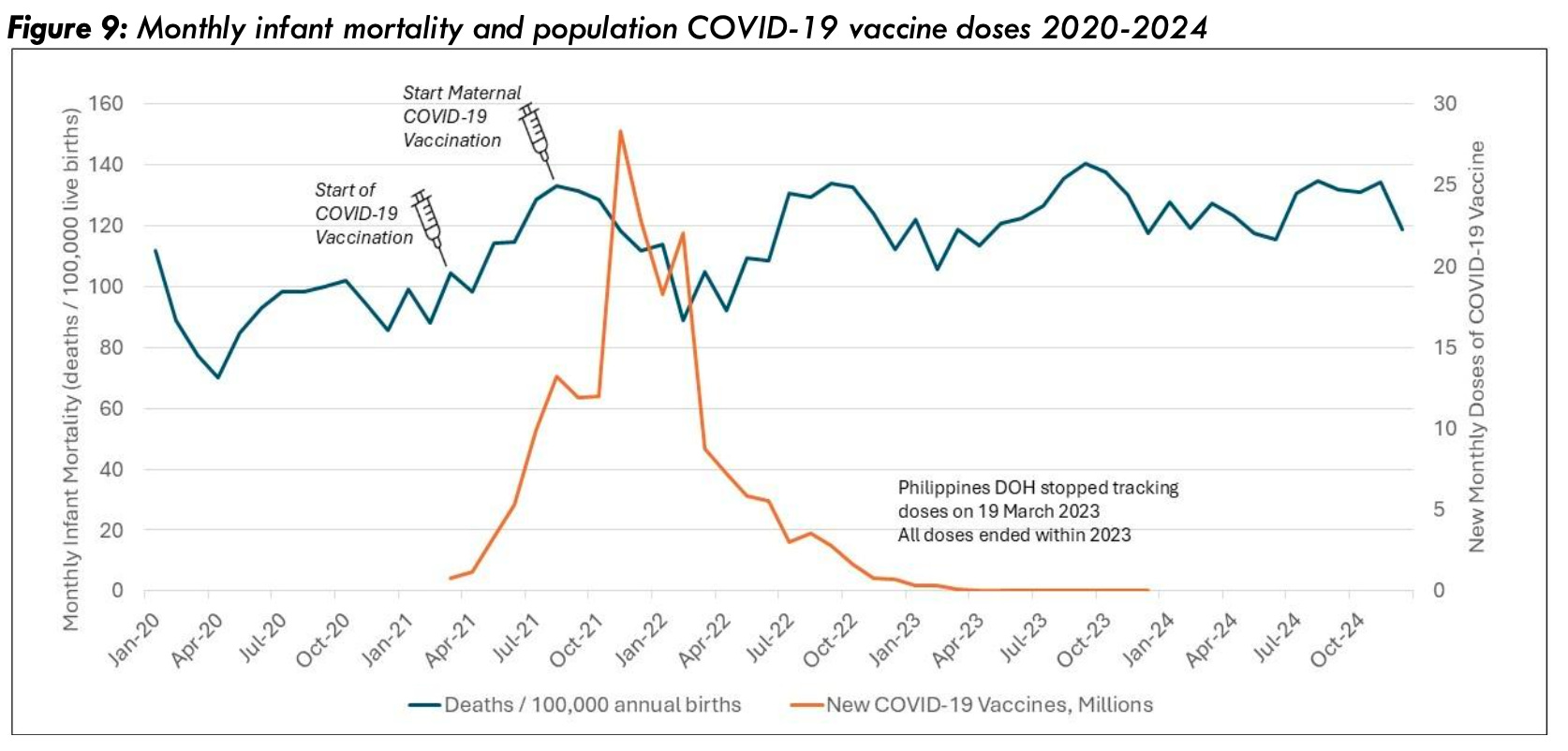
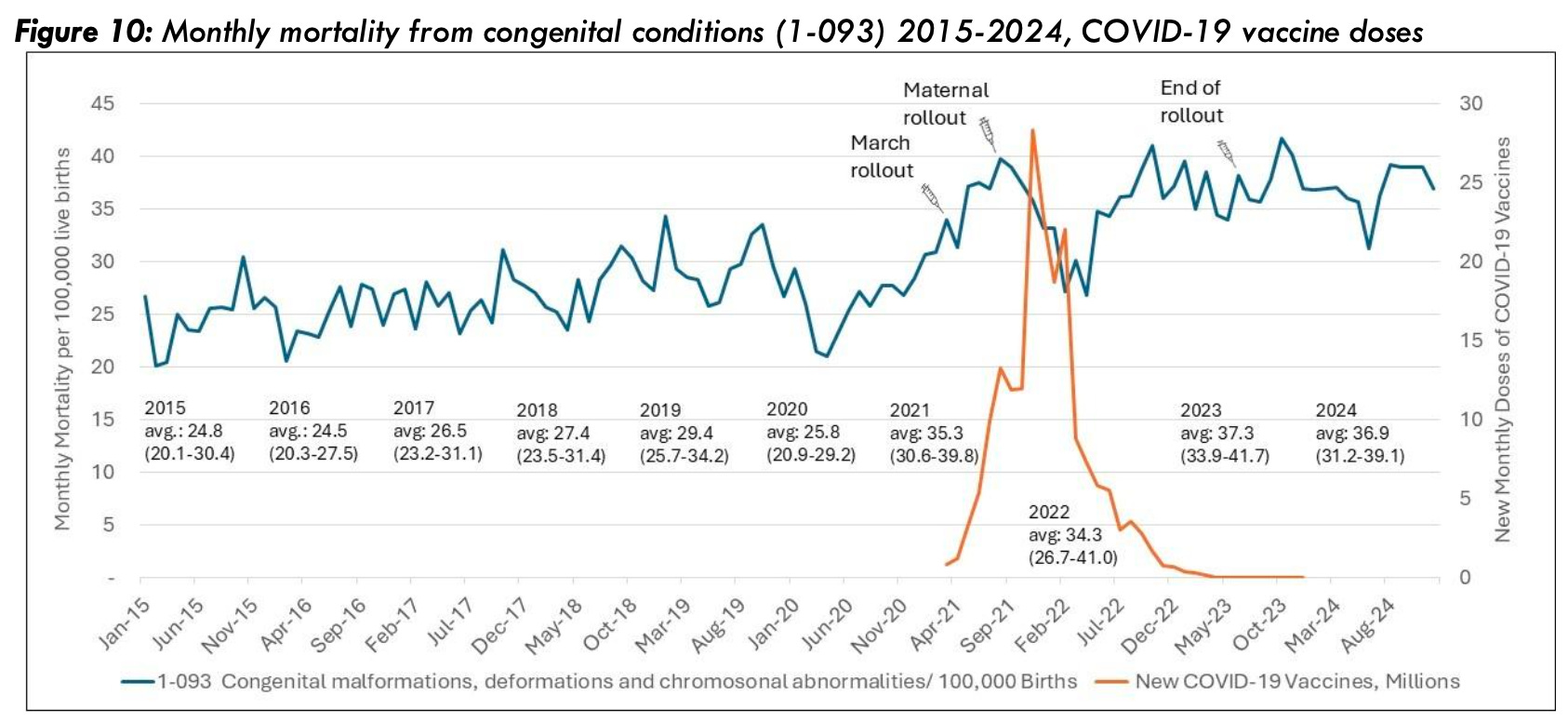
As a result, the first birth cohorts gestated after widespread maternal COVID-19 vaccination (starting in 2021) experienced the dramatic infant mortality rise, along with a 46% increase in congenital abnormality deaths and major spikes in respiratory diseases (+124%), infectious/parasitic diseases (+125%), and unexplained sudden deaths (+106%, including SIDS).
Although these data are derived from the Philippines, the implications are global. Similar vaccination schedules, products, and maternal COVID-19 vaccination strategies have been implemented worldwide. Notably, our findings align with recent analyses of U.S. CDC death certificate data demonstrating a break in decades-long declining infant mortality trends beginning in 2021, alongside significant excess mortality among young children.
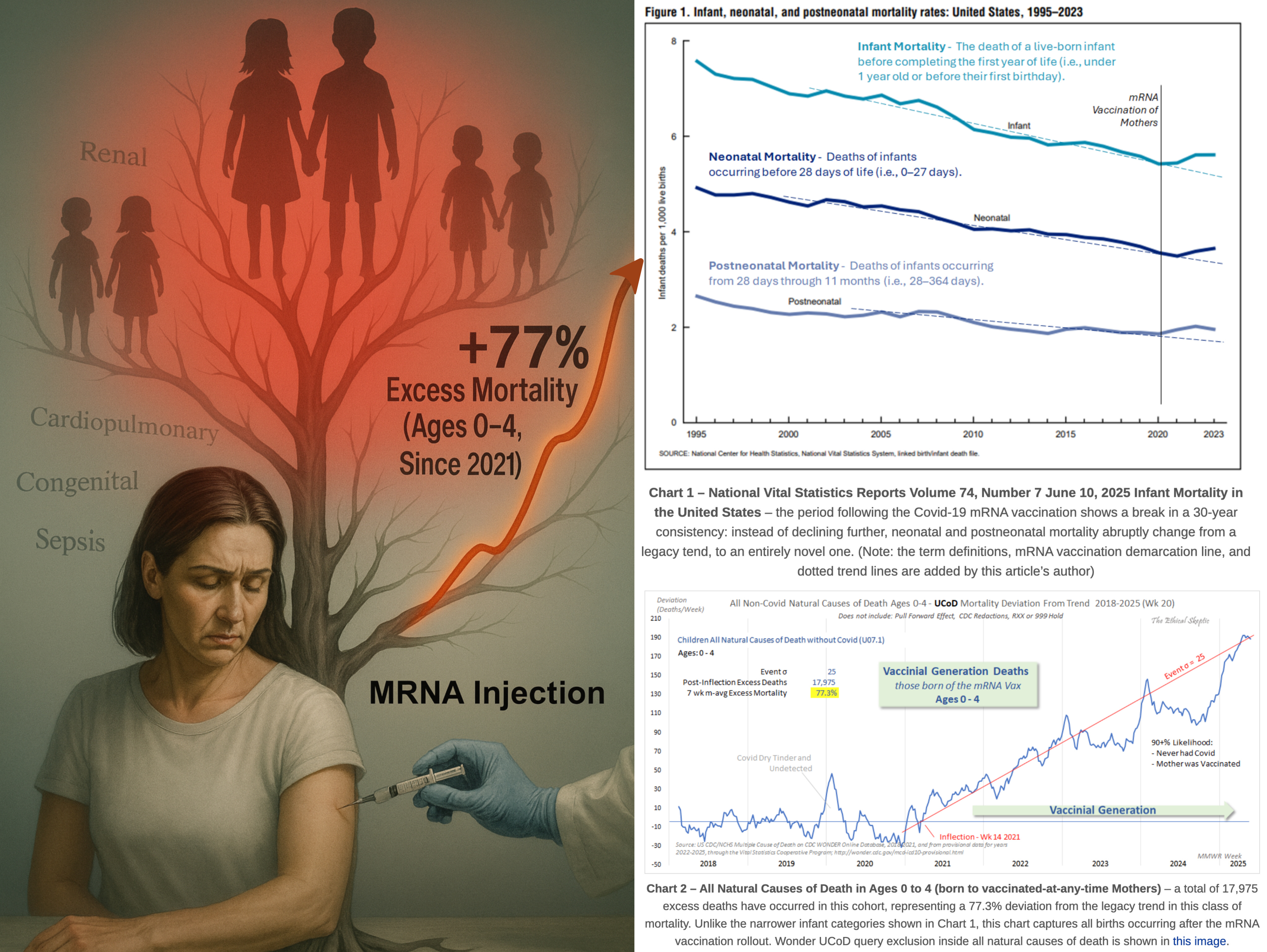

After decades of steady improvement, the abrupt and sustained reversal in infant mortality—alongside parallel rises in congenital abnormalities and multiple cause-of-death categories—represents a clear and unprecedented public health signal that cannot be ignored.
Epidemiologist and Foundation Administrator, McCullough Foundation
Support our mission: mcculloughfnd.org
Please consider following both the McCullough Foundation and my personal account on X (formerly Twitter) for further content.
Copyright 2026 Focal Points

This isn't 'population reduction to save the planet' or 'eugenics', this is the attempted total extermination of OUR entire species of mankind by another species by means of forced sterilization and birth defects so that the jews can seize the entire planet for themselves alone to live on, this is a military attack, we are witnessing the extermination of our entire species being implemented.
Infant mortality is serious business. Let’s demand clean data and real analysis instead of headline bingo. Babies deserve better than clickbait science