

This article originally appeared on Focal Points and was republished with permission.
Guest post by Nicolas Hulscher, MPH
Aggressive cancer was associated with a major disruption of beneficial gut bacteria involved in immune regulation and intestinal-barrier function.
A new metagenomic study led by Dr. Sabine Hazan analyzed stool samples from 60 adults, including 25 patients with aggressive cancer, 15 with non-aggressive cancer, and 20 controls without cancer.
The cancer cases included breast, lymphoma, colon, ovarian, lung, bladder, thyroid, prostate, and several other malignancies. Dr. Hazan’s team used next-generation sequencing to compare the relative abundance of key bacterial genera across the three groups.
The most dramatic finding involved Bifidobacterium, a beneficial group of bacteria associated with immune regulation, intestinal-barrier integrity, and antitumor immune activity.
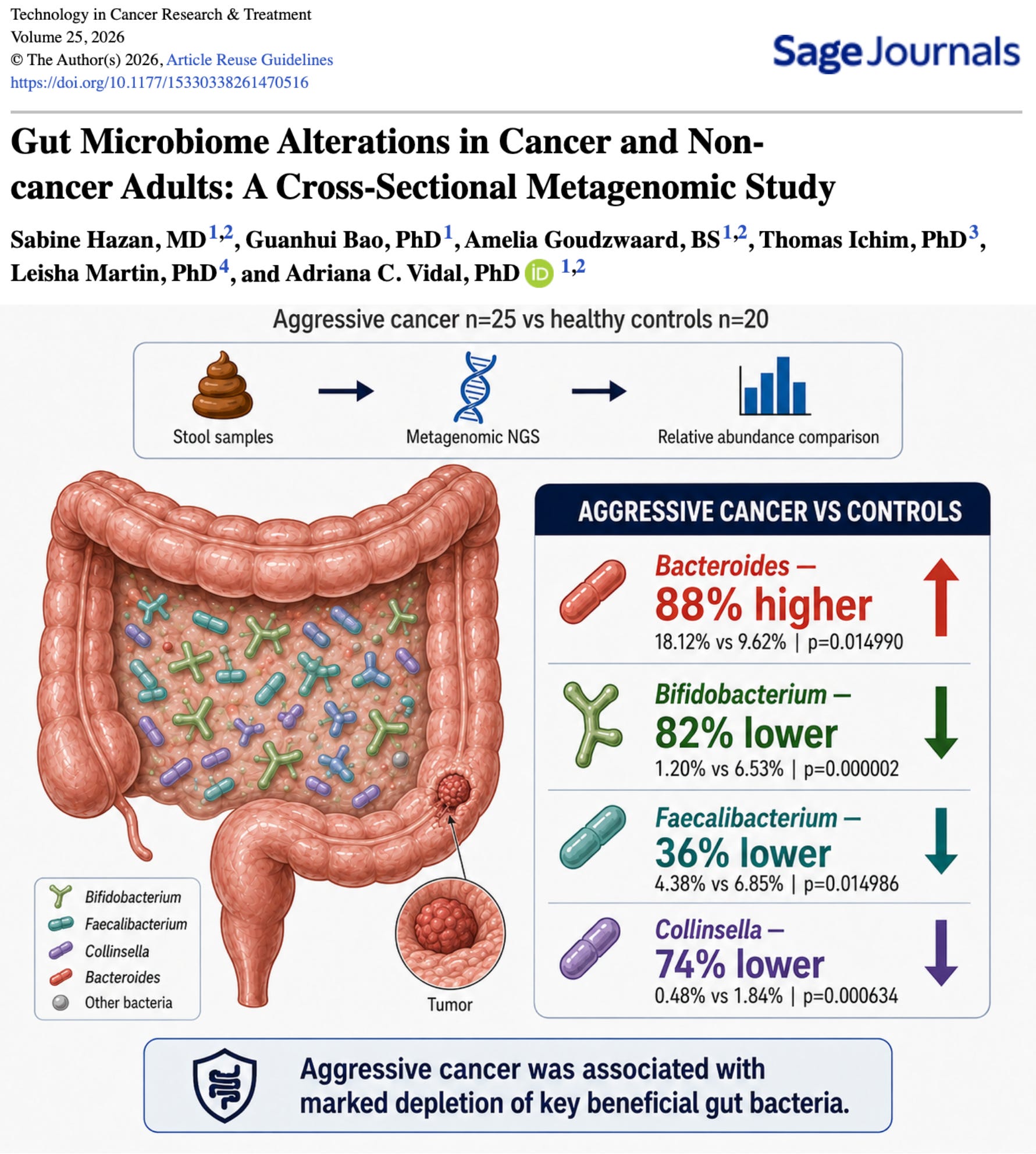
Aggressive cancer patients had an average Bifidobacterium abundance of just 1.20%, compared with 6.53% in controls (82% less).
They also had 76% less Collinsella, 36% less Faecalibacterium, and 88% more Bacteroides, with all four differences reaching statistical significance.
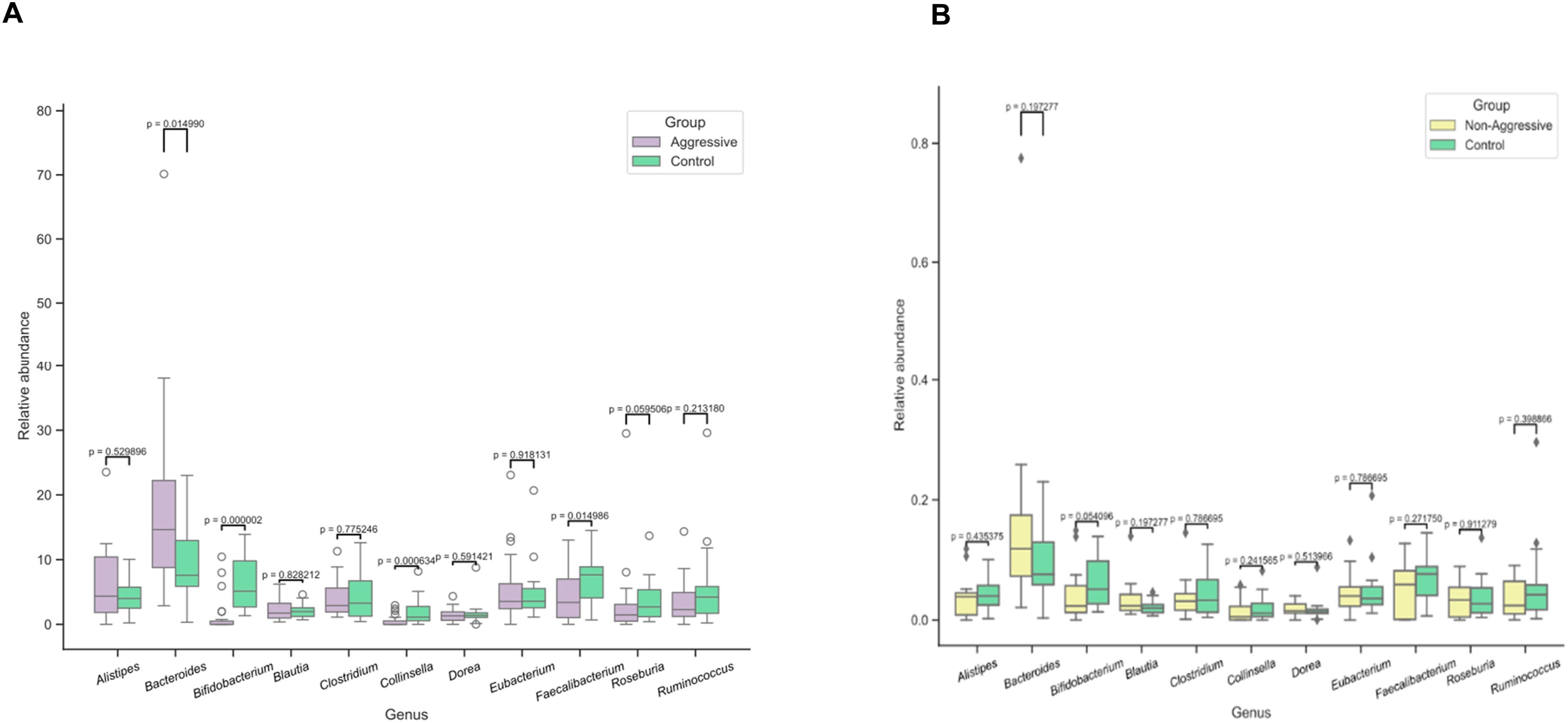
This pattern is notable because Bifidobacterium, Faecalibacterium, and Collinsella have been associated with healthier immune function and better responses to certain cancer therapies. Some Bacteroides strains, by contrast, have been linked to tumor-promoting activity.
The differences were less pronounced in patients with non-aggressive cancer. Their Bifidobacterium levels were also lower than those of controls, but the result narrowly missed conventional statistical significance.
The findings suggest that more aggressive cancer may be associated with a more severely disrupted gut microbiome. The magnitude of the differences—especially the 82% lower Bifidobacterium abundance—supports larger prospective studies to determine whether these microbial patterns could eventually help identify aggressive cancer or become targets for microbiome-based cancer interventions.
Epidemiologist and Foundation Administrator, McCullough Foundation
www.mcculloughfnd.org
Please consider following both the McCullough Foundation and my personal account on X (formerly Twitter) for further content.
Copyright 2026 Focal Points

Especially those that took the jab. It seems that the shots robbed them of that very opportunity thing.