
This article originally appeared on ZeroHedge and was republished with permission.
Guest post by Tyler Durden
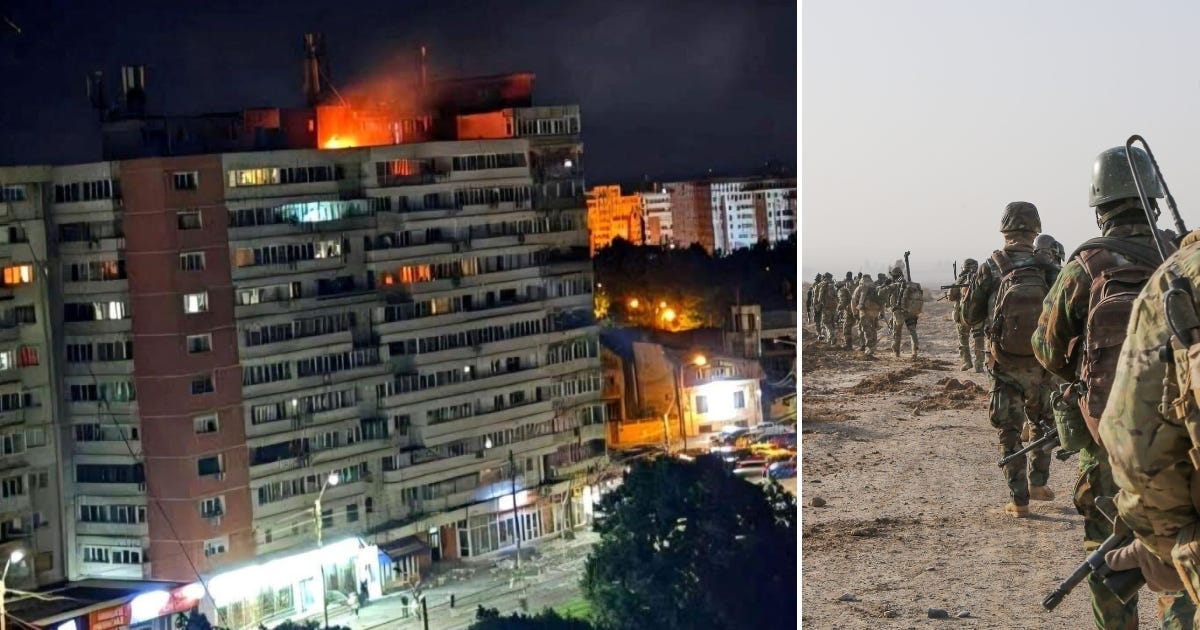
A Russian overnight attack on Ukraine reportedly involved an errant drone crashing into a 10-story apartment block in neighboring Romania, which is a member of NATO.
“We condemn Russia’s recklessness, and NATO will continue to strengthen our defenses against all threats, including drones,” a NATO spokesperson said on X, in an initial reaction.
Romanian officials described that during the Russian military’s assault on Ukraine, which has basically become nightly at this point, a Russian drone slammed into the residential building in the southeastern city of Galati - resulting in an explosion and a fire that injured two people.
The Romanian Foreign Affairs Ministry condemned the “grave and irresponsible escalation from Russia” while further declaring it has issued formal request for more anti-drone defense measures from NATO.
“Romania has informed allies and NATO’s secretary-general about the circumstances and requested measures to accelerate the transfer of anti-drone capabilities to Romania,” the ministry said.
While Romania and other countries which border Ukraine have witnessed ‘errant’ drones and missiles come across the border before, this is the first time Romania in particular has suffered casualties as a result of a projectile hitting a densely populated city or area.
Romania has said that drone fragments have fallen on its territory several of dozens of times - the vast majority or nearly all of these happening without injury or serious incident.
Reuters details that “Romania’s emergency response agency said on Friday a fire broke out in a 10th floor apartment after the drone struck the building’s roof and exploded.” The report indicated that “Two people were receiving medical treatment on site, it said, adding 70 people had evacuated.”
The Kremlin has denied that Russian forces were behind the incident, while state media suggested the drone came from Ukrainian forces:
Moscow denied the allegations, arguing that there is no definitive proof that the drones were Russian.
Several suspected Ukrainian drones have veered into the airspace of the Baltic states in recent months. On May 7, a UAV damaged four empty oil storage tanks in eastern Latvia near the Russian border. Moscow has accused the Baltic states of allowing Ukraine to use their airspace to conduct strikes deep inside Russia, which the NATO members have denied.
In prior recent instances of drones entering neighboring airspace, NATO jets were scrambled - and in some cases drones are safely brought down via electronic intercept means.
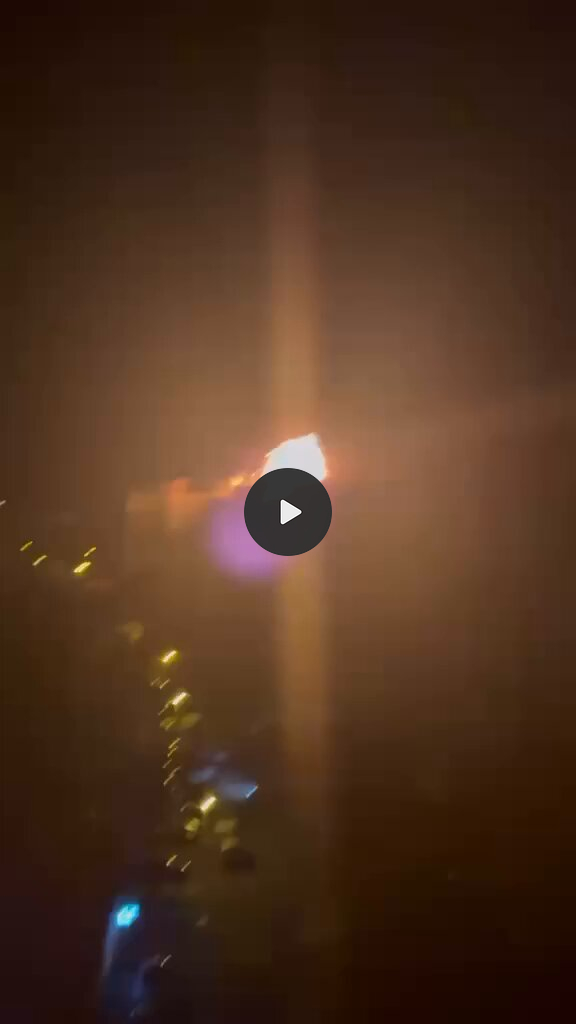
Video of drone crash. Romania’s military said it could not safely intercept over densely populated areas:

But each instance creates new tensions between Russia and NATO, and the typical accusations and threats then fly. The Kremlin has of late been especially alarmed at the Trump administration transferring 5,000 US troops from Germany to Poland, near Russia's doorstep.
Russia Warns US Against Sending Thousands More Troops Near Its Borders: Pushing Toward ‘Suicidal Conflict’
Russia is deeply alarmed about US plans to deploy thousands of additional troops to NATO’s eastern flank member Poland, slamming reports out of Washington as unacceptable and portending an escalation in the Ukraine war.
Russian Foreign Ministry spokeswoman Maria Zakharova said at a press briefing on Thursday that sending additional American soldiers to Poland “would result in escalation of tension across Europe” and that Moscow would be forced to take “retaliatory measures”.
Given that some 5,000 troops are being moved there from Germany, she did acknowledge that reducing America’s troop presense in Europe would overall be “rational, justified, and long-overdue” step toward stabilizing what she called an “imbalanced” security situation created by NATO and Western policies.
Weeks ago, the White House began threatening a significant and historic force reduction from Germany, following Berlin officials’ repeat criticisms of the US-Israeli war against Iran. This was initially presented in media reports as part of a broader drawdown from Europe, but now it appears US forces are just being shifted around, and with 5,000 to be placed closer to Russia.
But these thousands more troops in Poland could induce Russia to respond with “military-technical measures.” Zakharova in perhaps the most provocative part of her remarks warned that NATO is pushing the continent toward a “suicidal” conflict.
In total, some 10,000 US service members are stationed in Poland, on a regular rotation, and the new Washington deployment would see thousands more added to this - from among the 80,000 deployed across Europe.
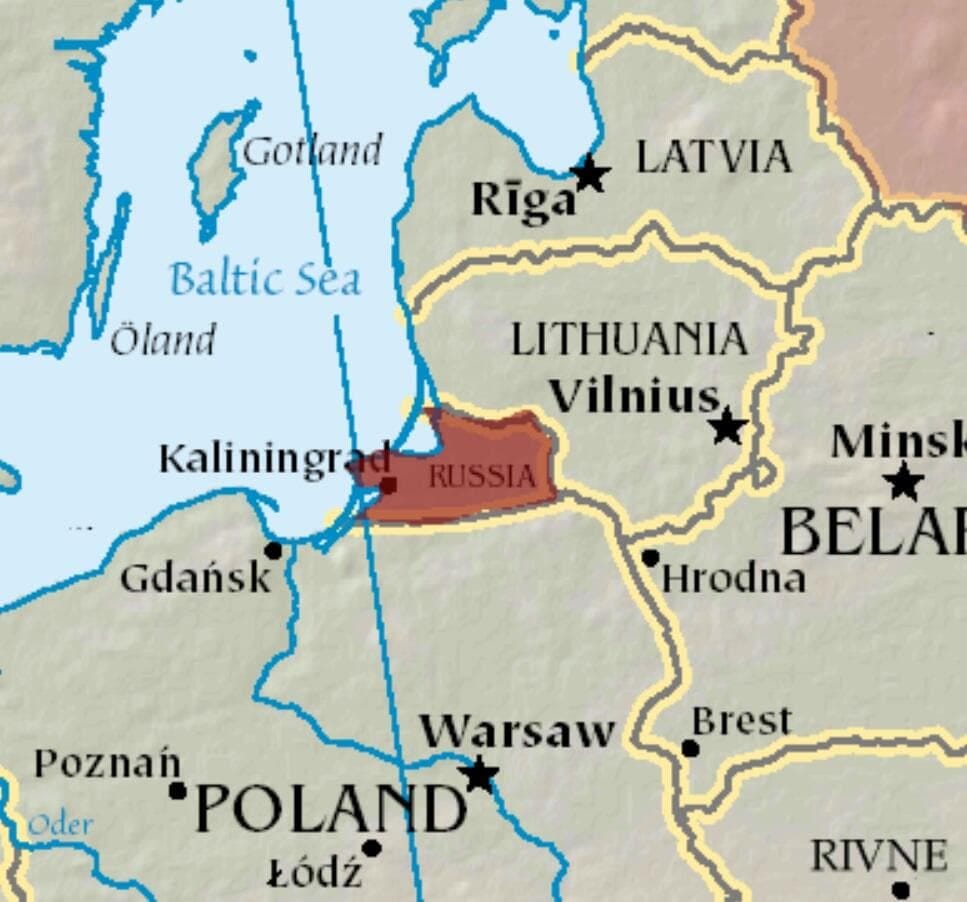
Poland shares a border with Russia’s Kaliningrad Region, setting off further concerns about targeting and drone activity:
The deployment of additional US military forces to Poland could lead to a “qualitative escalation” of tensions between Russia and the West and force Moscow to take retaliatory measures, Russian Foreign Ministry spokeswoman Maria Zakharova said on Thursday.
Zakharova also said that the number of drone attacks on Russian territory from the direction of Europe and Northern European states was increasing.
Moscow has expressed concern that Ukrainian drones could be using Baltic or other countries’ airspace to launch attacks on targets inside Russia, an assertion rejected by Kyiv and the three Baltic countries.
Warsaw has hit back, with Foreign minister Maciej Wewiór having told the Polish news agency PAP that allied troops in Poland were “a necessary reinforcement of NATO’s eastern flank” as a result of Russia’s aggression in Ukraine, and given the Kremlin’s “escalatory rhetoric” towards the alliance.
Wewiór additionally said the “real source of escalation and tensions in Europe” remains Moscow’s “unlawful and aggressive military actions” – and not legitimate measures taken by NATO countries to defend their populations and borders.
Copyright 2026 ZeroHedge

US foreign policy is essentially a large bully poking you in the chest and threatening to kick your ass repeatedly, then calling you a nazi when you punch him in the nose.