
This article originally appeared on Focal Points and was republished with permission.
Guest post by Nicolas Hulscher, MPH
For decades, Americans have been told that measles represents a grave and ongoing threat — and that MMR vaccination is one of the safest and most effective interventions in modern medicine. Pharma-captured mass media and public health agencies have centered almost exclusively on the minimal dangers of measles infection and ignored grieving parents whose children were injured or even killed by the shots. No proper attention has been paid to signals emerging within the federal government’s own vaccine safety database.
Now, our new McCullough Foundation study titled “Deaths Following MMR and MMRV Vaccination in the United States,” authored by Kirstin Cosgrove, Breanne Craven, Claire Rogers, John A. Catanzaro, Albert Benevides, M. Nathaniel Mead, Mila Radetich, Peter A. McCullough, and Nicolas Hulscher (myself), takes a comprehensive look at reported fatal outcomes following MMR and MMRV vaccination in the United States, doing the work that our public health agencies should have done many years ago.
After analyzing VAERS data through August 29, 2025, we identified a serious mortality safety signal following MMR/MMRV vaccination in the United States. What we observed was not a diffuse or randomly scattered pattern across age groups and time intervals. Instead, we found an alarming number of deaths among infants and toddlers within days of receiving MMR/MMRV vaccines, sharply clustered in the routine first-dose window.
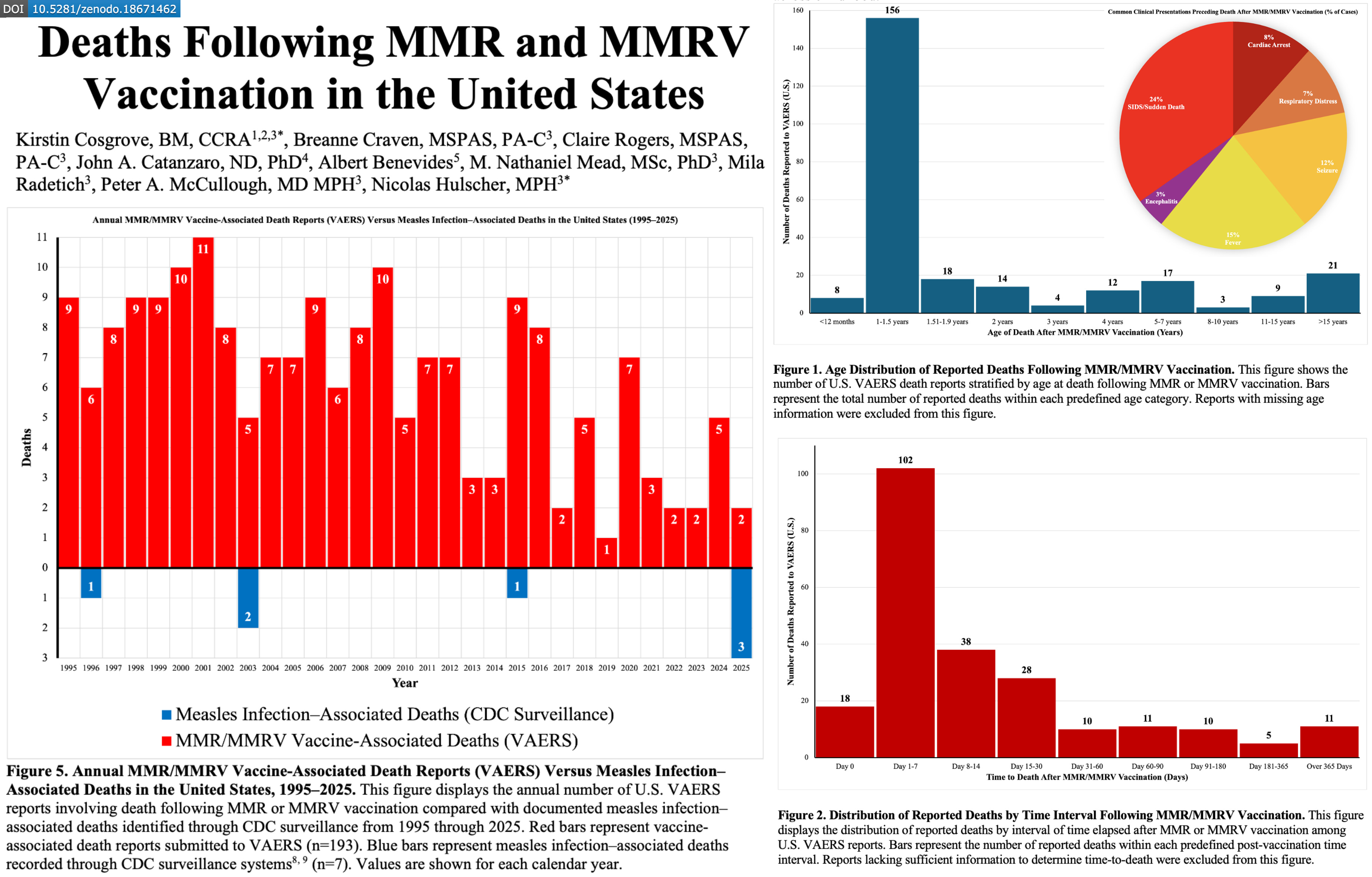
Most fatalities appeared to involve acute deterioration following vaccination, with manifestations including fever, seizures, and cardiac arrest at home, frequently culminating in classification as Sudden Infant Death Syndrome (SIDS). A small proportion survived hospitalization but were unable to be resuscitated.
Perhaps most striking is the broader context. Since 1995, there have been 193 U.S. MMR/MMRV vaccine-associated death reports with identifiable dates, compared to 7 measles infection–associated deaths recorded in the United States during the same period. That represents a 2,657% higher count of reported vaccine-associated deaths than measles deaths in the modern era.
Here’s a full breakdown of our findings:
Total MMR/MMRV Death Reports Identified in VAERS
Using the MedAlerts interface to query VAERS from inception through August 29, 2025, we identified:
536 total global reports of death following MMR or MMRV vaccination
299 reports explicitly attributed to the United States (focus of this study)
VAERS is widely recognized to be substantially underreported. A federally funded investigation led by Lazarus et al. found that fewer than 1% of vaccine adverse events may be reported to national surveillance systems. In other words, VAERS captures only a small fraction of total adverse outcomes.
Measles Vaccinations Vs. Measles Infection
Since 1995:
193 U.S. MMR/MMRV death reports with identifiable dates
7 measles infection–associated deaths in the United States (CDC surveillance)
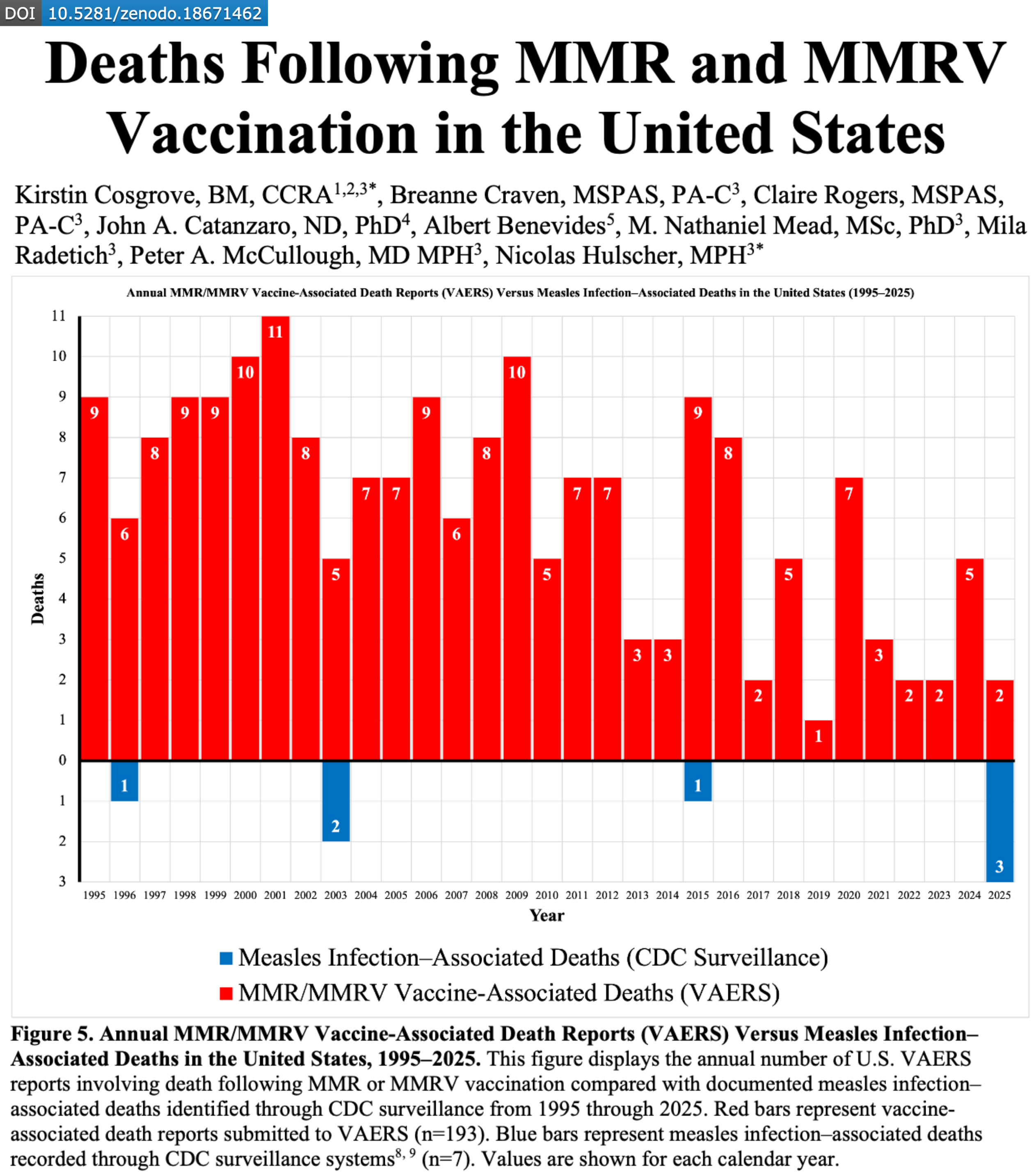
This represents a 2,657% higher count of reported vaccine-associated deaths compared to measles deaths over the same period.
This is absolutely absurd. A vaccine should NEVER be deadlier than the disease.
Mortality Concentrated in the First-Dose Age Window
Among the 299 U.S. reports:
182 deaths (60.9%) occurred in children under age 2
156 deaths (52.2%) occurred between 1.0–1.5 years of age
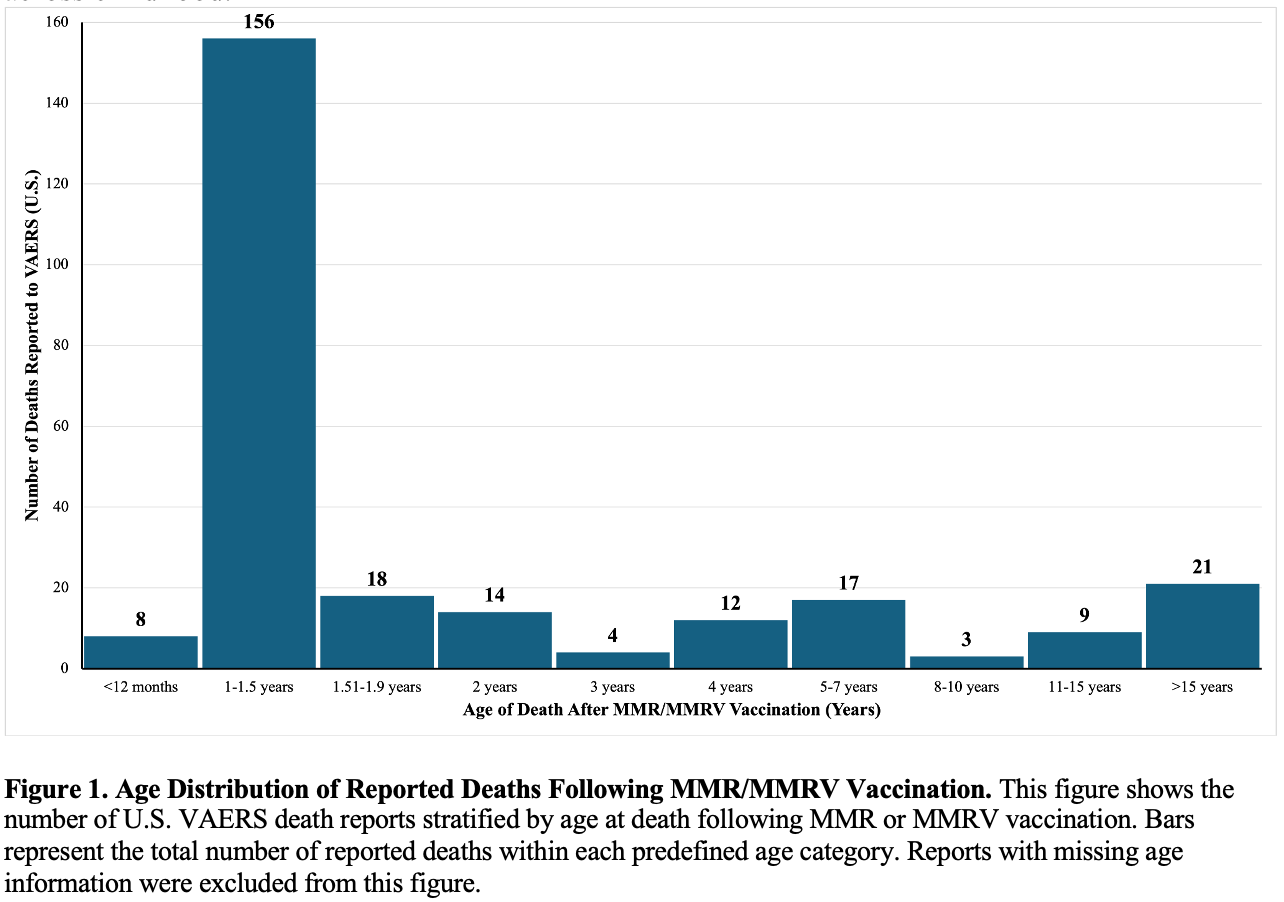
That 1.0–1.5 year age band corresponds precisely to the routine 12–15 month first MMR dose.
Rather than a gradual distribution across childhood, we observed a sharp concentration during the narrow developmental window when the first dose is typically administered. The age clustering was pronounced and non-uniform.
Most Deaths Occurred Within 2 Weeks
Time-to-death analysis demonstrated a strongly front-loaded distribution:
120 deaths (40.1%) occurred within 7 days
158 deaths (52.8%) occurred within 14 days
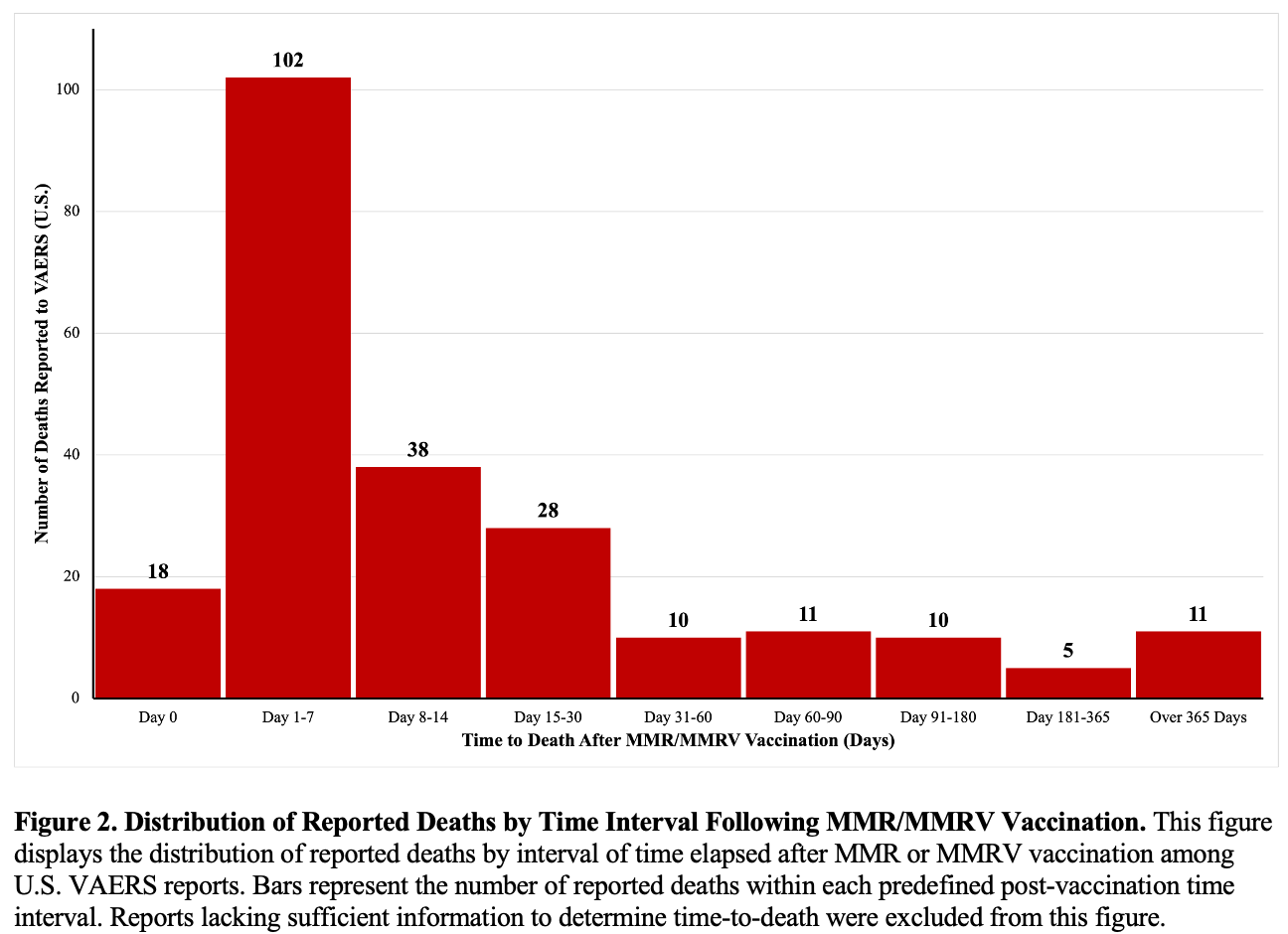
Among first-week deaths with available age data, 68.6% occurred in children 1.0–1.5 years old, reinforcing the synchronization between age peak and immediate post-vaccination timing.
The highest concentration of deaths occurred in the immediate days following vaccination — not months or years later.
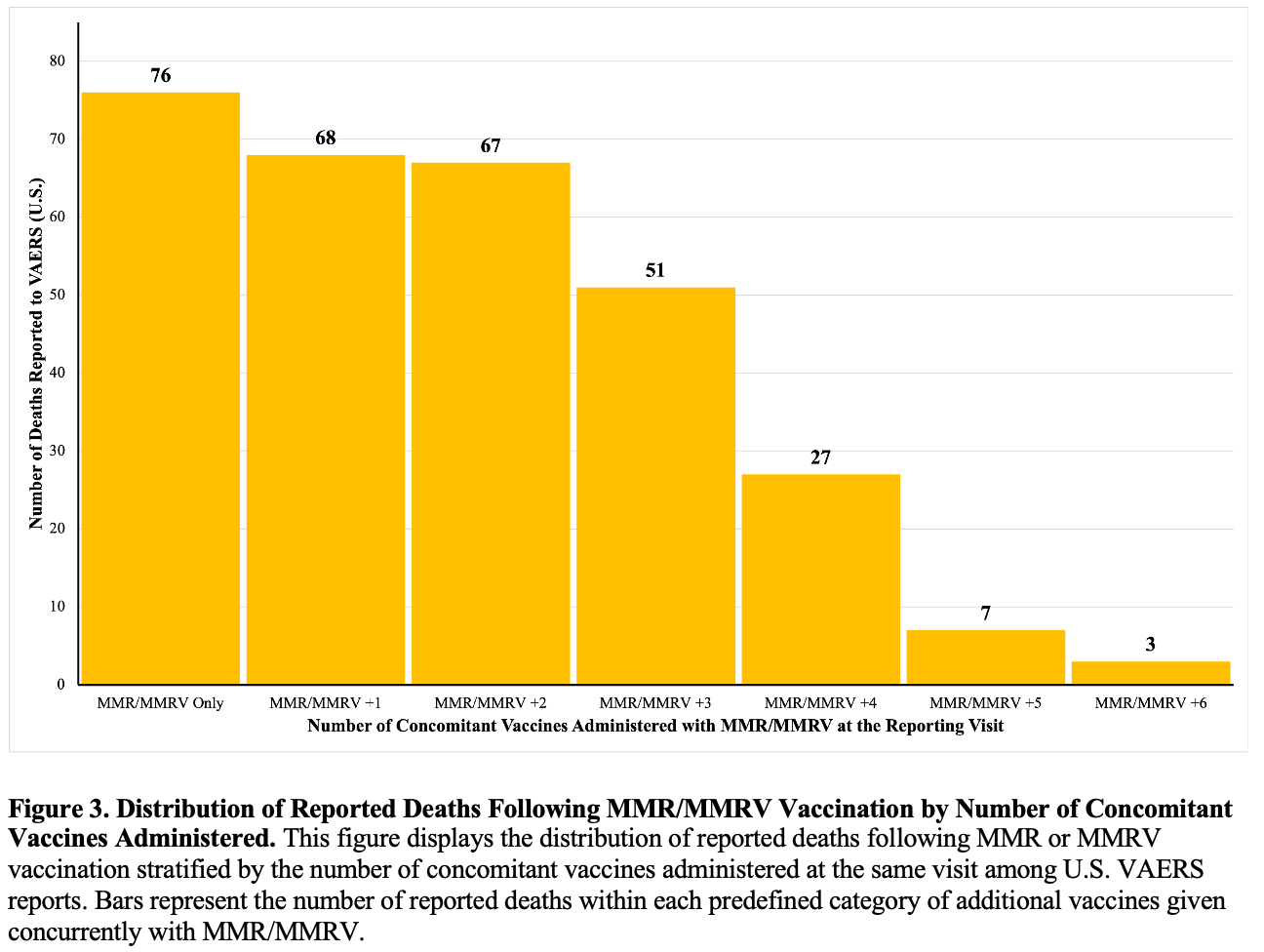
Majority Occurred During Multi-Vaccine Visits
We also examined concomitant vaccine exposure:
74.6% of deaths followed visits involving MMR/MMRV plus one or more additional vaccines
25.4% followed MMR/MMRV alone
Recurring Clinical Presentations
Clinical features preceding death showed recurring patterns:
24% SIDS or sudden unexplained death
15% fever
12% seizures
8% cardiac arrest
7% respiratory distress
3% encephalitis
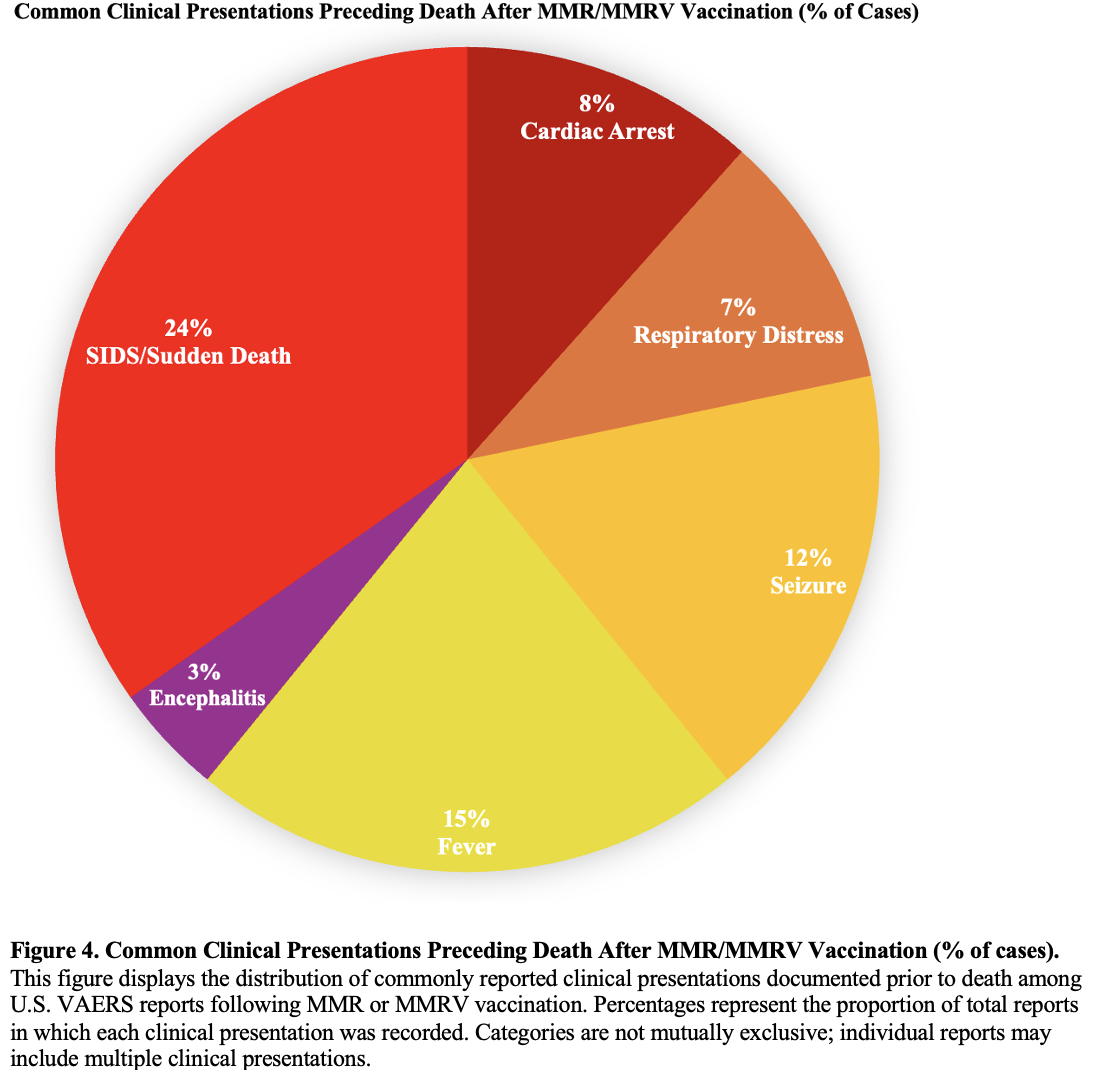
Notably, 68% of SIDS cases occurred in the 1.0–1.5 year age group, mirroring the first-dose window.
Additionally:
23.7% involved emergency department visits
25.4% involved hospital admissions
Many cases involved documented acute clinical deterioration prior to death.
Taken together, these findings cannot be brushed aside as coincidence or statistical noise. The clustering across age, timing, vaccination context, and recurring clinical presentations forms a coherent and internally consistent signal of death within the federal reporting system itself.
As our study concluded:
We identified a serious mortality safety signal following MMR/MMRV vaccination in the United States. A substantial number of reported deaths were documented, with patterns demonstrating pronounced alignment across age, temporality, routine-dose timing, concomitant vaccine exposure, and recurring clinical presentations—including fever, seizures, SIDS, and cardiac arrest.
Reported deaths were predominantly concentrated in children under 2 years of age, and the majority occurred within the first 14 days following vaccination. The synchronization of age-specific clustering with immediate post-vaccination timing reflects a non-random pattern of mortality. This concern is further amplified by the stark contrast between reported vaccine-associated deaths and the exceedingly rare number of measles infection–associated deaths in the modern era.
The magnitude, concentration, and temporal proximity of these reports demand rigorous, transparent, and fully independent evaluation. Future research should prioritize active surveillance cohort studies, detailed autopsies with virologic testing, and record-linked datasets capable of assessing background mortality and determining causal relationships.
You can read the full study here: https://zenodo.org/records/18671462
Epidemiologist and Foundation Administrator, McCullough Foundation
Support our mission: mcculloughfnd.org
Please consider following both the McCullough Foundation and my personal account on X (formerly Twitter) for further content.
Copyright 2026 Focal Points