This article originally appeared on ZeroHedge and was republished with permission.
Guest post by Tyler Durden
Update (Sunday Afternoon):
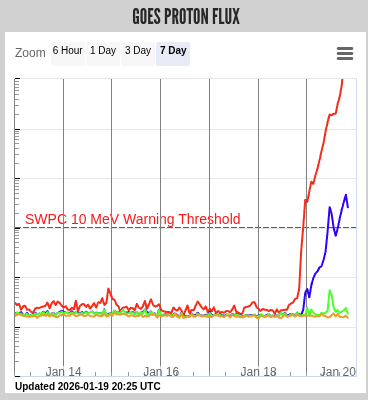
The Space Weather Prediction Center issued an alert on X, saying the Earth-directed coronal mass ejection first identified on Saturday is now producing one of the largest solar radiation storms in more than two decades.
“An S4 severe solar radiation storm is now in progress - this is the largest solar radiation storm in over 20 years. The last time S4 levels were observed was in October, 2003. Potential effects are mainly limited to space launch, aviation, and satellite operations,” SWPC said.
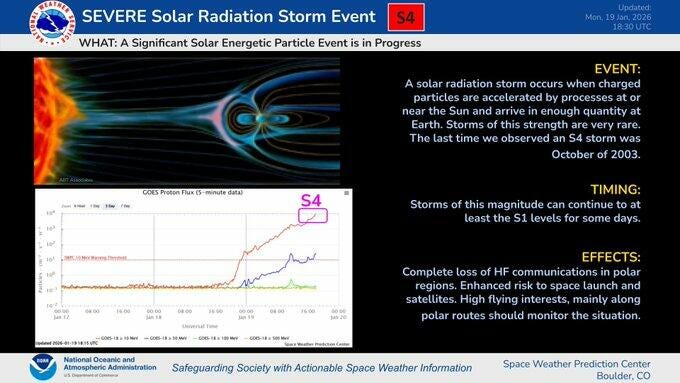


Here’s what a S4 severe solar radiation storm can disrupt:
Satellites and spacecraft
Permanent or temporary damage to satellite electronics
Single event upsets causing glitches, reboots, or loss of attitude control
Degradation of solar panels, shortening satellite lifespan
Increased drag on low Earth orbit satellites due to atmospheric heating
Aviation
High radiation exposure for passengers and crew on polar routes
Airlines may reroute transpolar flights, increasing fuel costs and delays
Potential disruption to avionics that rely on satellite navigation
GPS and navigation
Reduced GPS accuracy, especially at high latitudes
Timing errors affecting precision systems such as financial networks, telecom syncing, and military operations
Communications
Intermittent HF radio blackouts used by aviation, maritime, and military operators
Loss of long-range radio communications in polar regions
An S4 solar radiation storm is a serious threat to satellites, aviation, GPS, and the infrastructure that supports the modern world.
* *. *
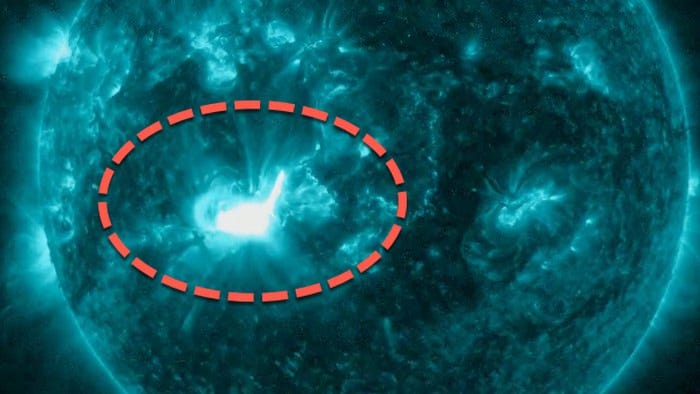
The Space Weather Prediction Center issued an alert Sunday afternoon after a powerful X1.9 solar flare erupted on the Sun, with the space weather event expected to produce an Earth-directed coronal mass ejection (CME).
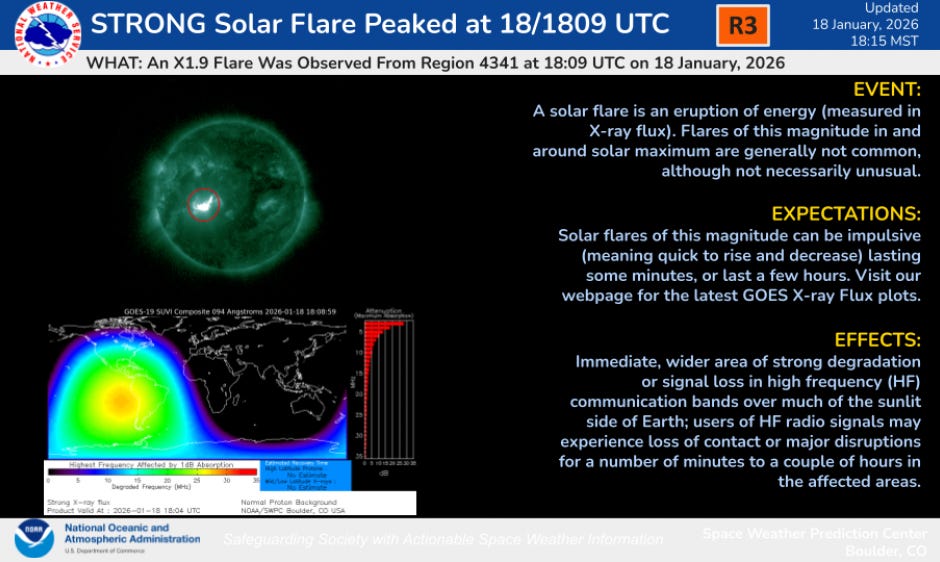
Stefan Burns, a geophysicist and space weather forecaster, wrote on X that the X1.9 flare is “insane” and will produce a “huge coronal mass ejection.”


“A huge coronal mass ejection has been launched toward Earth at high velocity. We will have a BIG solar storm impact in 2 to 3 days. Expect at least G3 geomagnetic storming. Early forecasts are liable to revision as more data comes in,” Burns said.

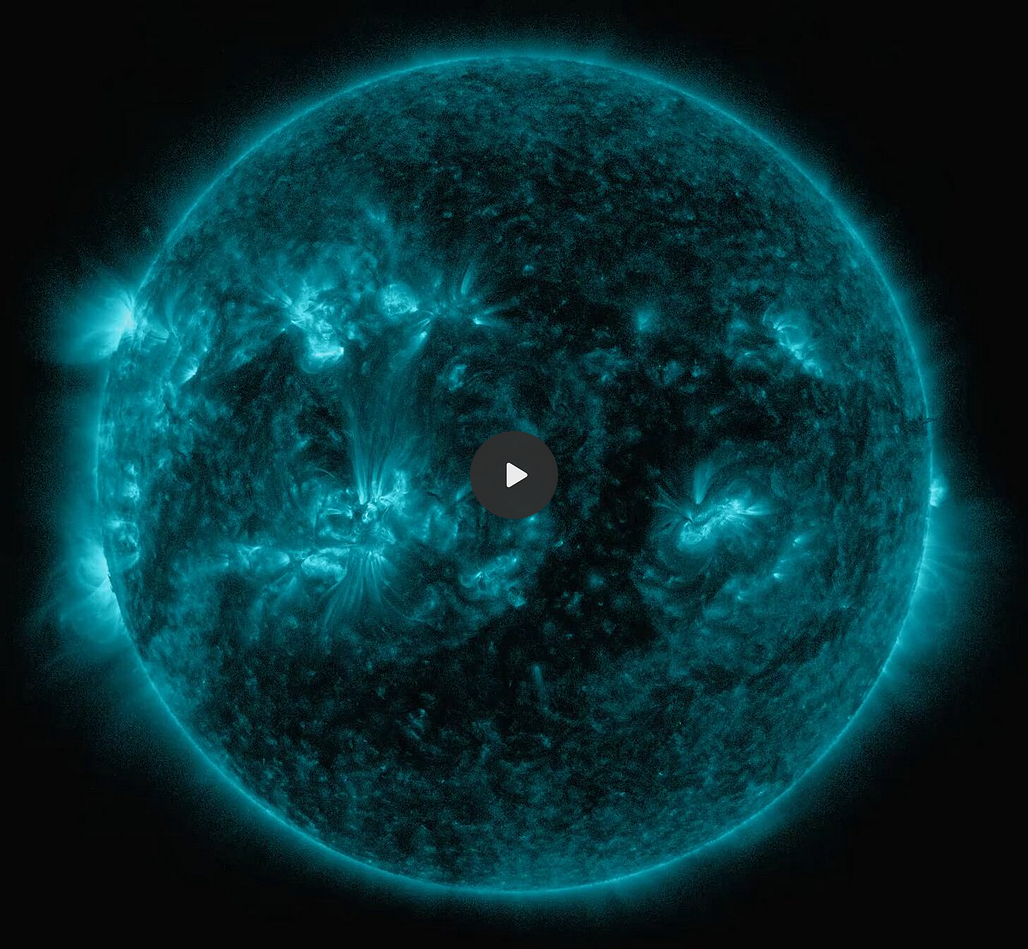
Space Weather News’ Ben Davidson streamed a live analysis on YouTube earlier about the X-class solar flare and what to expect...
The X-class flare can disrupt radio and navigation immediately. The larger risk comes from the expected CME in the coming days, which can trigger geomagnetic storms that affect power grids, satellites, aviation, and the modern economy built on chips and data centers.
Copyright 2026 ZeroHedge