
This article originally appeared on The Defender and was republished with permission.
Guest post by Michael Nevradakis, Ph.D.
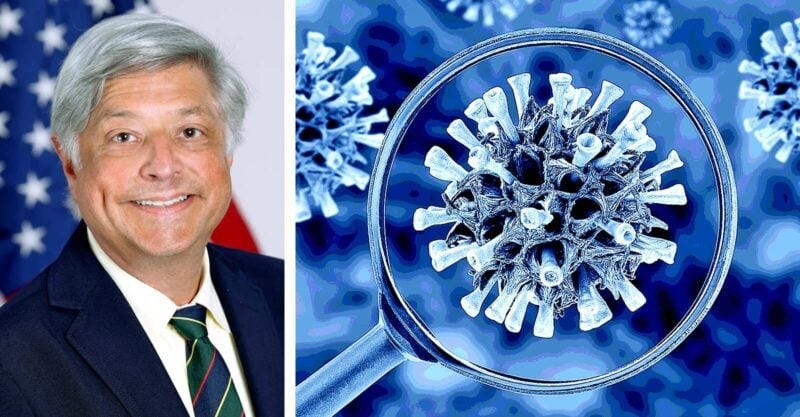
Jeffery Taubenberger, acting director of the National Institute of Allergy and Infectious Diseases (NIAID) — the agency formerly led by Dr. Anthony Fauci — is reportedly out, amid a broader shakeup at the NIH. Sen. Tammy Baldwin revealed Taubenberger’s apparent departure Thursday during a U.S. Senate Appropriations Committee hearing, STAT reported.
Jeffery Taubenberger, acting director of the National Institute of Allergy and Infectious Diseases (NIAID) — the agency formerly led by Dr. Anthony Fauci — is reportedly out, amid a broader shakeup at the National Institutes of Health (NIH).
Sen. Tammy Baldwin (D-Wis.) revealed Taubenberger’s apparent departure Thursday during a U.S. Senate Appropriations Committee hearing, STAT reported. Taubenberger was scheduled to speak before the committee.
According to STAT, Taubenberger may have left NIAID “about two weeks ago” and it’s unclear if his reported departure was voluntary.
NIH Director Jay Bhattacharya, who spoke at Thursday’s hearing, did not confirm or deny Taubenberger’s departure. Taubenberger is still listed as acting director on NIAID’s website as of this writing.
Investigative journalist Paul D. Thacker, a former Senate investigator, told The Defender that sources inside the U.S. Department of Health and Human Services (HHS), which oversees NIH and NIAID, told him that before the hearing, HHS “disclosed to Senate Democrats that Taubenberger was stepping down from his role.”
“I was told this information was then leaked to STAT. Not surprising, as STAT News is the voice of Big Pharma — and Big Pharma investors donate to the Democratic Party,” Thacker said.
Taubenberger is widely viewed as a proponent of gain-of-function research, which increases the transmissibility or virulence of viruses and is often used in vaccine development.
He is perhaps best known for his work sequencing the 1918 Spanish flu virus, the results of which were published in a 1999 paper he co-authored.
STAT reported that Taubenberger is currently “the lead scientist on a project to try to develop a so-called universal flu vaccine, one that would protect against the strains that transmit among people and other versions of the virus — like H5N1 bird flu — that circulate among animals but are believed to pose a pandemic threat.”
If Taubenberger’s departure is confirmed, it would create the latest in a series of vacancies across key leadership posts within that agency.
In November 2025, NIH posted 12 open positions, including a vacant position for NIAID director — perhaps indicating that the agency did not intend to keep Taubenberger in the position permanently or was aware that he planned to depart.
“There was a job ad up for some time for the NIAID director, so this means they’re probably getting close to hiring that person,” Thacker said.
Earlier this month, NIH posted a vacancy for deputy director of NIAID. That listing has since been removed. HHS did not respond to The Defender’s request for comment by press time.
Taubenberger downplayed gain-of-function risks, link to COVID pandemic
Taubenberger became acting director of NIAID in April 2025, a month after the Trump administration ousted Dr. Jeanne M. Marrazzo, who took over as director after Fauci left in 2022.
At the time, Taubenberger was a 19-year veteran of NIAID’s Viral Pathogenesis and Evolution Section.
Taubenberger is widely known in the scientific community as a researcher with a commendable track record, particularly in the field of influenza.
But critics have pointed to Taubenberger’s public support of gain-of-function research and the zoonotic theory of COVID-19’s origins. He has also drawn criticism for his ties to Fauci and other controversial virologists, and his prior work on COVID-19 vaccines.
Brian Hooker, Ph.D., chief scientific officer for Children’s Health Defense (CHD), cited Taubenberger’s Spanish flu study as “a clear example of research that should never be done” and that calls into question his ongoing work on a universal flu vaccine.
“It was clear that his ‘universal vaccination’ program … was just a ruse for additional gain-of-function research to make human-infective strains of influenza more pathogenic,” Hooker said.
According to Karl Jablonowski, Ph.D., CHD’s senior research scientist, “The flu virus changes a lot and very quickly (antigenic drift). This means the vaccine must target a virus that doesn’t exist yet — and you can figure out what they will look like by creating them, which is gain-of-function research.”
Jablonowski called such research “a coin with two sides.”
“On one side, we learn about disease evolution and capabilities in a controlled setting. On the other side, the controlled setting is not as controlled as it needs to be. Since we have yet to invent a leak-proof lab, gain-of-function research is a threat to everyone, as demonstrated by our last global pandemic,” he said.
In a 2014 interview with the journal EMBO Reports, Taubenberger downplayed the risks of gain-of-function research, claiming it’s what “virologists have done for a hundred years.”
In a 2013 letter to the journal mBio, Taubenberger suggested that gain-of-function research replicates natural processes. He argued that influenza A viruses “continually undergo ‘dual use experiments’ as a matter of evolution and selection.”
According to the American Society for Microbiology, dual-use research is a type of gain-of-function research that raises “important biosafety and/or biosecurity concerns.” It requires “a higher level of review” and is “subject to strict protocols.”
Taubenberger a ‘key participant in defrauding the public’’ about COVID’s origin
Taubenberger also downplayed any connection between gain-of-function research and the origins of COVID-19, instead claiming the virus emerged naturally.
In July 2020, Taubenberger and Fauci associate Dr. David Morens co-authored an op-ed in the American Journal of Tropical Medicine and Hygiene, suggesting that COVID-19 is “a virus that emerged naturally.”
In a later email to a Science reporter, on which Taubenberger was copied, Morens described the article as one that “defends Peter and his Chinese colleagues” — referring to zoologist Peter Daszak, Ph.D., former president of the EcoHealth Alliance. EcoHealth collaborated with scientists at China’s Wuhan Institute of Virology on gain-of-function research.
Proponents of the lab-leak theory have suggested the virus may have leaked from the Wuhan lab.
Rutgers University molecular biologist Richard Ebright, Ph.D., a critic of gain-of-function research, said Taubenberger was a “close Fauci associate” and a “key participant in defrauding the public about the origin of COVID.”
Last month, a grand jury indicted Morens on five charges related to the alleged use of his personal email account to hide communications about the origins of COVID-19 while shaping the public narrative that the virus emerged from nature instead of from a lab.
Ebright noted that the indictment “explicitly cited” Taubenberger and Morens’ paper “as evidence for criminal conspiracy against the United States.”
According to Nature, Morens is just one of several scientists “involved with COVID-19 research” to “face action from the Trump administration” in recent weeks.
Late last month, virologist Ralph Baric, Ph.D., who collaborated with Fauci, Daszak and Wuhan institute researchers during the COVID-19 pandemic, lost his NIH grants. HHS has initiated proceedings to bar Baric from future federal grants.
In 2024, HHS suspended all funding for EcoHealth Alliance after finding the organization had failed to properly monitor risky coronavirus experiments.
Taubenberger also received NIH funding for his ongoing work related to the development of a universal flu vaccine — to the tune of $500 million. Bhattacharya has called the research “quite promising.”
NIH reassigns Fauci-linked scientists as part of ‘new vision’ for NIAID
Last week, Nature reported that the NIH reassigned three other senior NIAID employees part of an ongoing reshuffling of NIH leadership posts by the Trump administration.
Nature reported that two of the officials — Kelly Poe, Ph.D., and Andrea Wurster, Ph.D. — were responsible for managing the NIH’s grant portfolio. They were reassigned to the National Institute of Minority Health and Health Disparities.
The third official, Dr. Daniel Rotrosen, was “the top scientist for the institute’s Division of Allergy, Immunology, and Transplantation for nearly 30 years.” He was reassigned to a post in the NIH Office of the Director.
“All three also worked under Fauci,” Nature reported, noting that they are among several other senior scientists and NIAID veterans who worked under Fauci that the Trump administration has “required to vacate their jobs.”
Daniel O’Connor, founder and CEO of TrialSite News, said these changes are “not merely bureaucratic turnover — they are the unraveling of an entire pandemic-era governing philosophy built around secrecy, centralized scientific authority and increasingly risky pathogen research.”
“The departures of figures closely associated with the Fauci era suggest that Washington finally recognizes the biomedical establishment cannot simply reset to 2019 and pretend nothing happened,” O’Connor said.
At a January meeting, Bhattacharya presented a new vision for NIAID, reorienting the agency toward research on infectious diseases affecting the U.S. — a marked shift away from the agency’s previous focus on pandemic preparedness.
Bhattacharya said at the time that NIAID is in need of reform and must move away from “politicized” science. In a January paper co-authored by Bhattacharya and Taubenberger, they wrote that “much of the American public has lost trust in NIAID.”
HHS spokesperson Andrew Nixon told Nature the department “remains committed to maintaining strong scientific leadership across its institutes and centers.”
“NIH is pivoting in a new direction,” Thacker said. “Yet Nature acts like this is some sort of scandal.”
According to O’Connor, “Bhattacharya’s effort to redirect NIH away from an almost permanent ‘pandemic preparedness’ footing toward broader public health priorities may represent one of the most important course corrections in modern biomedical policy. A reassessment of those priorities is not anti-science — it is exactly what responsible science and democratic oversight are supposed to look like.”
Related articles in The Defender
Fauci’s Replacement at NIAID a Cheerleader for Gain-of-Function Research
CIA Whistleblower: Fauci Led Multi-Agency Cover-Up of COVID Lab Leak Evidence
Virologist at Center of Coronavirus Research Loses NIH Grants, University Places Him on Leave
‘A Fauci Clone’: New NIAID Director Oversaw Remdesivir Trials, Has Ties to Biosafety Lab Research
Donate to Children’s Health Defense

Man, maybe we just need to fire all of them and let smart professionals capable of critical thinking take their spots.
Then again, these guys probably started with the best of intentions were corrupted by corporate interests and money.
Captured - like every other institution in the west.