
This article originally appeared on The Defender and was republished with permission.
Guest post by Jill Erzen
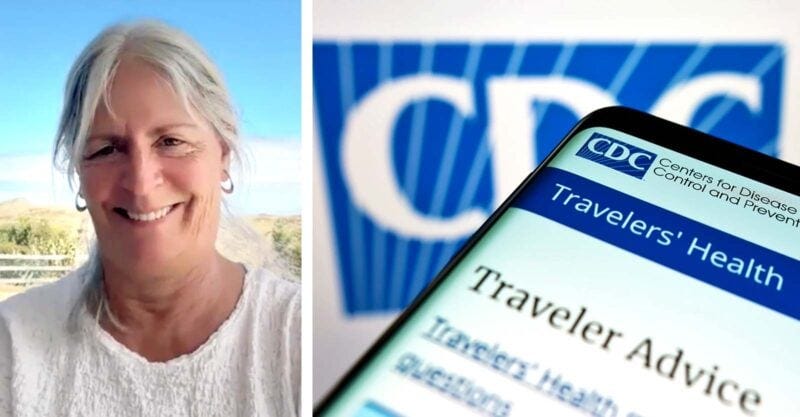
Dr. Suzanne Humphries challenged a CDC travel advisory warning about polio outbreaks in at least 30 countries. In a CHD.TV interview, Humphries said the media exaggerated the threat. She said the travel advisory relied largely on wastewater detections rather than human cases and that the CDC ignored data showing most infections cause no symptoms.
A new CDC travel advisory warning of polio risk in at least 30 countries has sparked headlines across major media outlets — but physician and researcher Dr. Suzanne Humphries says the alert relies more on fear than on the underlying data.
“They want us to think that polio is taking over the world,” Humphries, author of “Dissolving Illusions: Disease, Vaccines, and The Forgotten History,” said in a recent interview on CHD.TV’s “Good Morning CHD.”
The Centers for Disease Control and Prevention (CDC) last week issued a Level 2 “Practice Enhanced Precautions” travel advisory for 32 countries where poliovirus has been detected. The agency recommends travelers be up to date on their polio vaccines.
On Monday, the agency updated its list, removing Finland, Ghana, Spain and Zimbabwe. The CDC added Laos and Namibia.
USA Today, Newsweek and other news outlets reported on the initial advisory, emphasizing potential travel risks. But Humphries said the coverage makes the situation sound far more urgent than the data suggest.
“This Level 2 practice … has been there for years,” she said. “All they did was they added a few of those European countries in and issued an update.”
Headlines framed the change as a new threat. One Fox News story warned of polio risk “as spring break travel ramps up” for Americans.
“What the mass media is promoting is that … we need to be getting jabbed before going on spring break or having any fun in Europe,” Humphries said.
If Europe is ‘polio-free,’ why is it risky for fully vaccinated Americans?
Germany detected poliovirus in sewage samples in November 2025, but the country’s Robert Koch Institute said the risk to the general population was “very low.”
Humphries pointed to the finding as an example of how environmental detections can be interpreted as signs of wider risk.
“They found wild polio in the sewage in Germany,” Humphries said. The detections involved isolated wastewater samples rather than human infections.
“They weren’t human cases, but they’re calling them ‘cases’ because they love that word,” she said.
That distinction raises questions about how the risk is being framed, according to Humphries.
“If polio is no risk to Germans, why does the CDC think it’s a risk to fully vaccinated Americans?” she asked.
Data from the European Centre for Disease Prevention and Control show that Poland and the U.K. are “polio-free,” although vaccine-derived poliovirus has appeared in wastewater.
Humphries said the CDC advisory relies largely on environmental surveillance findings, not documented illness.
“Why are we told there is an upward trend?” she asked. “Because of vaccine-derived poliovirus types circulating and found in wastewater? That’s why. … Not because … of people becoming paralyzed.”
In her interview with CHD.TV — conducted before the CDC revised its travel warning list — Humphries also questioned why countries such as Finland and Spain were included, noting that neither has reported a native case of wild polio in the past decade.
CDC: ‘Most people infected with poliovirus will not have any visible symptoms’
Humphries said headlines warning about a paralyzing disease overlook the reality of most polio infections.
“The message is there’s a crippling and potentially deadly disease despite the reality that 95% of people who contract polio don’t even have any symptoms,” she said.
According to CDC data, “Most people infected with poliovirus will not have any visible symptoms. About 1 in 4 people will have flu-like symptoms. … Fewer than 1% of people will have weakness or paralysis in their arms and/or legs.”
The CDC travel advisory recommends that adults who previously completed the routine polio vaccine series may receive a single lifetime booster before traveling to certain destinations.
Humphries questioned that guidance.
“Why is a lifetime booster needed?” she asked. “Weren’t the previous three boosters lifetime boosters? And how long does a lifetime booster work for?”
She also noted that the injectable, inactivated polio vaccine stimulates antibodies but does not prevent virus transmission.
“It does not stop you swallowing a virus,” Humphries said. “It does not stop you … passing it on to anybody else.”
Polio numbers tied to controversial change in how cases are counted
Humphries argued that changes in disease surveillance make modern polio data difficult to compare with historical numbers.
Today, global surveillance systems track acute flaccid paralysis (AFP), a broad category of paralysis that includes polio but can also have other causes.
Humphries said the shift redefined cases previously counted as polio.
In the mid-1990s, India launched Pulse Polio, a nationwide campaign to eradicate the disease by vaccinating all children ages 5 and younger. In 1997, the World Health Organization (WHO) expanded its eradication program to include AFP surveillance.
According to Humphries, the change altered how paralysis cases were classified. After 1997, many cases in India that might previously have been counted as polio were instead labeled as AFP. As a result, reported polio cases declined while AFP cases surged.
“If we use the old definition” of polio, which includes AFP cases, then paralysis rates actually increased, Humphries said, citing data reproduced in “Dissolving Illusions.”
By returning AFP cases to their pre-1997 polio definition, “it’s obvious … that the incidence of paralysis has actually markedly surged,” she said.
“This graph underscores that the WHO’s polio eradication initiative, which it portrays as a triumphant success, correlates with worsening situations for millions of children,” Humphries said.
Media repeatedly push ‘complete misinformation’ about polio
People magazine emphasized the potential dangers of polio by pointing to the well-known case of President Franklin D. Roosevelt (FDR), noting that the disease “can lead to paralysis, as it did with” the former U.S. leader.
Humphries disputed that commonly cited example.
She pointed to research led by pediatrician Armand Goldman. Goldman reviewed Roosevelt’s medical records and concluded his illness more closely resembled Guillain-Barré syndrome, an autoimmune condition.
“They really need to ditch that commentary about FDR having polio because it simply wasn’t the case,” Humphries said.
Elsewhere in its coverage, People linked growing skepticism about vaccines to the resurgence of some diseases.
The publication also referenced a 2022 citizen petition seeking to revoke approval of the polio vaccine, which People said “eradicated the disease” in the U.S. Some reports also tied the petition to U.S. Health Secretary Robert F. Kennedy Jr.
Such portrayals oversimplify the issue and mischaracterize the petition, according to Humphries.
Humphries said:
“They want you to believe that we had this disease eradicated. And now here’s Robert Kennedy, this complete loon, you know, that’s been hired on as secretary of HHS, and he wants to revoke all polio vaccines and let polio just come back and eat up children. OK? That’s the message that they want you to have. And it’s complete misinformation.”
Attorney Aaron Siri, not Kennedy, filed the petition, which targeted a specific product — Sanofi’s IPOL vaccine — rather than all polio vaccines.
“The petition asked for the withdrawal or suspension of approval for that vaccine for use in infants, toddlers and children until a proper trial was done,” Humphries said.
Siri argued that the vaccine’s approval relied on a clinical trial that monitored safety for only three days after injection and lacked a control group, she said. The request remains pending with the U.S. Food and Drug Administration.
Media reports on vaccines revolve around ‘falsehoods … laced with fear’
Humphries said the surge in media coverage about polio reflects broader concerns about declining public trust in vaccines following the COVID-19 pandemic.
“Hundreds of millions of people woke up during COVID and they became vaccine-hesitant,” she said. “So the powers that be want to take the conversation away from COVID and back to the shots that so-called normal people previously considered good.”
However, that public health messaging increasingly relies on fear-based narratives, Humphries said.
“This is done by falsehoods that are laced with fear,” she said. “These lies spread really rapidly … before the facts can be even verified. People get terrified, they go off, they vaccinate.”
Instead of reacting immediately to alarming headlines, Humphries urged people to pause and examine the evidence.
“If you start to feel fear, your next move should be: ‘OK, stop. Let me sit and look through this. Let me think about this,’” she said.
“It’s still easy to find the package inserts and look at the ingredients. … as of now, you can still find them. But … you have to go to the sources that are going to give you the information,” she said. “You’re not going to find it from People magazine.”
Humphries said parents — not media outlets or public health messaging — are responsible for their children’s medical decisions.
“You’re in charge of looking after your own child,” she said. “The safety of that child is in your hands. Not some superstar from People magazine or anybody else that you might be listening to. Even your neighbor. It’s your hands.”
Watch Humphries on ‘Good Morning CHD’ here:

Related articles in The Defender
Watch: ‘We’ve Been Lied to’ — Vaccines Didn’t Eradicate Polio, Researcher Tells Joe Rogan
Watch: Experimental Polio Vaccine Rolled Out to Hundreds of Thousands of Children in Gaza
Fact-checking Fortune: Has Polio Vaccine Saved 20 Million Children From Paralysis?
‘RFK, Polio Vaccines, the Media and Me’: Lawyer Corrects New York Times Misinformation
Donate to Children’s Health Defense

Hi Vigilant Fox, do you think you could post a content for us? Send me a message if you are interested. I am Ayan Yazon from Global Healing and Earth Harmony, on behalf of Dr. Edward Group. I think it fits your narrative.